 ★★★★★
( 5 Star Reviews)
★★★★★
( 5 Star Reviews)
Sterling Physiotherapy is a trusted clinic in Hamilton with 240+ real Google reviews for Physiotherapy, Vestibular, TMJ Dysfunction, Massage therapy and Custom orthotics.
Some folks mix up vertigo, dizziness, yet lightheadedness though they’re distinct. Spotting what sets them apart matters since each one might signal a separate health issue, needing its own kind of care.
Some folks walking into Sterling Physiotherapy in Hamilton talk about feeling dizzy. Yet what they mean turns out to be something else entirely - like vertigo, shaky balance or a head-heavy sensation tied to another problem altogether. Spotting the actual trigger comes down to careful evaluation. From there, care steps follow where needed.
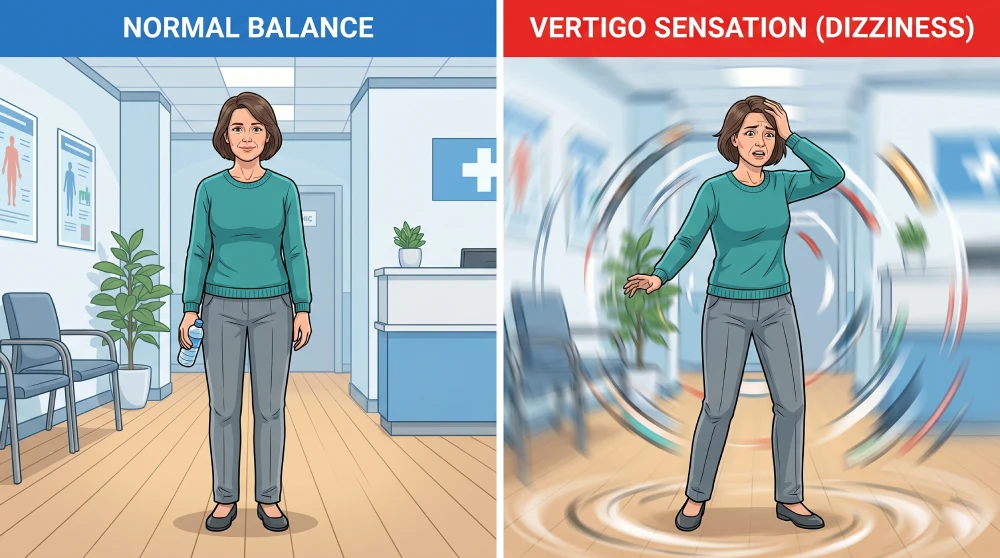
Lying down doesn’t always help when the room seems to shift without warning. That spinning sensation or just a floaty head, falls under one word people reach for - dizziness. Not an answer, really, yet something doctors hear often. More like a signal than a condition, showing up in different ways for different reasons.
People with dizziness may describe sensations such as:
Spinning sensations might come from issues deep inside the ear. Low pressure in the bloodstream sometimes triggers it too. Not drinking enough water plays a role now and then. Worry that sits heavy in the body has been known to bring it on. Stiffness or strain along the neck often links to balance trouble. Migraine episodes open the door for wooziness. Pills meant to help one thing may mess with equilibrium instead. Problems wiring signals in the brain can stir up dizziness just like that.
When people feel dizzy, it often ties back to how the inner ear sends signals. Instead of syncing well with the brain, that communication gets off track. Balance relies heavily on these messages moving smoothly. If they lag or distort, dizziness can follow. The problem isn’t always obvious at first glance.

Spinning out of nowhere - that is what some describe when vertigo hits. It tricks the body into thinking it's moving even when standing still. Motion feels off, sometimes as if the room flips without warning. Balance wobbles, making steps unsure.
People experiencing vertigo often feel:
Besides dizziness, trouble often begins deep inside the ear's balance network. Typical triggers might be found in conditions affecting that inner machinery:
Not just spinning sensations - vertigo might also bring nausea, vomiting, balance issues, sweating, blurred vision, abnormal eye movements or ringing in the ears.
At Sterling Physiotherapy’s Vestibular Rehabilitation Program, specialized physiotherapists assess these symptoms carefully and use evidence-based vestibular rehabilitation techniques to reduce spinning sensations and restore balance.
Lightheadedness isn’t the same as dizziness or that spinning sensation some feel. Some say it’s like a near-faint, a shaky headspace, almost tipping into blacking out.
Common sensations include:
Most often, lightheadedness doesn’t come from the inner ear. It tends to show up because of things like low blood pressure, dehydration, low blood sugar, stress or anxiety, heart-related conditions, poor circulation, or fatigue.
Lightheadedness feels different than vertigo - no swirling world here. Instead of rotation, it's more like fading edges. However, when signs show up often, especially if there's pressure in the chest, passing out, or trouble breathing, get help right away. A visit to a doctor becomes urgent under these conditions.
| Symptom | Description | Common Causes |
|---|---|---|
| Dizziness | Wobbliness, feeling off-balance, floating sensation. | Inner ear issues, stiff neck, worry, certain medications. |
| Vertigo | A distinct illusion of movement; the room is spinning or you are spinning. | Problems deep inside the ear (BPPV), crystals shifting, nerve irritation. |
| Lightheadedness | Fading strength, near-fainting, feeling woozy without motion. | Low fluid volume (dehydration), blood pressure dips, mental strain. |
Figuring out these distinctions lets medical workers pinpoint if the problem ties to balance organs, nerves, heart and blood systems, or muscles and bones.
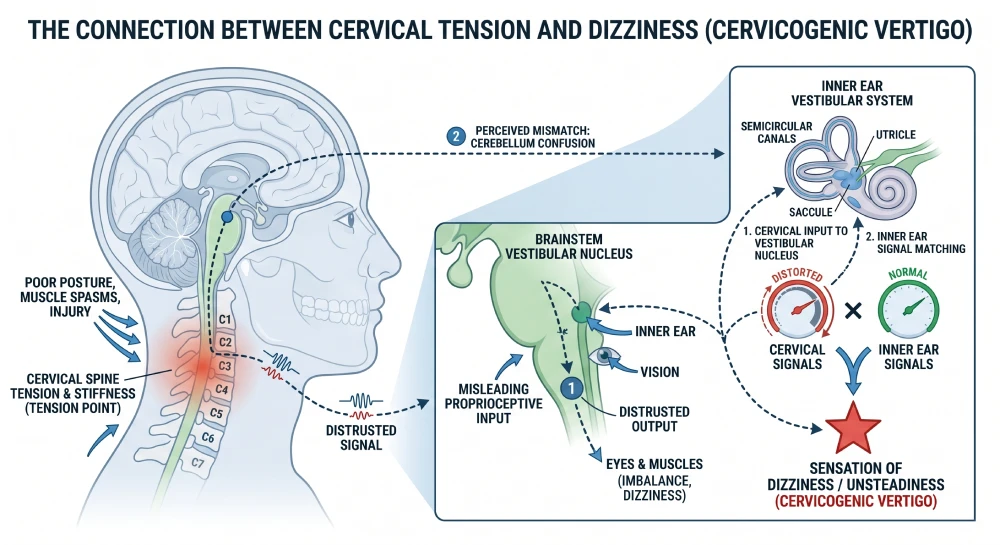
True. Dizziness stemming from neck issues (Cervicogenic Dizziness) shows up when movement troubles in that area mess with balance. Sometimes signals get crossed - head position feels off because the neck isn’t sending clear messages.
Communication issues between the neck and brain often come from stiff joints, old injuries, weak posture, or tense muscles. Not every cause shows up right away. The body reacts in quiet ways. Sometimes it's a slow build. Pressure builds without notice. Nerves get squeezed. Signals change. Movement feels off. Balance shifts slightly. Even small tension can disrupt messages. Past harm leaves traces. How you hold yourself matters more than thought. Stiffness sneaks in over time.
Symptoms may include:
At Sterling Physiotherapy Hamilton, physiotherapists assess both vestibular and cervical causes of dizziness to ensure the correct treatment approach is used.

Now and then, feeling a bit dizzy might not mean much. Yet when it keeps happening, pay attention. Ignoring repeat episodes is never wise. Get a trained expert's opinion when signs show up like:
Faster recovery usually comes when care starts sooner, while delaying it might let things get worse.
Balance problems and issues with the inner ear often respond well to certain physical therapies. Studies show these tailored exercises help ease feelings of dizziness and spinning for many people. Treatment may include:
Surprisingly often, those stuck with endless dizziness find things shift once they start vestibular rehab. Movement feels less scary - forums light up with notes about fewer spinning spells, steadier steps, a quiet new trust in walking straight. Start by getting a full check to find where the problem really comes from - skip just covering it up with pills. What matters most shows up when treatment targets the cause, not the effect.
| Symptom | Vertigo | Dizziness | Lightheadedness |
|---|---|---|---|
| Feels like spinning | Yes | No | No |
| Off-balance | Yes | Yes | Sometimes |
| Feeling faint | No | Sometimes | Yes |
| Common cause | Inner ear disorders | Many causes | Blood pressure, dehydration |
Spinning out of nowhere - that's how some describe vertigo. Imbalance creeps in differently, showing up as a shaky walk or clumsy steps. Faintness tugs at others, pulling strength from limbs without warning. Each feeling follows its own path, never quite matching the next. Causes branch off too, separate trails leading to distinct experiences.
Getting it right at the start matters - how you heal hinges on what’s actually wrong. When the issue sits in your inner ear, messes with balance, follows a head bump, or stems from neck tension, therapy that targets movement often helps quite a bit.
If dizziness or vertigo is interfering with your daily life, the team at Sterling Physiotherapy provides personalized vestibular rehabilitation programs designed to restore balance, reduce symptoms, and help you return to normal activities safely.
Vertigo creates a spinning or movement sensation, while dizziness usually feels like imbalance, unsteadiness, or feeling off-balance without spinning. Vertigo commonly comes from inner ear problems affecting the vestibular system.
If you feel like the room is spinning, tilting, or moving around you, it is likely vertigo. If you mainly feel unsteady, weak, foggy, or off-balance without spinning sensations, it is more commonly dizziness or lightheadedness.
Yes. Cervicogenic dizziness happens when neck stiffness, poor posture, muscle tension, or cervical spine dysfunction affects communication between the neck and brain, leading to dizziness and balance issues.
Sudden vertigo triggered by head movements is often caused by Benign Paroxysmal Positional Vertigo (BPPV). This condition occurs when tiny calcium crystals inside the inner ear move out of place and disturb balance signals.