 ★★★★★
( 5 Star Reviews)
★★★★★
( 5 Star Reviews)
Sterling Physiotherapy is a trusted clinic in Hamilton with 200+ real Google reviews for Physiotherapy, Vestibular, TMJ Dysfunction, Massage therapy and Custom orthotics.
Pain in the shoulder shows up often across Canada, ranking just behind two other bone and muscle issues. Inside that group, problems tied to the rotator cuff pop up a lot. When folks in Hamilton hear doctors mention a rotator cuff issue, confusion sometimes follows. What comes next treatment-wise? That part isn’t always clear. Understanding lags, even after the diagnosis lands.
Two frequent problems affecting the shoulder’s rotator cuff are explained here, followed by how physiotherapy helps each case differently. One often involves inflammation from overuse; treatment focuses on easing strain through guided movement. The second type tends to stem from tissue wear over time, where strengthening plays a bigger role than rest. Each situation responds best when exercises match the specific issue, avoiding generic routines. Progress depends less on quick fixes and more on consistent effort tailored day by day. Healing moves forward not by repeating the same steps but adjusting them as symptoms shift.
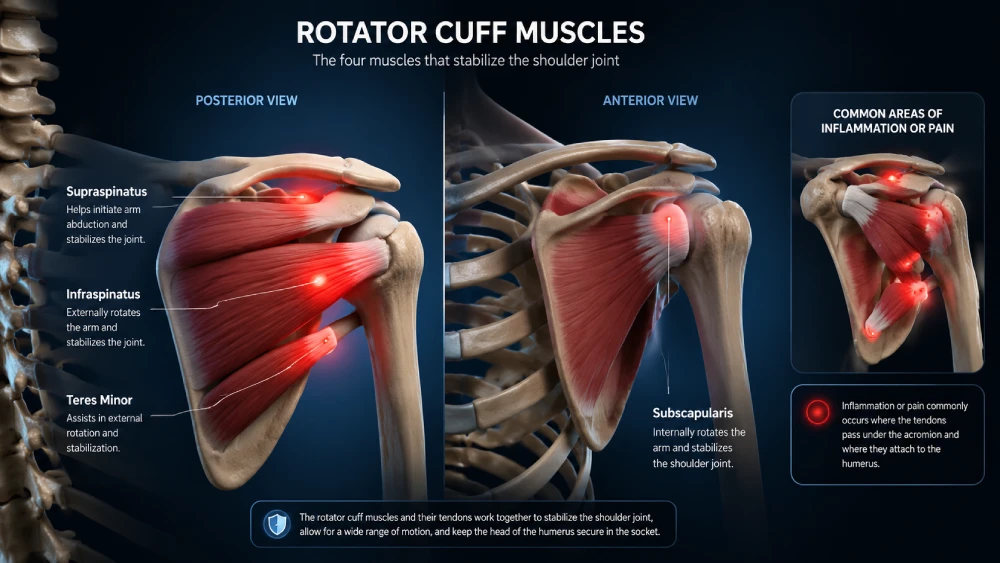
Surrounding the shoulder joint, four muscles plus their tendons form the rotator cuff: supraspinatus, infraspinatus, teres minor and subscapularis. These help keep the arm steady while allowing it to move up and twist around.
Since the shoulder can reach so many directions, the tendons stay active nearly all the time. This constant effort opens them up to sudden harm or slow wear over years.

Most often, pain shows up where the tendon connects to bone. This happens because tiny damage builds over time when tissue can’t recover fast enough. Instead of healing cleanly, fibers get messy and weak. Irritation grows quietly beneath the surface. Swelling might come and go without clear reason. Daily movement turns stiff or sore after rest. Strength dips even though nothing looks torn. The body keeps using it anyway, making things worse slowly. Healing takes longer than expected each time.
Common signs include:
Most times, physical therapy built around movement leads the way. Building strength through slow lowering motions plus static holds helps restore what tendons can do while easing discomfort. Hands-on work, sound waves, or strong pulses might tag along alongside main treatments. Healing usually takes about two months before things settle.
Somebody might see a rip in the tendon, meaning part or all of it has snapped. These splits show up after an accident, like slipping or popping a joint out, yet sometimes they creep in slowly as the body ages past fifty. Oddly enough, scans often reveal damaged rotator cuffs even when folks feel nothing - so what matters most for care isn’t just pictures but how things move and whether pain shows up.
Some injuries heal just fine with physical therapy alone. A few might need more help later on. Most people see improvement without going under the knife. Healing takes time, but movement often helps. Not every tear means an operation is next. Therapy guides strength back slowly. Progress shows up when routines stay consistent.

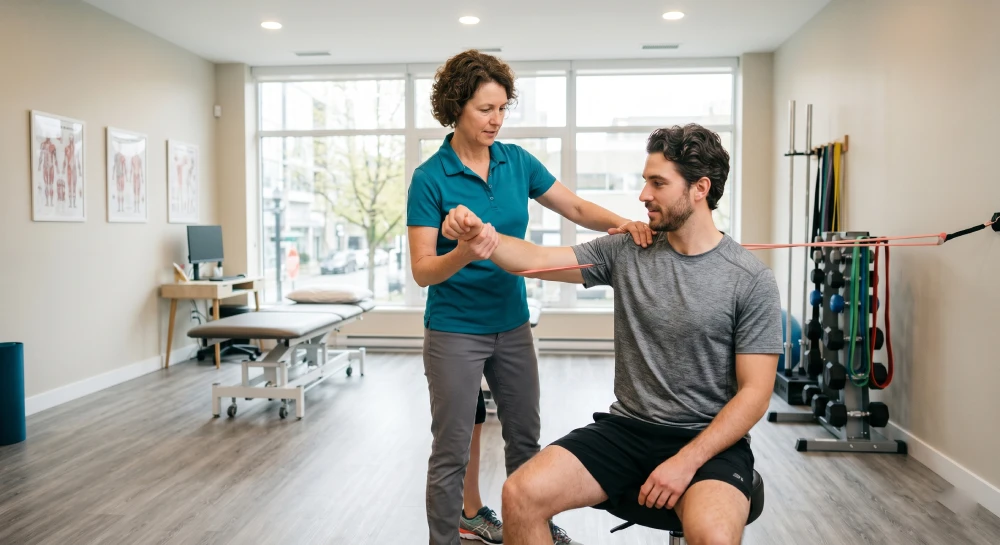
When you visit a clinic for physiotherapy in Hamilton, the rehabilitation journey generally follows a structured, step-by-step path designed to rebuild your shoulder safely:
Start slow. Rest a bit more than usual. Try moving your shoulder carefully each day. A therapist might press or stretch the area gently. Machines could send tiny pulses through the skin nearby. Some people feel less hurt after these steps.
Next up, building strength in the rotator cuff happens alongside work on shoulder blade control. Resistance slowly increases during exercises targeting these muscles. Focus shifts to steady improvement through controlled challenge. Movements become harder only when ready. Stability gains come from consistent effort over time. Progress depends on how well earlier steps were done.
Back to daily tasks or sport routines now feels smoother. Movement fixes come next, once strength returns. Posture tweaks happen alongside practice drills. Activity picks up when control improves. Job demands guide exercise choices. Sport moves follow real-life patterns. Balance matters more than speed at this point.
Don't let a rotator cuff injury keep you from the activities you love. A proper assessment and a tailored exercise plan can get you moving comfortably again.
Rotator cuff tendinopathy usually causes shoulder pain during movement, stiffness, and discomfort when lifting the arm. A rotator cuff tear often causes significant weakness, difficulty raising the arm, night pain and sometimes a sudden sharp pain after injury. A physiotherapy assessment and imaging like ultrasound or MRI can confirm the diagnosis.
Mild rotator cuff tendinopathy may improve with rest and activity modification, but proper physiotherapy treatment helps reduce pain faster, restore strength and prevent the condition from worsening or recurring.
The fastest recovery usually involves early physiotherapy, targeted strengthening exercises, posture correction, manual therapy and avoiding activities that overload the shoulder. Early treatment often improves recovery outcomes.
You should see a physiotherapist if shoulder pain lasts more than a few days, affects sleep, limits arm movement, causes weakness, or interferes with daily activities, work, sports or exercise.