That twinge in your hip often shows up slowly. Maybe when standing from the couch, or stepping out after sitting too long. Walking through Gage Park might start to pull a bit. Stairs at home feel heavier each day. Little by little, motion gets tighter, and daily life starts adjusting around the discomfort.
Here’s what matters most: calling it “hip pain” only describes the feeling. The hip is made up of multiple structures, each capable of causing discomfort in different ways. This is where expert assessment at Sterling Physiotherapy in Hamilton helps identify the true source and guide the right treatment.

Common Causes of Hip Pain
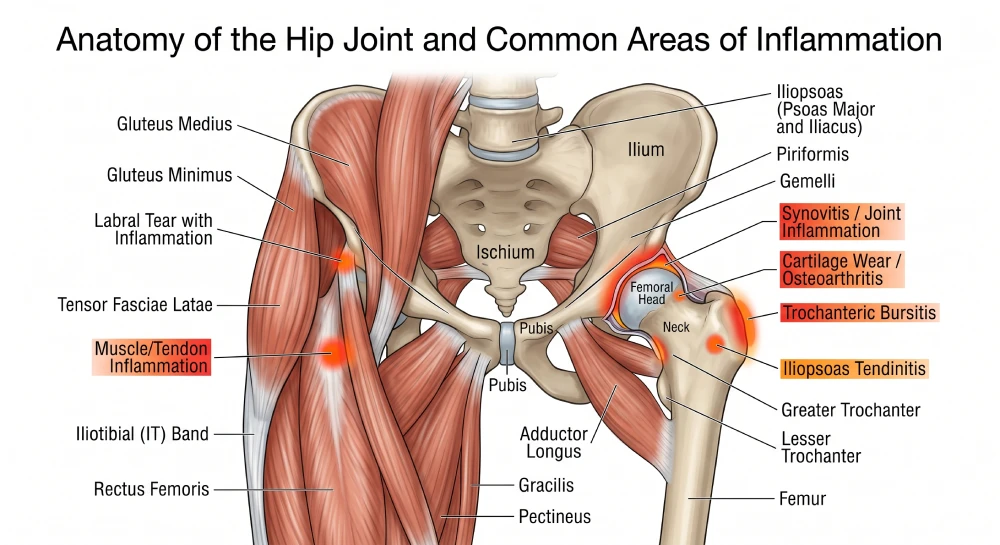
1. Greater Trochanteric Pain Syndrome (Hip Bursitis)
Pain on the outer side of the hip often worsens while lying on that side, climbing stairs, or crossing one leg. This is usually caused by irritation of the bursa along with tendon strain. Targeted physiotherapy helps reduce inflammation and restore movement efficiently.
2. Hip Osteoarthritis
Groin stiffness in the morning or after long periods of sitting may point to joint wear. The discomfort often improves with gentle movement. Staying active through guided exercises is key to managing symptoms long term.
3. Hip Flexor Strain or Tightness
Front hip or groin discomfort is commonly linked to tight iliopsoas muscles, especially in people who sit for long hours. Pain may extend into the thigh. Stretching, soft tissue release, and strengthening exercises help restore flexibility and function.
4. Femoroacetabular Impingement (FAI)
Sharp pain during deep squats, cycling, or sitting may be due to abnormal contact between hip bones. Strength training and movement correction help reduce joint stress and improve motion over time.
5. Referred Pain from the Lower Back
Sometimes hip pain originates from the lower spine. Nerve irritation can send pain signals into the hip, buttock, or thigh. A detailed assessment of both the hip and spine helps identify the real cause.
Learn more about physiotherapy treatment options in Hamilton for accurate diagnosis and recovery planning.

Physiotherapy for Hip Pain
Your physiotherapist will begin with a detailed assessment to understand movement patterns, strength, and limitations. Treatment plans are tailored to your lifestyle and recovery goals.
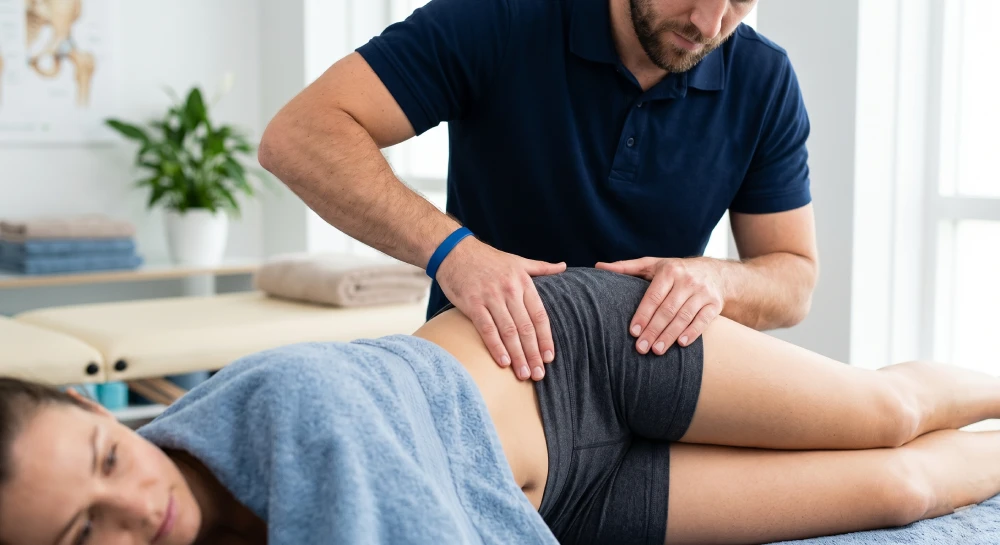
Hands-on therapy plays a key role. Joint mobilization improves movement, while soft tissue techniques release tight muscles such as the glutes, hip flexors, and IT band. These techniques reduce tension and improve flexibility.
Strengthening exercises focus on the glutes, hip muscles, and core. As these muscles get stronger, they help distribute load more evenly and reduce pressure on the hip joint.
- Gait retraining to improve walking and running mechanics
- Load management strategies to prevent overuse
- Ultrasound therapy to promote healing
- Electrical stimulation to reduce pain
- Kinesiology taping for support and recovery
Explore massage therapy for muscle tightness as part of a comprehensive recovery plan.
Signs Your Hip Pain May Be Serious
Seek immediate medical attention if hip pain follows a fall or injury. Difficulty bearing weight, severe pain at rest, or pain accompanied by fever could indicate a more serious condition such as a fracture or infection.
Early assessment helps prevent complications. You can book a physiotherapy appointment in Hamilton for a detailed evaluation and personalized treatment plan.
Hip pain while walking is often caused by joint wear, muscle weakness, bursitis, or tendon irritation. It can also result from poor walking mechanics or imbalance in surrounding muscles.
Sitting for extended periods can tighten hip flexor muscles and reduce joint mobility. This often leads to stiffness and discomfort when standing up or starting to walk.
Climbing stairs increases load on the hip joint. Pain may occur due to muscle weakness, joint inflammation, cartilage wear, or conditions like hip impingement.
Mild hip pain may improve with rest and activity modification. However, persistent or recurring pain usually requires proper assessment and physiotherapy to address the root cause.