 ★★★★★
( 5 Star Reviews)
★★★★★
( 5 Star Reviews)
Sterling Physiotherapy is a trusted clinic in Hamilton with 200+ real Google reviews for Physiotherapy, Vestibular, TMJ Dysfunction, Massage therapy and Custom orthotics.
Living with long-term heel pain, stubborn tendon problems, or muscles that remain tight even after regular physiotherapy can be frustrating. Many people reach a point where traditional treatments seem to stop working. That’s where shockwave therapy offers a different path. It’s not surgery and it’s not a trend. Instead, it’s a treatment supported by clinical research that helps the body restart stalled healing processes.
More patients in Hamilton are exploring this therapy because it works differently from older methods. For many, progress finally appears when other treatments have failed to deliver lasting relief.
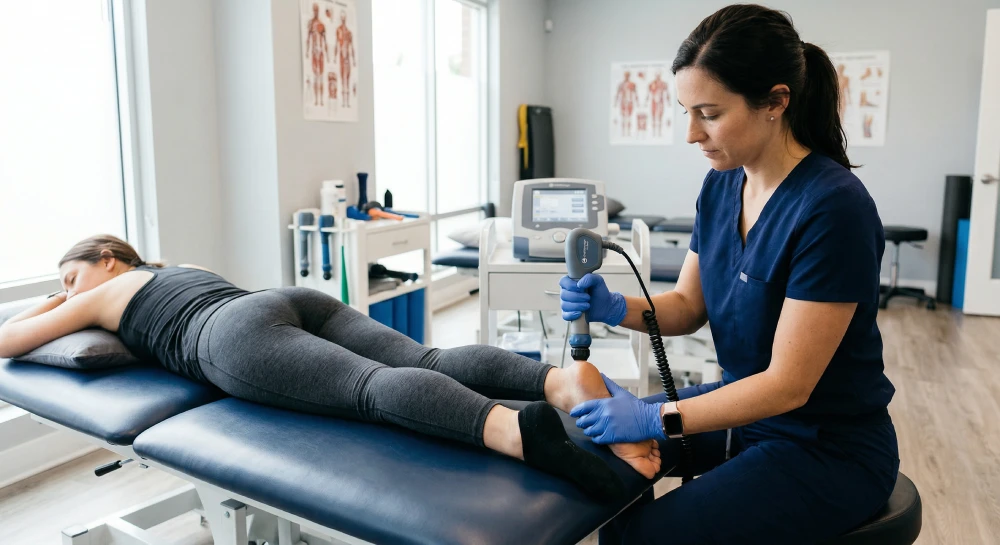
Shockwave therapy uses controlled sound waves to stimulate healing deep within injured tissues. These waves deliver energy to targeted areas of the body, encouraging natural repair processes to begin again.
Once the waves reach the injured area, several biological reactions occur. Cellular activity increases, blood circulation improves, and the body begins rebuilding damaged tissue. Scarred or stiff areas may gradually soften as the sound waves stimulate regeneration.
Unlike surgical procedures, shockwave therapy does not involve incisions or injections. The treatment relies purely on sound-based energy pulses delivered through a handheld device.
Sessions typically last about 15 minutes. At Sterling Physiotherapy in Hamilton, each treatment is performed by a licensed physiotherapist who carefully targets the injured area.
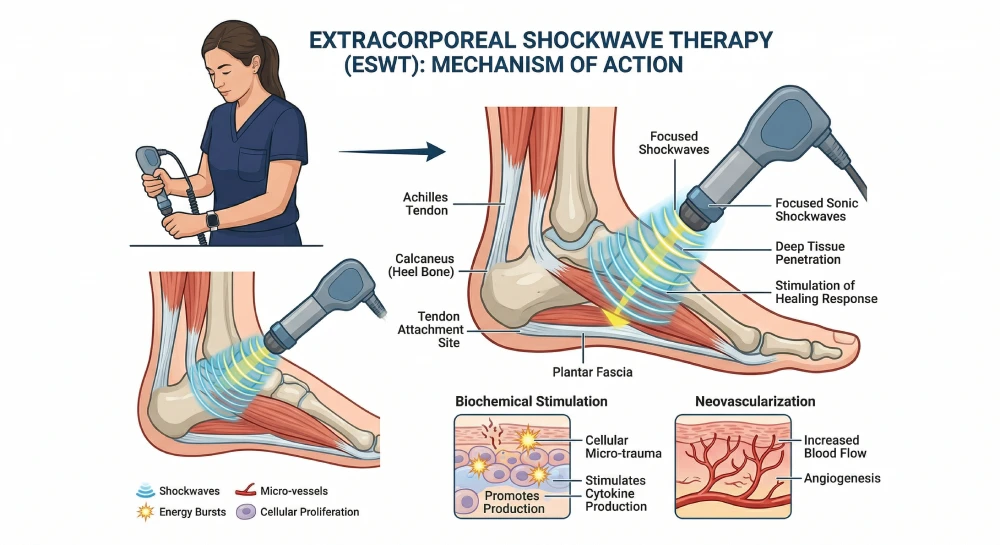
Shockwave therapy has been studied extensively and is commonly used for chronic muscle and tendon conditions. Research shows promising results for several musculoskeletal problems, especially when traditional therapy alone has not provided relief.
Some conditions that may benefit include:
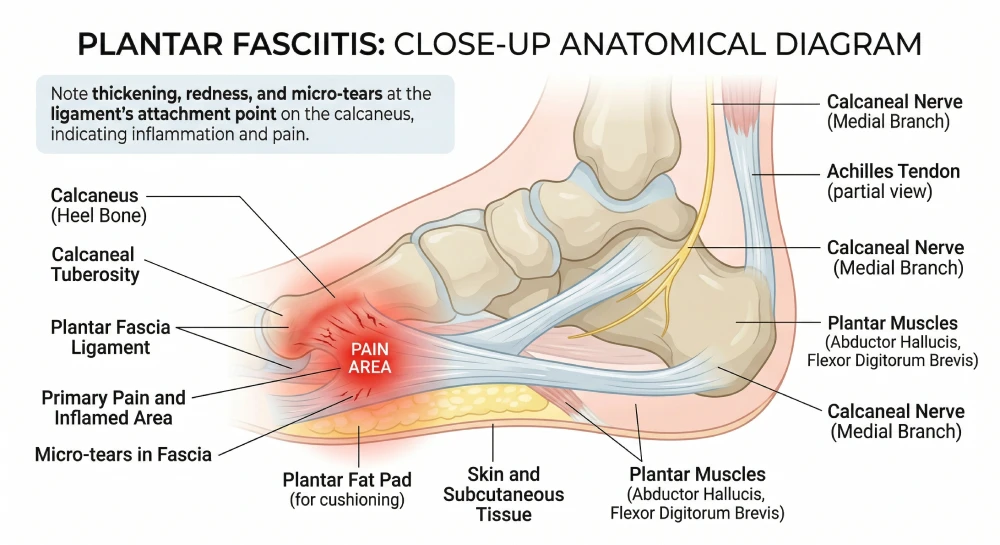
Plantar fasciitis, for example, often starts as a sharp pain beneath the heel. The discomfort usually appears during the first steps in the morning or after long periods of sitting. Although rest may help temporarily, the condition can persist for months without targeted treatment.
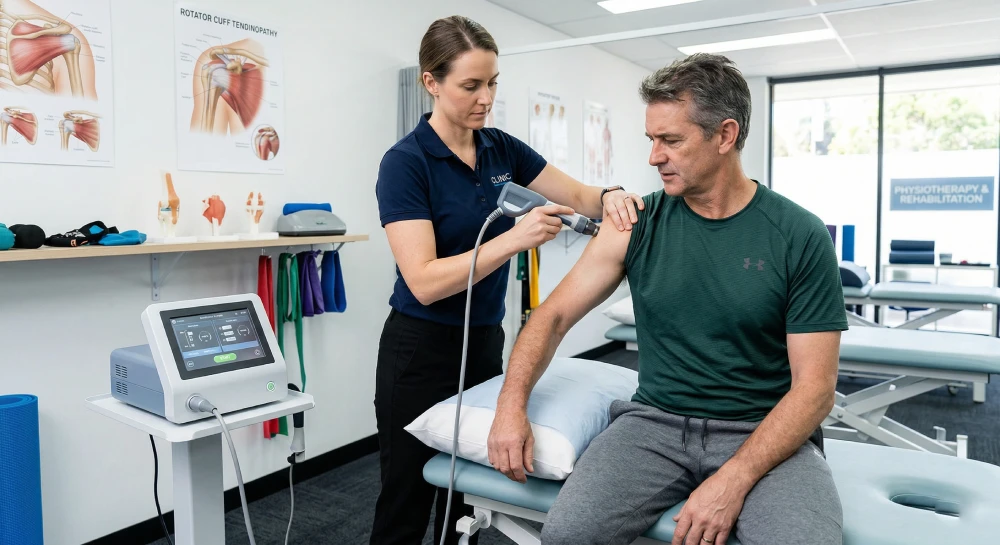
During a session at Sterling Physiotherapy, a therapeutic gel is first applied to the skin. This helps the device deliver sound waves efficiently into the targeted tissues.
A small handheld device then sends controlled pulses into the affected area. Many patients describe the sensation as rapid tapping. Some mild pressure or temporary discomfort may occur, which often indicates the treatment is reaching the intended tissues.
Any soreness usually fades quickly and most patients can return to normal activities shortly after the session.
Most conditions improve within three to five sessions, typically scheduled about one week apart. During each visit, the physiotherapist monitors progress and adjusts the treatment intensity as needed.
Shockwave therapy is often combined with targeted exercises to strengthen muscles and improve long-term results.
When performed by a trained physiotherapist, shockwave therapy is generally considered safe. Some people may experience mild redness or slight swelling in the treated area, which usually disappears within 24 to 48 hours.
However, certain individuals should avoid the treatment. It is not recommended during pregnancy or for areas with open wounds or suspected tumors.
Traditional physiotherapy techniques are often highly effective for recent injuries. Shockwave therapy, however, focuses on chronic problems - injuries that have lasted longer than three months and have not improved with conventional treatments.
By delivering energy pulses into stubborn tissue, shockwave therapy stimulates healing where the body’s natural recovery process has slowed or stalled. In many cases, it helps “restart” the repair process and allows damaged tissues to recover.
Shockwave therapy is a non-invasive physiotherapy treatment that uses acoustic sound waves to stimulate healing in injured muscles, tendons, and ligaments. The energy pulses improve blood circulation, break down scar tissue, and activate the body’s natural repair process in areas where healing has slowed or stopped.
Most patients describe the sensation as a series of quick tapping pulses on the skin. Some areas may feel slightly uncomfortable during treatment, especially where tissue is inflamed. However, the discomfort usually lasts only during the session and fades quickly afterward.
Many patients begin to see improvement after three to five sessions. Treatments are usually scheduled about one week apart. The exact number of sessions depends on the severity of the condition and how the body responds to treatment.
A typical shockwave therapy session lasts about 10 to 15 minutes. The physiotherapist applies a gel to the skin and uses a handheld device to deliver controlled sound waves to the injured area.