 ★★★★★
( 5 Star Reviews)
★★★★★
( 5 Star Reviews)
Sterling Physiotherapy is a trusted clinic in Hamilton with 200+ real Google reviews for Physiotherapy, Vestibular, TMJ Dysfunction, Massage therapy and Custom orthotics.
Now life feels different. A lot of people in Hamilton who used to drive the QEW every day toward Toronto now walk just a few steps - from their bedroom into the living room instead.
Home offices often mean slouching on couches. Comfort sneaks in, then back pain follows. Flexible schedules pair with stiff necks. Pajamas win, posture loses. Sitting all day reshapes the spine slowly. Remote work hides physical costs. Sweatpants freedom trades for spinal strain.
From day one at Sterling Physiotherapy, cases of what we now label "The Kitchen Table Syndrome" have climbed fast. People walk through our door gripping their necks, wincing from sharp pain that radiates up into the skull - headaches tied to long hours bent forward. Often, fingers tingle without warning.
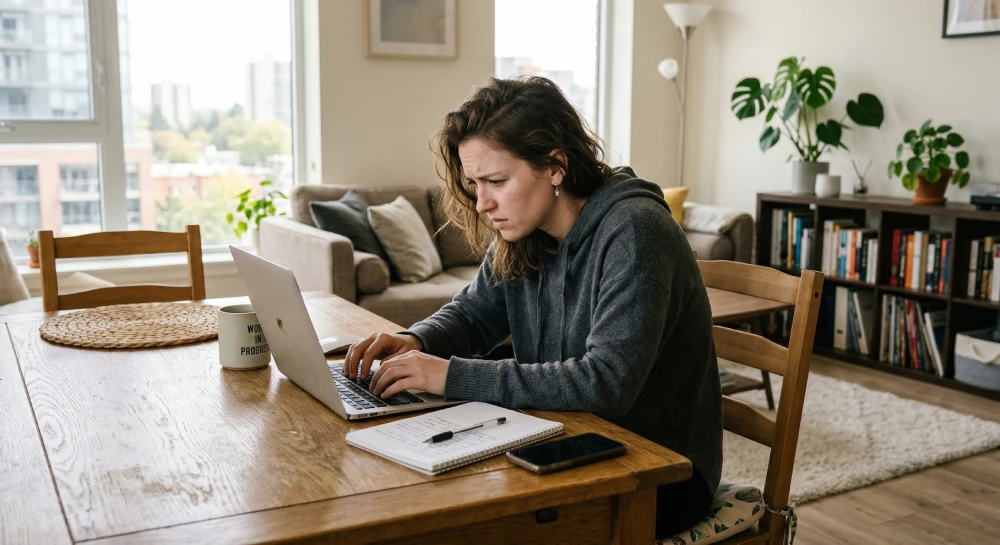
The root? Working daily on laptops placed atop a standard dining table, which sits just two inches above ideal height. On top of that, stiff wooden chairs give no lower back help whatsoever.
Even if the job stays the same, the way you sit doesn’t have to. A pricy ergonomic chair isn’t the only answer when discomfort hits. Sometimes it’s the tiny tweaks that ease things most.
Rest comes first when it comes to comfort. Joints work best when they sit naturally, not stretched or twisted.
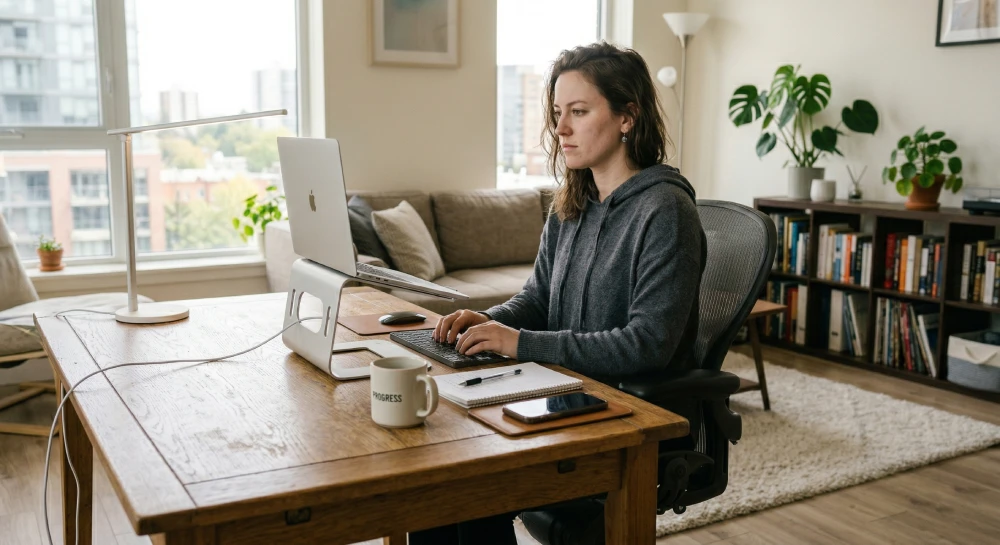
When your seat height is correct, your hips form a clean L-shape and your spine rests comfortably against the backrest.
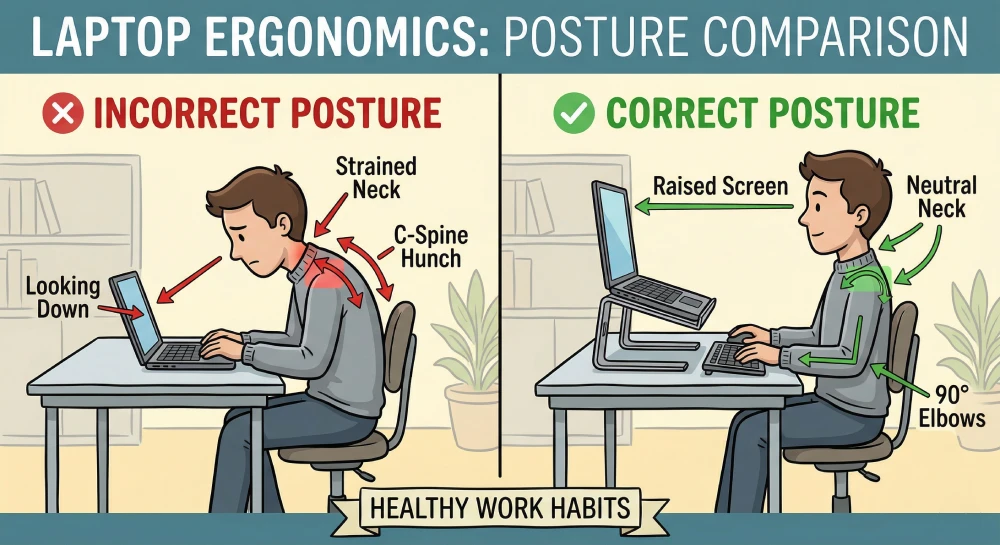
Laptops force you to look down, pulling your spine out of alignment and creating tension in your neck and shoulders.
The Fix:
When your chair is too high, your feet hang, putting pressure on your legs and reducing circulation.
The Fix: Use a box, books, or any stable object as a footrest to support your feet.
Sofas may feel comfortable but they pull your body into poor posture and strain your back.
The Fix:
Every 20 minutes, look at something 20 feet away for 20 seconds. This reduces eye strain and helps prevent “tech neck”.
While doing this, gently pull your head backward to align your neck and relax your shoulders.
Your body isn’t built to stay in one position. Every 60 minutes, change posture or stretch.
Stand in a doorway with arms bent at 90 degrees and forearms on the frame. Step forward gently and hold for 30 seconds to open your chest and shoulders.
Sit with hands on knees. Inhale and arch your back (Cow). Exhale and round your spine (Cat). Repeat for 10 slow breaths.
Sit on one hand to stabilize your shoulder. Tilt your head to the opposite side and hold for 30 seconds to stretch your neck.

Even with a perfect setup, pain can stick around if there’s underlying weakness or tightness. Small adjustments help, but sometimes your body needs expert care.
If discomfort continues, a physiotherapist can assess posture, movement and muscle balance to find the real cause.
Got an ache from too much screen time? Sterling Physiotherapy can help you correct posture, reduce pain and move better.
Book your appointment today for ergonomic advice and pain relief in Hamilton.
The best posture follows the 90-90-90 rule: your knees, hips, and elbows should all form 90-degree angles. Keep your feet flat on the floor, your back supported, and your screen at eye level to avoid strain.
Laptops force you to look down, which puts extra stress on your neck and upper back. Over time, this leads to muscle strain, stiffness, and what is commonly called “tech neck.”
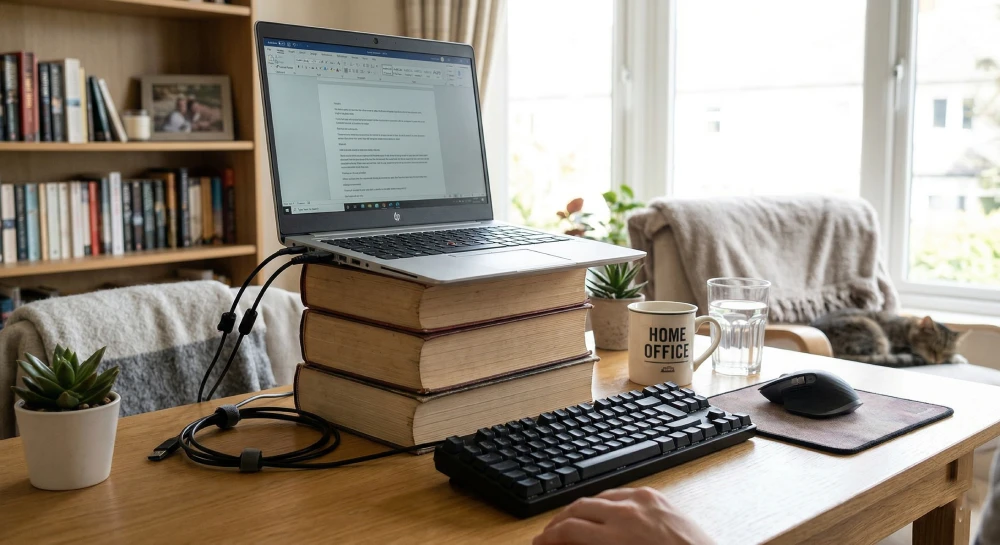
You can use simple solutions like stacking books to raise your laptop, using an external keyboard and mouse, and placing a box under your feet for support. Small adjustments can make a big difference.
You should take a break every 30 to 60 minutes. Stand up, stretch, or walk around to reduce stiffness and improve circulation.