 ★★★★★
( 5 Star Reviews)
★★★★★
( 5 Star Reviews)
Sterling Physiotherapy is a trusted clinic in Hamilton with 200+ real Google reviews for Physiotherapy, Vestibular, TMJ Dysfunction, Massage therapy and Custom orthotics.
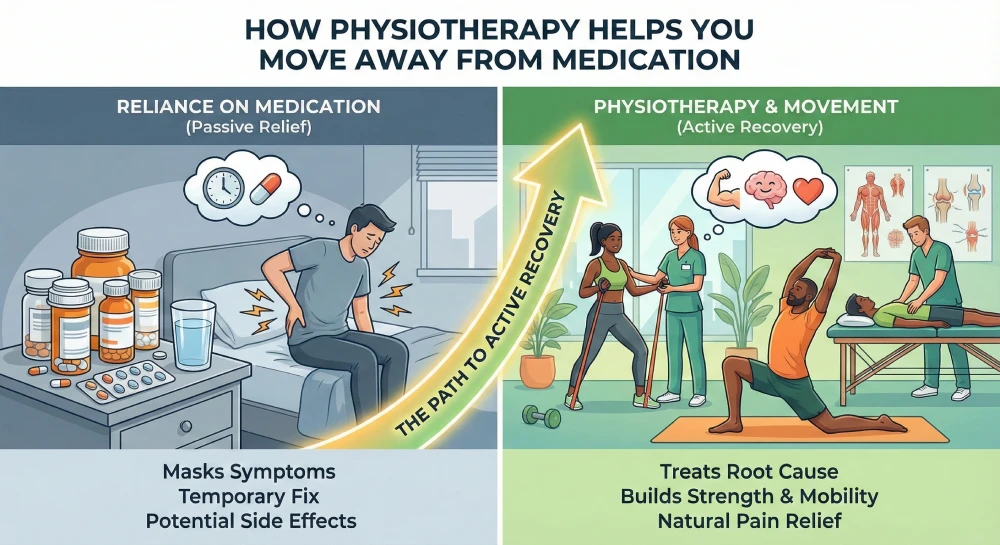
For lots of folks, popping a pill is where it starts - yet the comfort rarely sticks around. Drugs might calm discomfort for a bit, though they leave the root problem untouched. As days go by, higher amounts could become necessary, which opens the door to unwanted reactions or reliance.
A fresh approach works best. Research reveals around 85% of people cut back or stop using pain meds once they start physio. Over at Sterling Physiotherapy in Hamilton, the goal is tackling discomfort deep down - fixing the real issue by moving more, learning how the body heals, alongside letting nature do its part.
Pain relievers might help at first - say, following an operation, a fall, or sudden swelling. Yet if you take them for long-lasting discomfort, things shift: ease shows up briefly, then fades back, so you end up popping more now and then.
Common drawbacks include:
Though pills might help sometimes, physical therapy works better over time because it handles the source of discomfort instead of only easing how it feels.
1. Identifying the Source of Pain
Each person feels pain in their own way. So therapists check first if your ache comes from tight muscles, nerves acting up, joints not working right, or poor posture throwing things off.
When you know what's wrong, fixing it becomes the goal instead of just easing symptoms.
2. Restoring Mobility and Function
Tight muscles often lead to ongoing discomfort. Manual therapy - such as gentle stretching, releasing connective tissue, or moving stiff joints - helps bring back motion, ease swelling, while boosting blood flow without meds.
3. Strengthening and Re-education
Physio helps your body learn to move the right way once more. Because it retrains muscles that are either too weak or worn out, stress drops while further harm gets avoided. Bit by bit, strength improves, balance grows better, plus reliance on pills for comfort fades away.
4. Natural Pain-Relief Techniques
Ultrasound treatment, TENS currents, or dry needling when allowed can trigger endorphins - chemicals your body makes to ease pain.
Over at Sterling Physiotherapy, they rely on these techniques - helping the body recover naturally while skipping pills and unwanted reactions altogether.
5. Education and Lifestyle Changes
Your therapists help you fix posture, adjust your workspace, learn stretches, while building better movement habits - each one shown to lower chances of pain coming back. When you know how your body works, you start managing discomfort on your own.
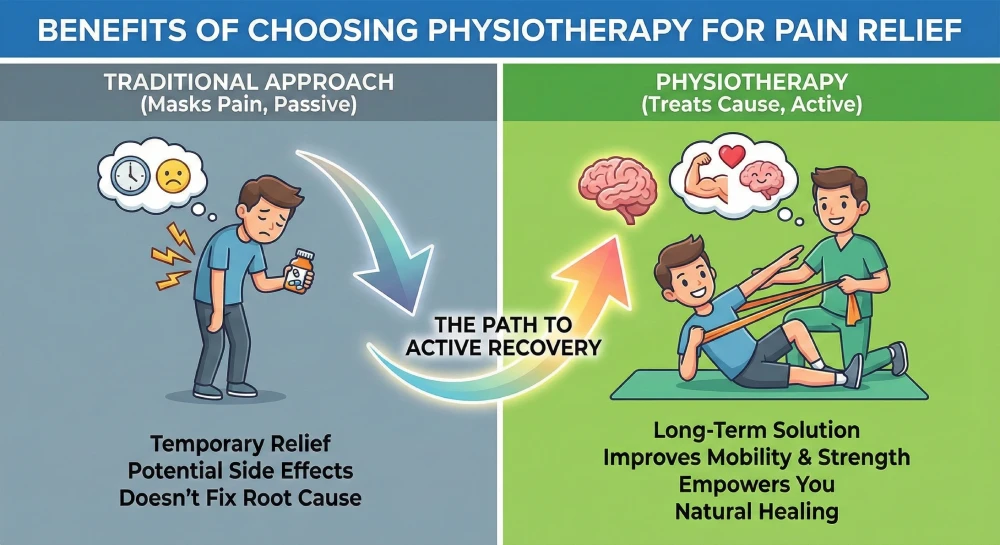
Studies into physical therapy keep finding about 85% of people dealing with muscle and bone issues cut back on pain drugs - or drop them altogether - when they stick with routine treatment.
This doesn't happen since physiotherapy swaps out drugs right away - rather, it supports the body's natural recovery. When the underlying source of discomfort gets sorted, reliance on pain meds drops off without effort.
At Sterling Physiotherapy, many of our Hamilton patients share the same story:
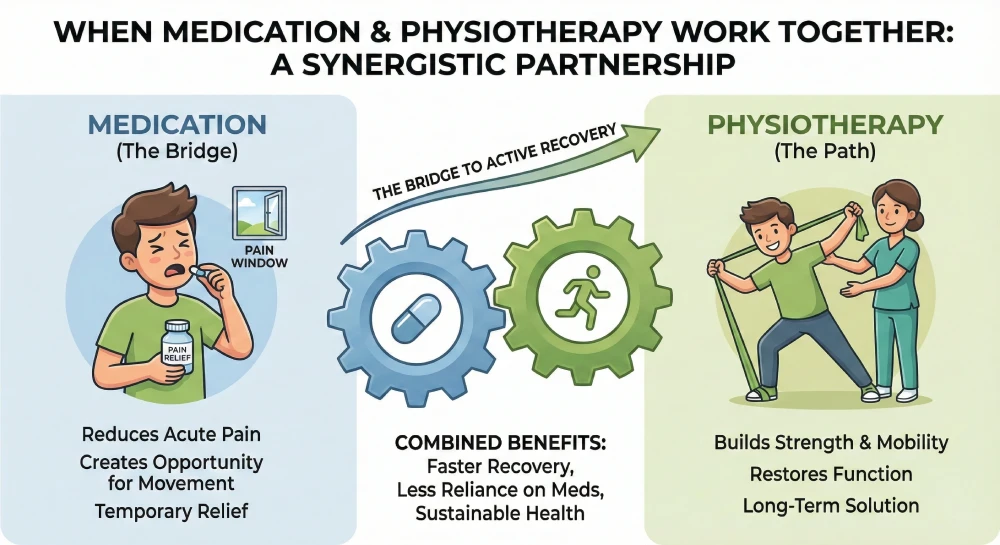
This isn't about saying no to pills - understanding that matters. For certain people, using medicine briefly along with physical therapy works better.
Medication might help you get started with physical rehab sooner. As movement gets better and discomfort fades, taking drugs tends to drop off without forcing it.
This is why physical therapy's usually seen as something that goes alongside treatment - rather than replacing it.
Over at Sterling Physiotherapy, they focus on easing pain without meds using proven physical therapy methods. Their crew teams up with you so that:
We’re after one thing - get you moving easy, feeling good, without pills or fuss.
Pain medication has its place - but it shouldn’t be the only option. Physiotherapy helps you move beyond temporary relief toward lasting recovery.
At Sterling Physiotherapy in Hamilton, we help patients regain strength, restore movement and live pain-free - naturally and safely.
In many cases, yes. Physiotherapy helps relieve pain by treating the underlying cause, reducing the need for long-term medication.
Most patients start to feel improvement within 2–4 sessions, with continued progress over several weeks.
Yes. Always follow your doctor’s instructions. Physiotherapy often complements medication until your pain levels improve.
Physiotherapy is effective for back pain, neck pain, joint pain, arthritis, sports injuries, and post-surgical recovery.