 ★★★★★
( 5 Star Reviews)
★★★★★
( 5 Star Reviews)
Sterling Physiotherapy is a trusted clinic in Hamilton with 200+ real Google reviews for Physiotherapy, Vestibular, TMJ Dysfunction, Massage therapy and Custom orthotics.
The pelvic floor muscles are really important because they help hold up your bladder, bowel and reproductive organs.
When the pelvic floor muscles get weak, you may experience problems such as leakage, pressure, or lower back pain during everyday activities.
The good news is that pelvic floor muscles can be strengthened with simple exercises done regularly. This guide is designed for beginners who want to understand what pelvic floor muscles do, how to activate them, and which exercises are safe to start with.
The pelvic floor muscles are a group of muscles that run like a hammock from the pubic bone to the tailbone. These muscles support several important functions, including:
When these muscles become weak, you may notice:
Before starting any exercise, it is important to identify the correct muscles. This ensures you exercise safely and effectively.
Try this:
The sensation should be felt inside your pelvis, not in your stomach, thighs, or buttocks. Avoid holding your breath.
If you are unsure, a pelvic health physiotherapist can guide you safely.
Start slowly and focus on quality rather than force or speed.
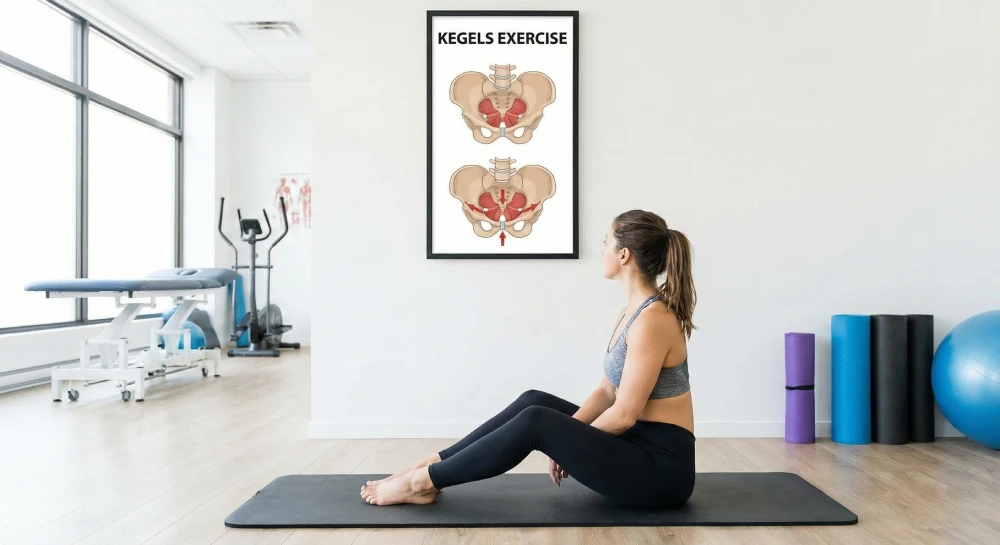
How to do it:
Repetitions: 10 reps, 2–3 times a day
Tip: You should feel a gentle inward lift, not a strong squeeze.
These help improve muscle coordination.
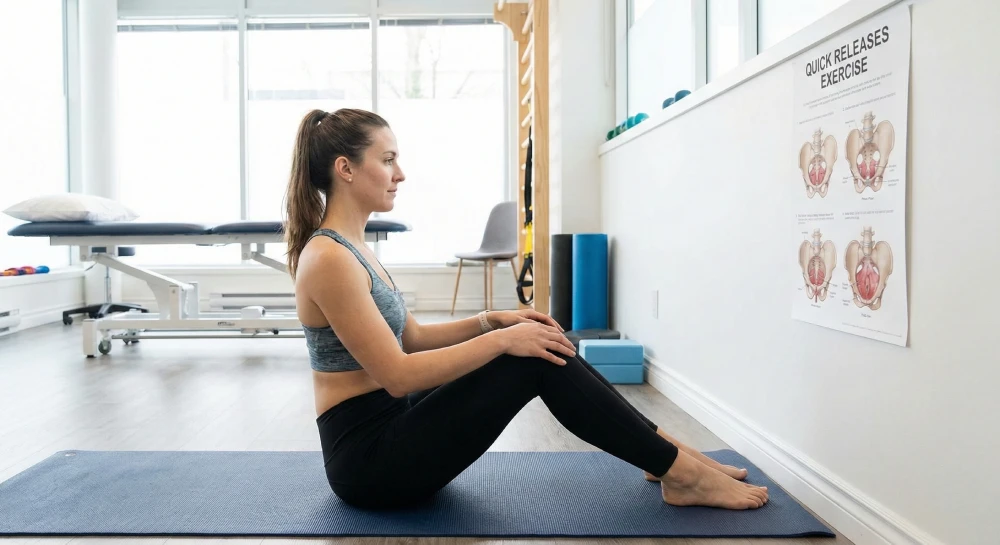
How to do it:
Repetitions: 10–20 quick squeezes
Pelvic tilts help loosen the muscles in your lower back and pelvis and improve movement and breathing coordination.
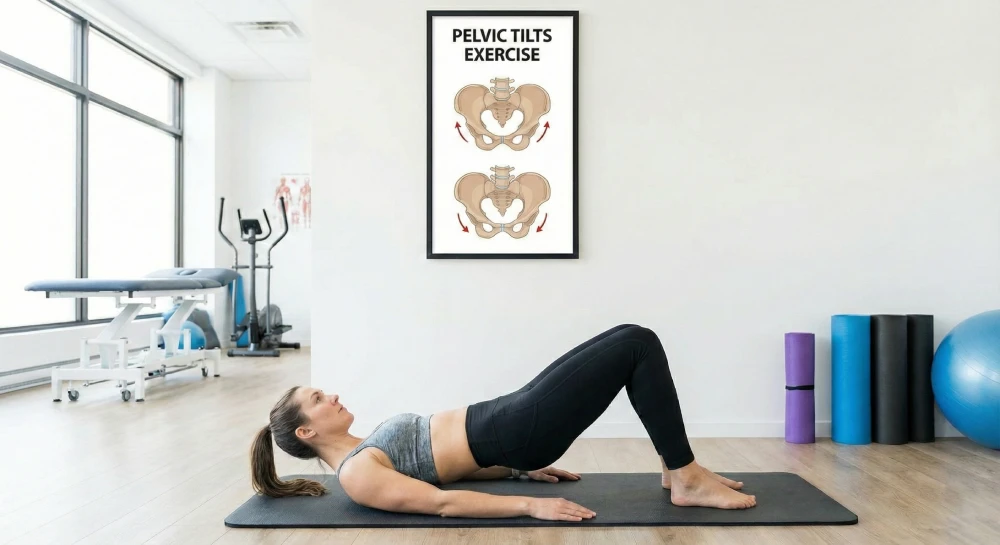
How to do it:
Repetitions: 10–15 reps
This exercise strengthens the pelvic floor and glute muscles.
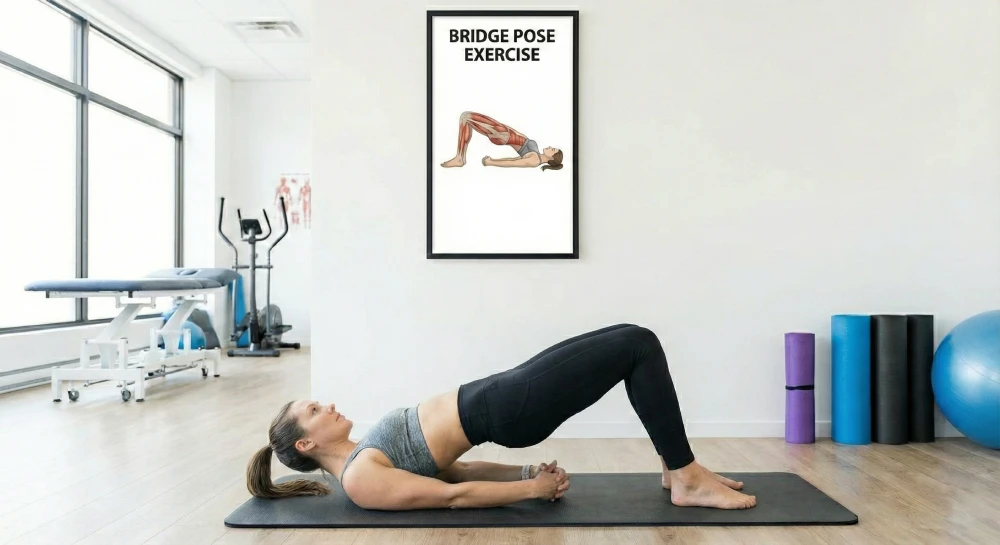
How to do it:
Repetitions: 10–12 reps
Relaxing the pelvic floor is just as important as strengthening it.
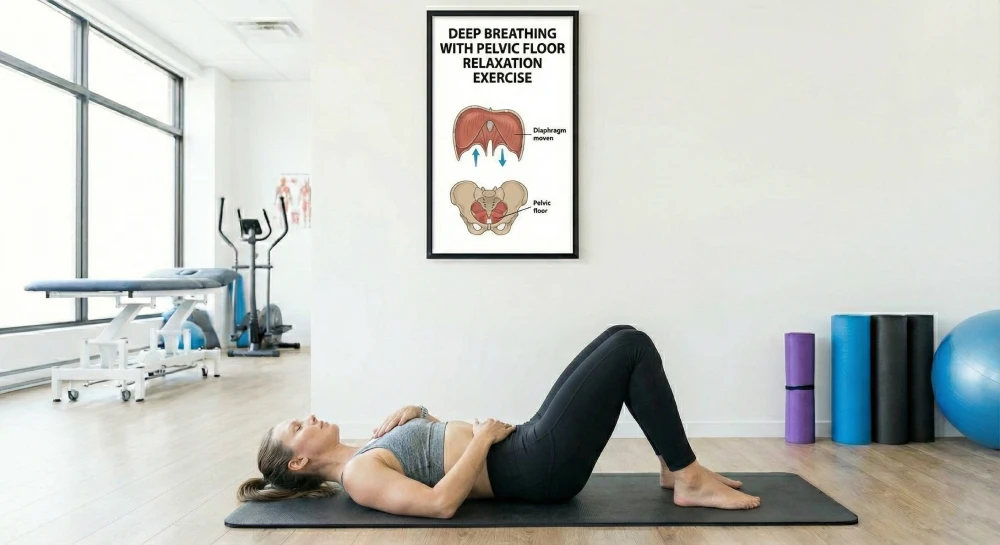
How to do it:
Repetitions: 5–10 slow breaths
Doing pelvic floor contractions while urinating can cause bladder issues. Always relax your muscles during urination.
Results vary for each person. Most people notice improvement within 4 to 8 weeks of consistent practice. Be patient and stay consistent.
Consider seeing a professional if you experience:
A pelvic floor physiotherapist can create a personalized treatment plan and ensure you are exercising safely and correctly.
Pelvic floor exercises are simple movements that help strengthen the muscles that support your bladder, bowel, and pelvic organs. These muscles play an important role in bladder control, core strength, and sexual function.
You should aim to do pelvic floor exercises every day. Most beginners start with 10 repetitions, 2 to 3 times per day. Consistency is more important than intensity.
Most people start noticing improvement within 4 to 8 weeks of regular practice. Some may notice changes sooner, while others may take a little longer.
Yes. Pelvic floor exercises are one of the most effective ways to improve bladder control and reduce leakage caused by coughing, sneezing, laughing, or exercise.