Bright elastic tape strips are everywhere-from Olympic runners to weekend hikers. Some people swear by the support and pain relief. Others call it placebo. The truth sits in the middle: kinesio taping can help in specific situations, especially alongside rehab-not as a stand-alone fix.
You’ve likely seen it out there during the Olympic Games-bright bands clinging to runners’ backs near a cliffside path, or elastic strips zigzagging over joints. The look has become familiar: on hikers, cyclists and weekend walkers too.
It might be helping-or maybe it just looks sharp in motion. Some say it provides support. Others whisper “placebo.” It stays put for days, breathes through its weave and slowly fades after showers, sun and sweat. Muscles feel soothed, swelling seems reduced and movement can feel “different.” Whether that change is physical, psychological or both is hard to separate.
Here’s our perspective after using kinesio tape in real sessions (not just theory). It isn’t magic and it isn’t useless. In the right case, with the right application, it can help. We base that view on what research actually shows and what we see on clinic floors. Most of the result depends on the person underneath the tape.

Understanding Kinesio Taping
Kinesio taping was developed in the 1970s by Japanese chiropractor Dr. Kenzo Kase. Unlike rigid athletic tape, kinesio tape is lightweight, mostly cotton, and elastic-typically stretching to about 130–140% of its original length, similar to how skin naturally moves.
When applied by someone trained, the tape is positioned to create a small lift at the skin’s surface. That subtle lift may influence deeper tissues such as fascia, help guide fluid through the lymphatic system, and/or change sensory nerve input related to movement and positioning.

What the Evidence Says
Kinesio tape can help-just not on its own. Research trends suggest it works best when paired with other rehab strategies and benefits are usually modest and short-term.
Pain relief (often modest, often short-term)
Several high-level reviews suggest kinesio taping can reduce pain slightly, especially for areas like the shoulder, knee and low back. It tends to perform better than doing nothing, but effects are not typically large and may fade when active treatment stops. Not everyone responds the same way, but small improvements can still matter during daily movement and rehab.
Proprioception (body awareness)
Tape can improve awareness of joint position by increasing sensory feedback-sometimes particularly helpful in the early stages after injury.
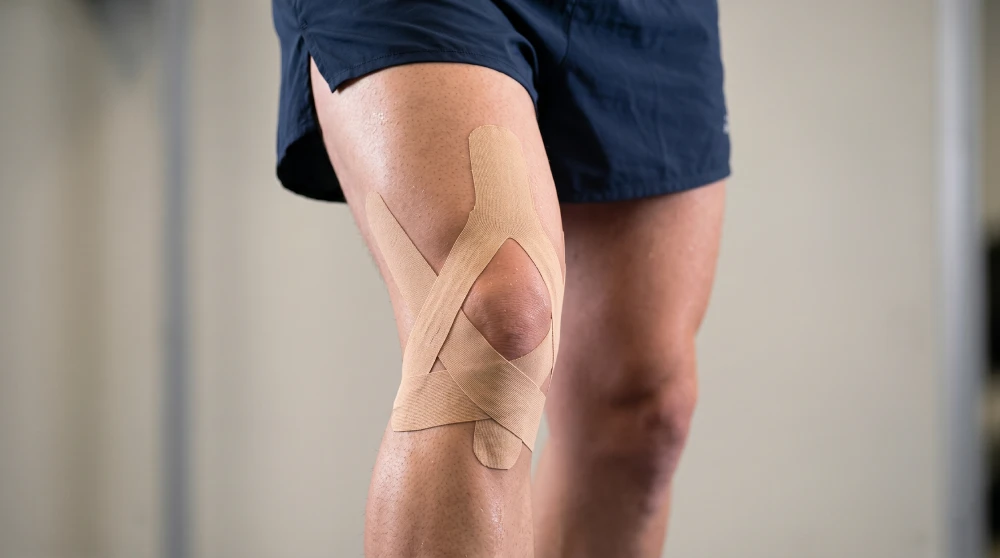
Swelling reduction (lymphatic techniques)
“Fan” or lymphatic taping techniques may support fluid movement after trauma or surgery. Evidence suggests swelling can decrease with consistent, appropriate application-helping recovery without adding extra strain.
Muscle tone and movement patterns
Some applications aim to reduce overactivity in tense muscles and improve recruitment in underactive ones. The goal is better balance and movement coordination-not “instant strength.”
What kinesio tape does not do
- It won’t build strength-only training and rehab progressions do that.
- It won’t heal the root cause of pain or tissue damage by itself.
- It is not meant for rigid joint immobilization (that’s the job of stiff athletic tape/bracing).
When Clinicians at Sterling Physiotherapy (Hamilton) May Choose Kinesio Tape
We use kinesio taping selectively-when it complements a bigger rehab plan. Common examples include:
- Shoulder impingement / rotator cuff issues: to support scapular positioning and reduce strain while movement patterns are retrained.
- Runner’s knee / anterior knee pain: to help guide patellar tracking and reduce discomfort during activity while mechanics are addressed.
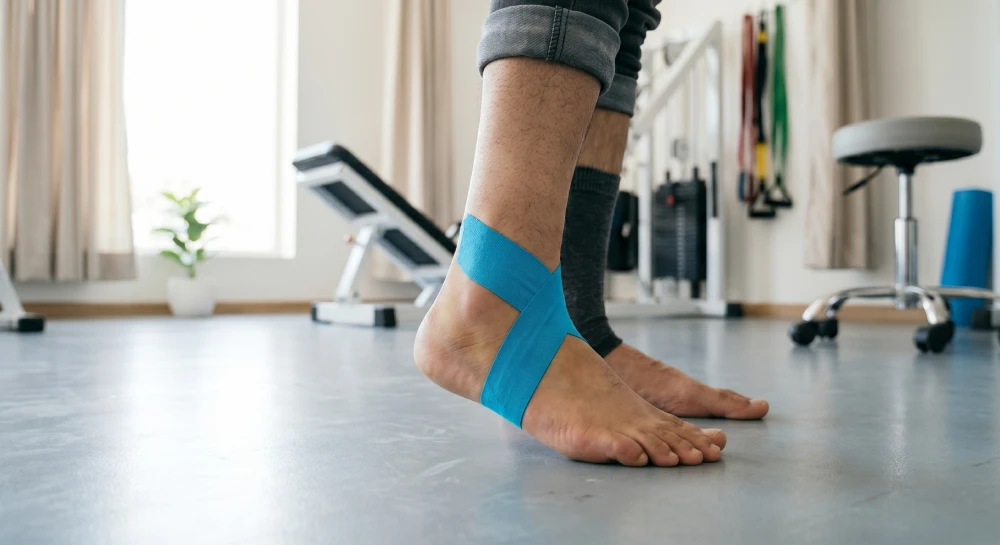
- Ankle sprains: early-stage support for swelling control and proprioceptive feedback.
- Acute low back flare-ups: lumbar decompression-style taping for short-term symptom relief.
- Postpartum diastasis recti: supportive applications used alongside pelvic floor and core rehabilitation.
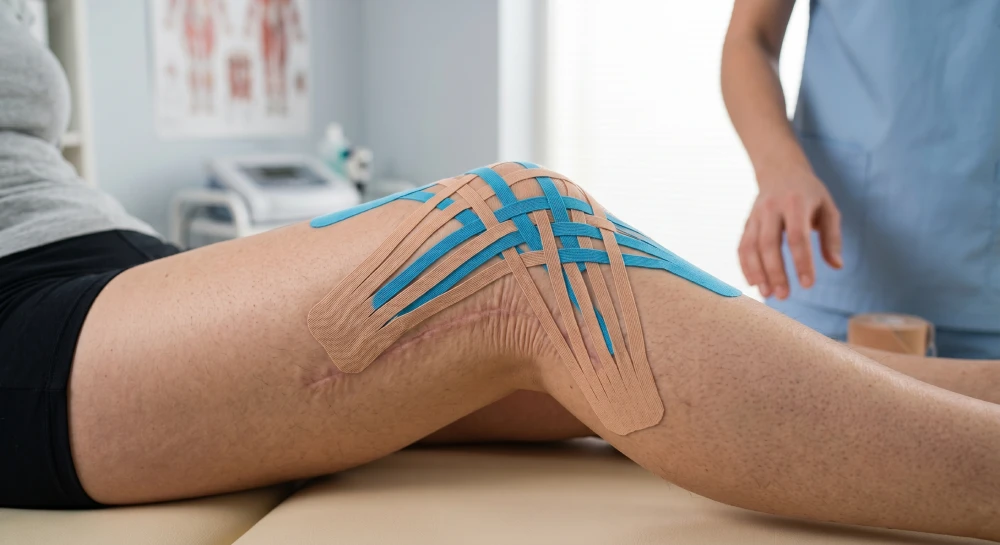
- Post-surgical swelling: lymphatic techniques after procedures involving the knee or shoulder.
Applying Kinesio Tape on Your Own?
Kinesio tape is widely available but placement, direction, stretch level and skin prep all matter. Applied incorrectly, it can be ineffective-or occasionally increase irritation or discomfort.
For your first few applications, it’s safest to have a physiotherapist apply the tape based on your specific condition, then teach you how to replicate it correctly at home.
Bottom line: kinesio tape is a useful add-on for the right person and the right problem. It’s not a cure by itself, but it can support comfort and movement while rehab does the real work.
Research shows kinesio tape provides modest short-term pain relief, especially for shoulder, knee, and lower back pain. Multiple systematic reviews confirm it works better than doing nothing, though results are typically small to moderate. It is not a "magic bullet"; it works best when combined with other physiotherapy treatments like exercise and manual therapy.
Kinesio tape is designed to stay on for 3–5 days. The adhesive remains effective through showers, sweating, and light activity. However, the tape gradually loses its elasticity and effectiveness after exposure to water and friction. You should remove it slowly, especially when wet, to avoid skin irritation.
No. Rigid athletic tape (like zinc oxide tape) is designed to immobilize and restrict joint movement completely. Kinesio tape is elastic, stretching up to 130–140% of its original length (similar to human skin). It allows movement while providing support, sensory feedback, and lifting the skin to improve circulation.
While you can buy the tape at a pharmacy, proper application technique is critical. If the tension or placement is wrong, it can worsen discomfort or fail to provide benefits. We recommend having a physiotherapist apply it initially to ensure the correct method for your specific injury. Once shown the technique, you can often replicate it at home for maintenance.