The one everyone forgets? That’s where we start. Not the usual picks, not the crowd favorites - this is different. A quiet part of movement. Overlooked. Always working but never mentioned. You don’t hear cheers for it. Doesn’t show in mirrors. Still matters.
Picture someone limping after a game, maybe a jogger clutching their leg. Yet far from the sidelines, inside clinics across Hamilton, quiet struggles unfold daily - bodies worn down by something never shouted about at dinner tables. Stiff backs, weak joints, pain buried under silence. Many wait, sometimes years, avoiding care not due to lack of need but shame wrapped around words like "incontinence" or "pelvic floor." Physios see it all, hands-on with issues folks whisper about only behind closed doors.
We are talking about Pelvic Health.
Pelvic floor physio isn’t just for new moms, even though many think so. True, helping after childbirth takes up plenty of our time. Yet that’s merely one slice of the full picture.
Not just moms - men too, older people no matter their gender, even those who’ve never had kids, plus serious athletes can struggle down there. Leaking a little when you cough, constant discomfort deep inside, or suddenly needing to run to the bathroom aren’t things you should shrug off. These issues? They’re common, sure - but normal they’re not.
Here at Sterling Physiotherapy, care happens in quiet rooms where no one rushes you. What your body holds matters - this guide shows how the pelvic floor works, also why strength returns slower than expected. Help arrives through small steps, never pressure.
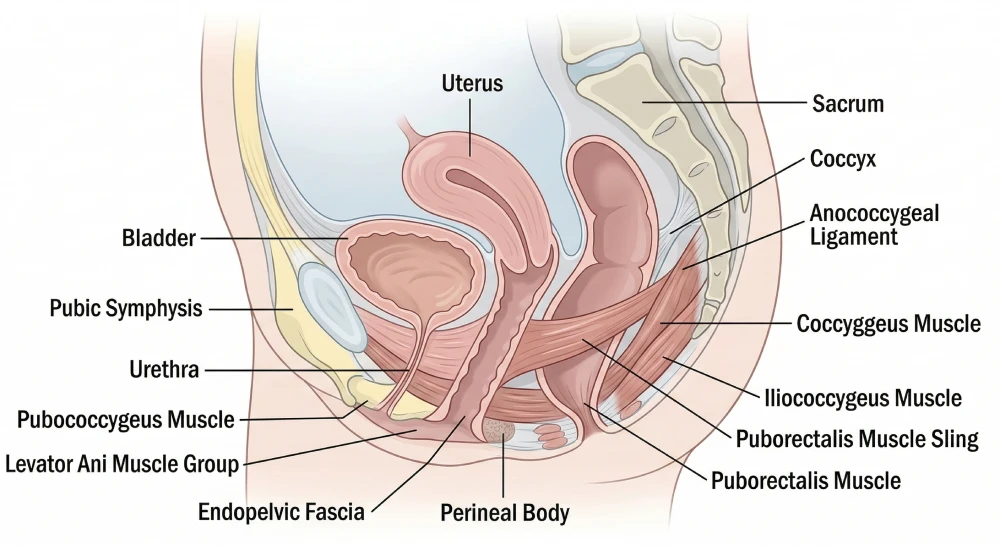
Understanding the Pelvic Floor?
[Image of the human pelvic floor muscles anatomy]
Your pelvis - that's the base of your trunk - works like a bowl. Inside it, muscles form a sling, much like a net hung low. From the front, where your pubic bone lies, all the way to your spine's end, they span across. These fibers make up what you call the pelvic floor.
Working together, these muscles handle three key tasks:
- Support: Pelvic muscles keep your bladder, uterus, and rectum in place when you stand. These tissues resist downward pressure every day. Gravity pulls on everything inside, yet structure maintains position. Organs stay where they belong because support systems work silently. Without that base, movement would shift things too far down.
- Control: Wrapped tight around your urethra and back passage, these muscles manage when things open or shut - so leaks stay avoided till you decide. Their grip holds everything in check without warning. Timing stays yours, not fate's. Closed means closed, unless you say otherwise.
- Sexual Function: Feeling during sex? That comes down to these nerves, working just the same no matter who you are.
A single muscle - say, near your hip or upper arm - might lose strength over time. Or it might shorten, staying locked in stiffness. Either state leads to real trouble down the line.
Myth Buster: "It’s Just Part of Aging"
We hear this all the time. A patient in their 50s tells us, "I leak a little when I laugh, but that’s just what happens when you get older, right?"
Actually, it's not right. Even though many women deal with incontinence - one out of three - it doesn’t mean it’s supposed to happen. This issue points to something off in how the body works. At twenty-five or eighty-five, jumping, laughing hard, chasing after a bus, lifting a grandkid - none of these should come with worry about leaking.
Who Might Benefit From Pelvic Floor Therapy?
More than expecting a baby brings folks through our doors. What else shows up often at our Hamilton spot? Think headaches, ongoing back tightness, trouble sleeping, stress that sticks around, knee discomfort after walks, stiff shoulders from sitting too long, digestion issues with no clear cause, fatigue even after rest, neck strain from phone use, dizziness for no obvious reason, recovery support after injuries, and help managing everyday wear and tear.
- 1. Stress Urinary Incontinence: Pressure builds up, then out it comes - a little leak when you cough. A sneeze hits hard, suddenly there's a drip. Laughter shakes things loose, surprise follows. Jumping jolts the system, spillage slips through. Even those box jumps at CrossFit aren’t safe from blame. Weakness is often behind it. When belly pressure jumps, the muscles can’t squeeze shut quickly or firmly enough to seal off the tube that carries urine.
- 2. Bladder Urgency and Frequent Urination: Starting your day knowing exactly where each restroom sits across Hamilton? Maybe three or more bathroom stops after dark are part of your nightly rhythm. Something small might set it off - maybe just tension, maybe your nerves acting on repeat. Signals fire before they should, making you think the bladder is full when it isn’t.
- 3. Pelvic Pain Affecting Men and Women: Pain shows up near the tailbone, in the genital area, or deep in the lower belly. Sitting can turn a dull ache into something sharper. Sex might stir it up too. Pressure tends to fuel the discomfort. A flare-up may come on slowly or hit suddenly. Location varies but stays low in the body. Movement sometimes eases it, though not always. A clenched fist held too long brings pain. So it is with some pelvic floor muscles - they stay tense without reason. Stress might start it. A past injury could play a role instead. Tightness builds quietly, like stiffness after standing still for hours. Discomfort follows, not from effort but from holding on.
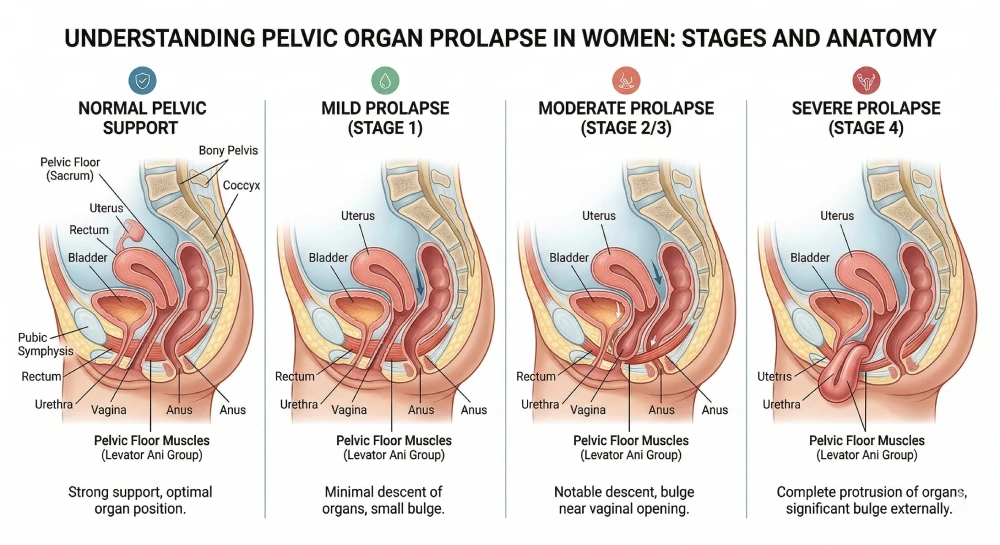
- 4. Prolapse: Something sits low, deep inside the pelvis. Pressure builds where it shouldn’t. A lump seems to push down, near the opening. Fullness grows, without warning. Tissue shifts, barely held. Weight hangs, even when still. The lower half feels off, out of place. [Image of pelvic organ prolapse stages] A dip in the hammock tugs everything lower. When things start to slide down, movement becomes the go-to fix before cutting is considered.
More Kegels Not Always The Answer?
Please Stop Guessing With Kegels!
This mistake shows up more than any other. Search online and you’ll hear “just do Kegels,” yet half the people walking into our clinic find those exercises worsen what they’re dealing with.
When muscles feel weak, doing Kegels could bring some improvement. Not always needed, yet sometimes useful when strength is low. For certain people, these exercises make a difference over time. It depends on the body, but trying them may be worthwhile.
When muscles feel tight - think hypertonic - trying Kegels is much like attempting bicep curls while your arm's locked in a spasm. That kind of move only adds more ache, more strain. Before anything else, the body must relearn release; down-training becomes the necessary step. Relief starts not with squeeze, but with letting go.
This changes everything - getting it checked by someone who knows what they’re doing isn’t optional. Whether things feel too tight, too loose, maybe even both, has to be seen first. Only then does any kind of help make sense.
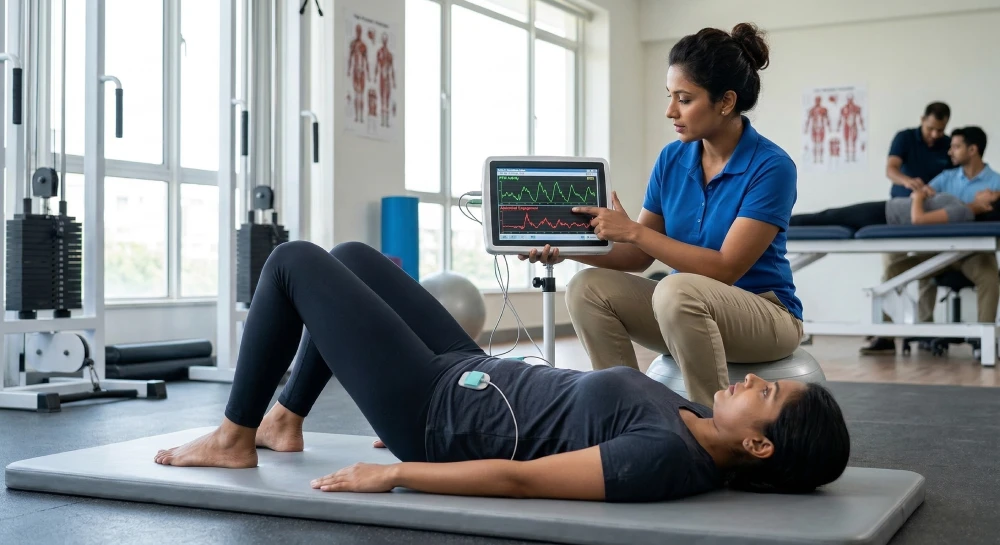
What happens during a pelvic floor check?
Truth is, it might feel overwhelming at first. Yet the goal sits clear - make it less scary.
Come to Sterling Physiotherapy
Starting off, we spend time chatting - it makes up a major piece of the evaluation. Your story matters, so we go into your past health, what you eat, how much coffee shows up in your day (it revs up the bladder, by the way), then shift toward what’s been showing up as problems.
A quick check of your back, how you stand, and your hip position can tell a lot. Because the pelvic floor links closely with your glutes and deep core muscles, trouble often shows up in those areas first.
Some folks skip it, yet many find value in going ahead. A check inside the body - through vagina or rectus pathway - offers clearest clues about how firm or strong things feel. Pressure tested that way tends to reveal what surface touches cannot.
Picture this - nothing like a Pap test. No metal tools. No feet-up position. Just a calm assessment of pelvic muscles, done by a trained therapist. You stay fully aware, always able to pause or say no. The choice stays yours from start to finish.
The Treatment: Retraining the System
Finding the reason usually leads to a fix that works well.
- With biofeedback, learning to reach those out-of-sight muscles becomes possible - then tightening or letting go happens when you choose.
- Every time you rush to pee even when not full, your bladder learns to hold less. A timed plan helps rebuild its usual space slowly. Waiting on purpose teaches it to stay relaxed longer between trips.
- Start by tapping into your deepest abdominal muscle - this one braces the pelvis when movement happens. Instead of just squeezing, think about gently tightening around your waist like a quiet hug. That subtle hold links directly to pelvic stability while working out. Imagine it kicks in before every lift or step. This inner layer does not bulk up - it learns timing. When it fires right, everything below feels steadier. Noticing it takes practice but the cue is light, never forced.
Conclusion
Pelvic health shapes how sure you feel, how you connect with others, yet also touches joy in everyday moments. Worrying about leaks shouldn’t mean carrying pads everywhere - nor skipping workouts out of fear.
If having a child was last month or decades back, there's support ready. Pelvic discomfort affects men too, yet solutions exist.
Start feeling like yourself again. Speak up when you're ready. Reach out now for a personal session with the Pelvic Health experts.
Start your pelvic health check today. Quiet rooms wait, just for you. Experts guide each step without rush. Care fits how you feel, not a script. Results matter most here. Time to listen to your body closely.
Pelvic floor physiotherapy is a specialized treatment that focuses on strengthening, relaxing, and coordinating the pelvic floor muscles. These muscles support organs such as the bladder, uterus, and rectum, and play an important role in bladder control, bowel function, and sexual health.
No. While many women seek pelvic floor physiotherapy after childbirth, it is also helpful for men, athletes, older adults, and anyone experiencing pelvic pain, bladder leakage, frequent urination, or pelvic pressure.
Not always. Kegels are useful when pelvic floor muscles are weak, but they can worsen symptoms if the muscles are already too tight. A pelvic floor physiotherapist can assess whether strengthening, relaxation, or coordination exercises are most appropriate.
During an assessment, the physiotherapist will discuss your symptoms, medical history, and lifestyle factors. They may also evaluate posture, breathing, and core muscle function. In some cases, an internal pelvic exam may be recommended to assess muscle strength and coordination.