
Many believe that all one needs to do following a concussion is rest until the symptoms resolve. However, recent research suggests that in order to return to work, school, or sport as soon as possible, one should instead focus on receiving appropriate rehabilitation at the right time.
If you have been injured during sports, in a motor vehicle accident, at work, or during a fall, it is time to book a concussion assessment with our physiotherapists at Sterling Physiotherapy.
Sterling Physiotherapy in Hamilton offers personalized concussion rehabilitation programs to help you return to your daily activities safely and effectively.
What is a Concussion?
A concussion is a mild traumatic brain injury (mTBI) caused by the brain accelerating rapidly inside the skull due to a direct or indirect blow to the head.
Contrary to popular belief, a person does not have to lose consciousness in order to have a concussion. In fact, most people who have a concussion remain conscious.
Common Causes of a Concussion
- Sports injuries
- Automobile accidents
- Slips and falls
- Workplace injuries
- Bicycle accidents
- A direct blow to the head or body
Symptoms of a concussion may present themselves immediately following the injury or up to 72 hours post-injury.
Common Symptoms of a Concussion
Each concussion is unique—some may see a rapid improvement in their condition while others may struggle with lingering effects of the injury.
Signs You Might Have a Concussion:
- Headache
- Dizziness and vertigo
- Unsteadiness
- Neck pain
- Visual disturbances
- Sensitivity to light and sound
- Difficulty concentrating
- Memory deficits
- Feeling "foggy"
- Sleep disturbances
- Irritability
If you are experiencing most of these concussion symptoms or they prohibit you from performing everyday activities, consider booking a concussion physiotherapy session with our experts at Sterling Physiotherapy.
When Should I Get Physiotherapy for a Concussion?
It is common for people to leave their concussions untreated for weeks or even months following the injury in the hopes that the symptoms will simply go away. However, in cases where symptoms persist for longer than a couple of weeks, it is always a good idea to seek professional medical attention.
You may want to consider seeing a physiotherapist if:
- Your symptoms have persisted for longer than a few weeks.
- Your headaches are getting progressively worse.
- You are struggling to maintain your balance.
- You are unable to concentrate well enough to return to work or school.
- Reading or working on a computer worsens your concussion symptoms.
- Working out induces or aggravates your symptoms.
- Your dizziness is affecting your ability to drive.
- You have suffered multiple concussions.
A professional physiotherapy assessment is always a good option if you are unsure about the cause of your symptoms or if you have suffered a severe injury.
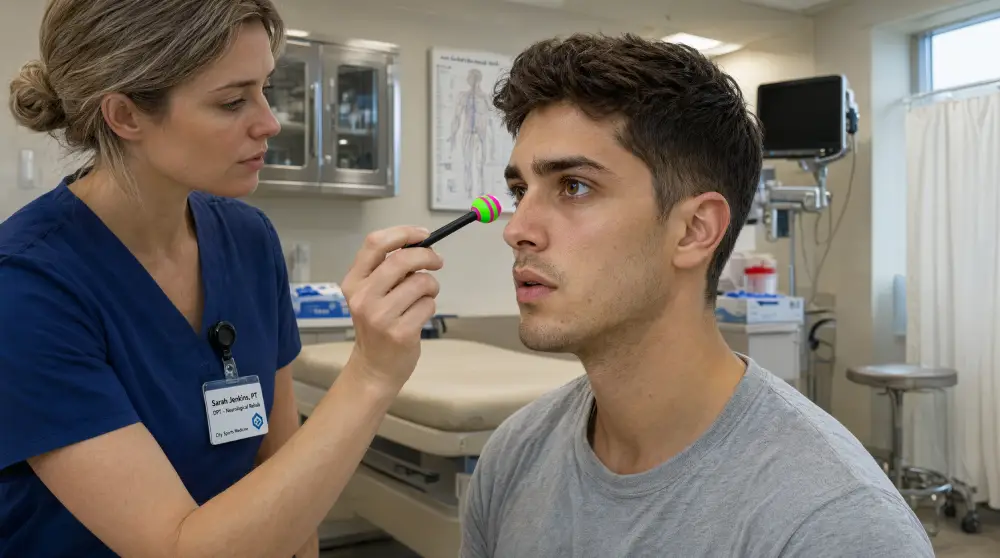
What Happens During a Concussion Physiotherapy Assessment?
Most of our patients wonder what happens during their concussion physiotherapy assessment, so we thought we'd share a bit of an insight into the process.
During your assessment, your physiotherapist will spend some time educating you on your condition while also asking you a series of questions pertaining to your injury, symptoms, current state of health, and personal goals. Some of the tests that may be performed during your assessment include:
1. Medical History Review
Your physiotherapist will review your:
- Date of injury/incident
- How the injury occurred
- Your current symptoms
- History of past concussions and overall medical history
- Activities that you are unable to perform due to your injury
2. Balance Assessment
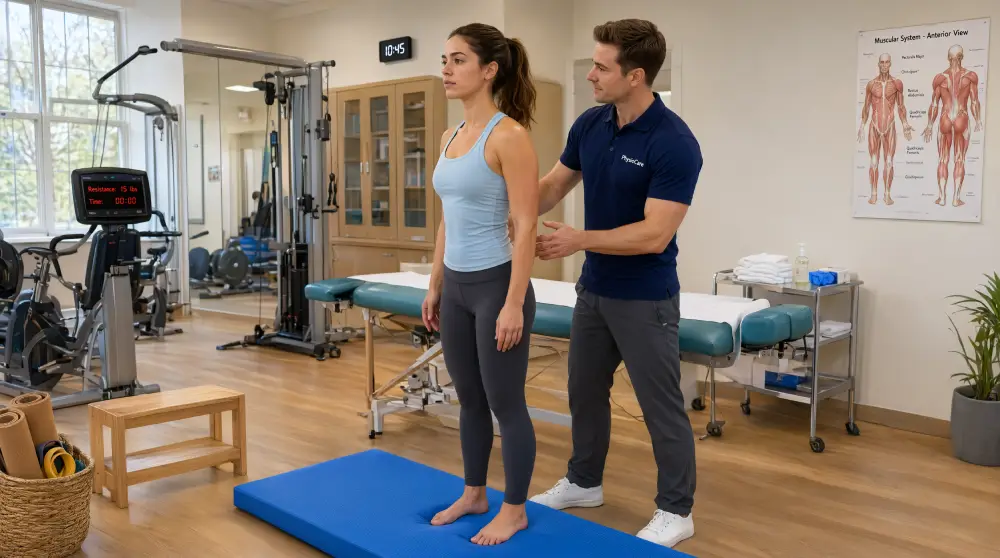
Many people that suffer concussions also suffer from balance difficulties. The physiotherapist will assess your:
- Standing balance
- Gait (walking pattern)
- Coordination
- Stability
3. Vestibular Assessment
Your vestibular system is responsible for helping your body maintain balance and posture. Some of the tests that may be performed during your assessment include:
- Head movement tolerance
- Eye movement
- Motion sensitivity
- Dizziness testing
4. Neck Assessment
Most people that suffer a concussion also suffer from some form of neck injury. The physiotherapist will assess:
- Range of motion
- Soft tissue restriction
- Joint restriction
- Posture
5. Vision Screening
The majority of people with concussions experience some form of visual disturbance. The physiotherapist will assess:
- Eye movements and coordination
- Visual focus
- Reading ability
Following the assessment, your physiotherapist will come up with a comprehensive rehabilitation program that addresses your unique needs and injury presentation.

How Can Physiotherapy Help Following a Concussion?
Recent advancements in concussion management suggest that the focus should be on identifying the systems that have been affected by the injury as opposed to simply suggesting total rest. Physiotherapy treatment for a concussion may include:
Vestibular Rehab
Vestibular rehab is a specialized form of physiotherapy that is used to treat dizziness, imbalance, motion sensitivity, and vertigo. It may involve:
- Balance exercises
- Motion sensitivity desensitization
- Gait training
- Fall prevention
Neck Rehab
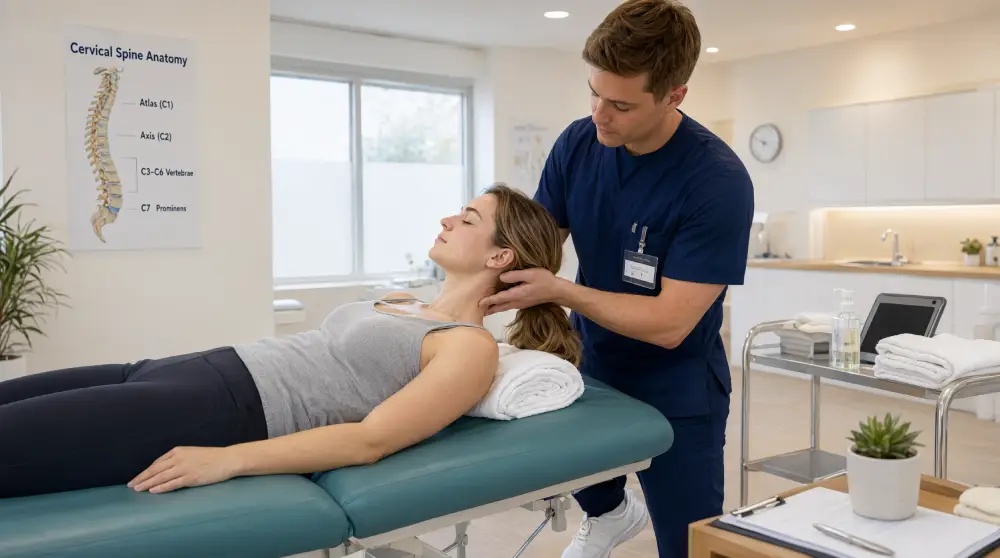
In cases where neck dysfunction contributes to headaches, dizziness, or visual disturbances, physiotherapy treatment may involve:
- Manual therapy
- Soft tissue release
- Range of motion and mobility exercises
Eye Movement Exercises
Physiotherapy treatment for eye movement dysfunction typically involves:
- Reading desk modifications
- Reading/visual tolerance exercises
- Visual tracking exercises
Return to Work/School Program
Your physiotherapist can walk you through an individualized, step-by-step program that will help you safely return to work, school, and sport. Current concussion management guidelines suggest that a gradual return to activity is typically safer and more effective than total rest.
How Long Does It Take to Recover From a Concussion?
The average concussion recovery time varies on a case-by-case basis and largely depends on a number of individual factors including:
- Age and overall health
- Injury severity
- History of past concussions
- Presence of neck or vestibular dysfunction
Most people make a full recovery within a matter of weeks, while some may require longer-term rehabilitation. The best way to manage a concussion is to follow a personalized treatment program that your physiotherapist will design specifically for you. Do not compare your road to recovery to that of someone else's-everybody heals at a different pace.
Tips for Recovering from a Concussion
Some helpful concussion recovery tips may include:
- Getting plenty of sleep and staying hydrated
- Eating healthy foods
- Limiting activities that induce your symptoms
- Gradually building up your level of physical activity
- Taking frequent breaks from screens
- Returning to activity at an appropriate pace
- Following your physiotherapist's home exercise program
- Attending your physiotherapy sessions regularly
Note: It is important to pace yourself during the first few weeks following the injury as trying to be too active or too sedentary can provoke your symptoms.

Why Choose Sterling Physiotherapy for Your Concussion?
At Sterling Physiotherapy, we recognize that each concussion is different. We offer a number of services that can aid in your concussion rehabilitation, including:
- Comprehensive concussion assessment
- Individualized rehabilitation programs
- Vestibular rehab and balance retraining
- Neck pain treatment
- Return to work and return to sports programs
- One-on-one physiotherapy sessions and progress monitoring
Whether your concussion was caused by a sports injury, a slip and fall, or a car accident, our physiotherapists are here to help you recover safely.