
Quick Summary: What is Shockwave Therapy?
Extracorporeal Shockwave Therapy (ESWT) is a non-surgical treatment that uses acoustic pressure waves to accelerate healing and reduce pain in chronic tendon and ligament injuries. It is highly effective for conditions like plantar fasciitis, tennis elbow and rotator cuff tendinitis that haven't responded to traditional physiotherapy.
If you're suffering from persistent heel pain, shoulder pain, or other chronic tendon problems, this article will discuss what shockwave therapy is, what it can be used for, what to expect during a session, and how to know if it's the right choice for you.
What Is Shockwave Therapy (ESWT)?
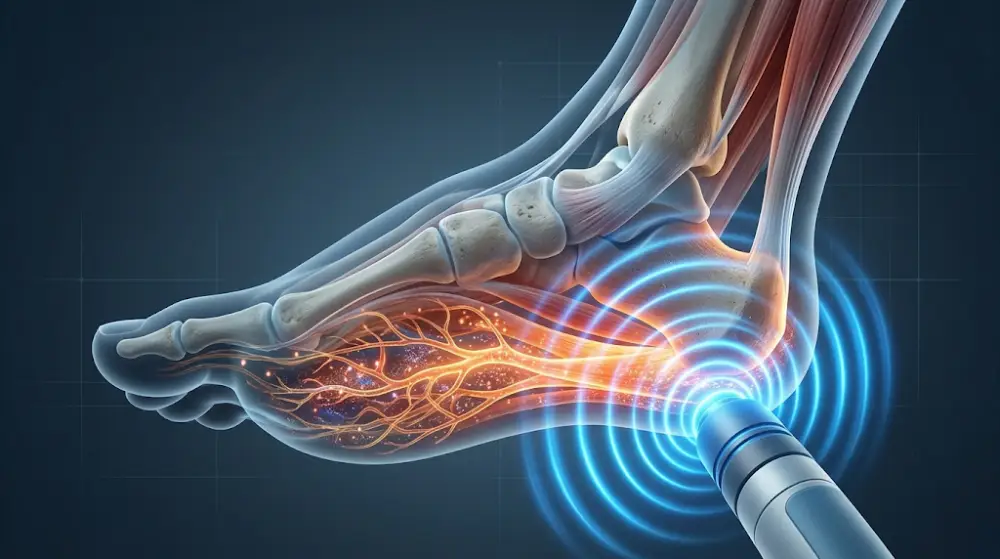
Extracorporeal shockwave therapy, or ESWT, utilizes a handheld applicator to administer short pulses of sound waves through the skin into a target tissue. Initially used to break up kidney stones, it is now widely used in physiotherapy to stimulate the healing of chronic tendonitis and other soft tissue conditions. The intent is not to break up healthy tissues; rather, it causes local circulation improvements and reduces pain signals at the target site.
Mechanism of Action
- Boosts Blood Circulation: Improves flow in low-flow tendon sites.
- Induces Healing: Triggers repair in chronically overloaded tissue.
- Reduces Pain: Lowers pain sensitivity locally for active rehab.
- Breaks Up Calcification: Helps dissolve calcium deposits in shoulders.
Clinical Effectiveness
The effectiveness is most well-established in specific diagnoses like plantar fasciitis and calcific tendonitis. Shockwave therapy should always be considered as part of a broader, personalized assessment and management plan customized by your physiotherapist.
What Are Common Uses For Shockwave Physiotherapy?
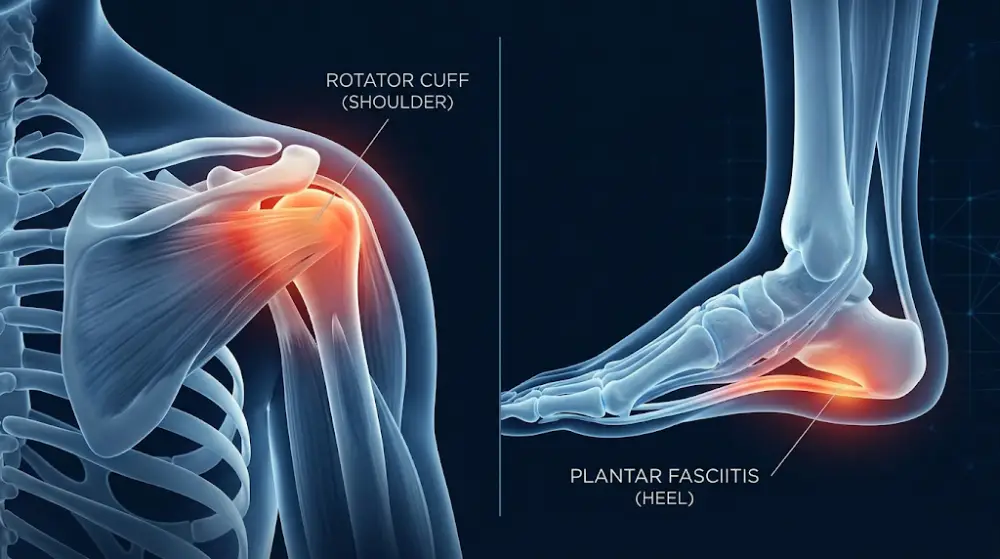
Shockwave therapy is primarily used to treat chronic MSK (musculoskeletal) conditions that have failed to improve with more conservative measures. The most common indications include:
- Plantar fasciitis with heel spur
- Tennis elbow and golfer's elbow
- Achilles tendinopathy
- Calcific shoulder tendonitis
- Rotator cuff tendinitis
- Jumper's knee (patellar tendinopathy)
- Outer hip pain (greater trochanteric pain)
- Shin splints and overuse injuries
What Happens During A Shockwave Therapy Session?
- Assessment: Your physiotherapist will review your history and conduct a musculoskeletal assessment to determine the root cause of your pain and verify if shockwave therapy is right for you.
- Preparation: A specialized coupling gel is applied to the treatment area to ensure optimal transmission of the acoustic sound waves.
- Administration: You will feel a tapping sensation as the applicator is passed over the treatment area. Intensity is adjusted to your comfort level (expect mild soreness).
- Exercise & Rehab Advice: Treatment time is brief (5-10 minutes per area). ESWT is most effective when paired with a tailored strengthening program.
- Resumption of Activity: You can resume normal activities immediately, though the area may feel slightly sore for a day or two.

How Many Sessions Will I Need & When Will I See Results?
Most patients receive between 3 to 6 treatment sessions (usually spaced once per week). However, this varies based on your specific condition, symptom chronicity, and overall health.
While you may notice some pain relief within a few weeks, keep in mind that tendons typically take between 6 to 12 months to fully remodel and heal. For this reason, combining shockwave sessions with progressive strength and conditioning is critical for long-term success.
Is Shockwave Therapy Safe? Are There Side Effects?
Shockwave therapy is generally considered to be highly safe with minimal risks. The most common side effect is minor soreness, redness, or discomfort in the targeted area for 24 to 48 hours post-treatment.
Contraindications
Shockwave therapy should NOT be used if you:
- Are pregnant
- Have an active infection or cancer in the treatment area
- Have blood clotting disorders or take blood-thinning medications
- Require treatment over active growth plates (in children)
How Does It Compare To Other Treatments?
Shockwave therapy is not typically a first-line treatment for acute MSK conditions. Your physiotherapy team will usually begin with patient education, activity modification, manual therapy, and strengthening.
It is reserved for recalcitrant, persistent cases that have failed multiple conservative treatments. Compared to invasive cortisone injections or surgery, shockwave therapy offers significant long-term healing benefits without the surgical risks or extended downtime.
Why Choose Sterling Physiotherapy For Shockwave Therapy In Hamilton?
At Sterling Physiotherapy, we rely on strong, evidence-based assessments to form your effective treatment plan. We don't do "one-size-fits-all."
Instead, we develop a comprehensive management plan that integrates shockwave therapy, manual therapy, and customized strength conditioning. If you're looking for a trusted physiotherapist in Hamilton, we are here to help.
Book Your Shockwave Therapy Assessment Today
Don't let persistent heel, knee, or shoulder pain dictate your life.