Vestibular therapy, sometimes called vestibular rehabilitation, is a form of physiotherapy that focuses on treating dizziness, vertigo and balance problems by retraining the inner ear and brain pathways responsible for the sense of balance. Depending on the cause, treatment may consist of repositioning manoeuvres, eye and head movement exercises, balance and practical coping strategies.
Key Takeaways
- Vestibular therapy resolves dizziness, vertigo, and unsteadiness by retraining the inner ear and brain.
- Highly effective for BPPV, concussions, vestibular neuritis, and general balance issues.
- Treatment safely includes repositioning manoeuvres (like the Epley manoeuvre), gaze stabilization, and balance training.
- Seeking vestibular therapy in Hamilton at Sterling Physiotherapy starts with a thorough, personalized assessment.
If the room spins when you roll over in bed, you feel unsteady on your feet, or dizziness hasn't resolved itself after a head injury or illness, this guide will tell you what vestibular therapy in Hamilton consists of, which conditions it treats and what you can expect.
What Is the Vestibular System?
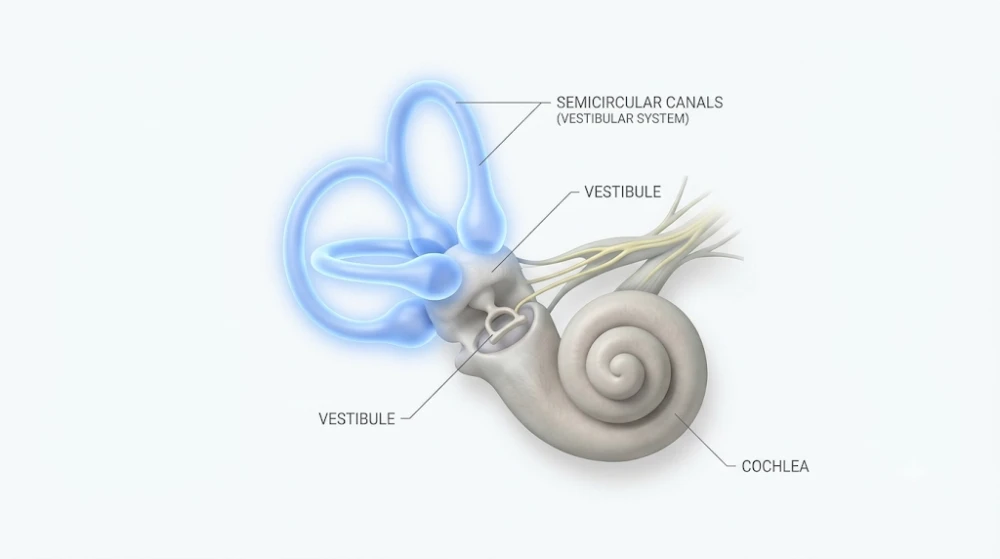
The vestibular system is made up of small organs within each inner ear and the brain pathways it connects to. It constantly sends information to the brain about the head's position and movement and works with the eyes and body sensors to maintain posture and clear vision when moving.
When there is a disruption to the system, the signals sent no longer align and you can become dizzy, off balance, or feel as though the world is spinning.
Common Symptoms of a Vestibular Problem
Patients experiencing a vestibular disruption often notice one or more of the following symptoms:
- Spinning sensation (vertigo): often brought on by rolling over, looking up, or bending down.
- Lightheadedness: or feeling "off" or foggy.
- Feeling unsteady: when walking, especially in the dark or on uneven ground.
- Blurred or bouncing vision: when moving your head.
- Nausea: triggered by head movement.
- Visual sensitivity: to busy environments, such as supermarkets or scrolling screens.
- Ear symptoms: Ringing in the ears or ear fullness (sometimes).
Conditions Vestibular Therapy Can Help
There can be a variety of causes of dizziness including heart, blood pressure, medication, and neurological conditions, so a thorough assessment (and sometimes a medical check) is an important first step. We commonly treat:
BPPV
Benign Paroxysmal Positional Vertigo causes brief episodes of vertigo triggered by head posture changes due to the displacement of crystals in the inner ear. It is the most common condition causing vertigo.
Vestibular Neuritis & Labyrinthitis
Inner-ear inflammation, often following a viral illness, resulting in prolonged dizziness and imbalance.
Post-Concussion Syndrome
Persistent dizziness, fogginess, and balance problems following a head injury.
Other Balance Disorders
Vestibular migraines, neck-related (cervicogenic) dizziness, PPPD (persistent unsteadiness), and age-related fall risks.

What Happens at a Vestibular Therapy Assessment?
The assessment can briefly cause feelings of dizziness, but your physiotherapist will work at a pace that you are comfortable with. You'll leave with a clear understanding and treatment plan.
- History taking: Your physiotherapist will ask what triggers your dizziness, episode duration, head injury/ear problem history, and medications.
- Eye and head-motion tests: A series of tests to determine how well your eyes track and maintain vision with head movement.
- Positional testing: Tests such as the Dix-Hallpike can help accurately identify BPPV.
- Balance and gait assessment: Standing and walking tasks to assess your balance.
- Neck and posture check: To see whether the neck is involved in your symptoms.
How Does Vestibular Rehabilitation Work?
- Canalith repositioning (e.g., Epley manoeuvre): A course of guided head and body positions that move displaced crystals out of the sensitive canal in BPPV.
- Gaze stabilization exercises: Maintaining a clear visual field as your head moves.
- Habituation exercises: Gradual, repeated exposure to movements or situations that trigger dizziness, allowing the brain to adapt so symptoms subside.
- Balance and gait training: Progressive tasks to restore confidence and physical stability.
- Neck treatment: Posture work and manual therapy where applicable.
- Education: Pacing strategies to successfully return to work, driving, exercise, and daily life.
How Long Does Vestibular Therapy Take?
Depending on the cause of your symptoms, treatment for BPPV can often be successfully completed in one or a few sessions once it has been correctly identified, although it can sometimes recur. For other vestibular conditions, regular exercises are often required for a number of weeks—typically 6 to 12 weeks. The brain often needs to be regularly challenged in order for improvements to happen, even though it might be unpleasant at first.
Vestibular Therapy and Concussion Recovery
Dizziness, visual motion sensitivity, and balance trouble are often seen after a concussion. If symptoms are persisting, vestibular therapy can be an important component of the rehabilitation plan, along with treatment to the neck and a graded return to activity. If this sounds like you, check out our comprehensive guide to concussion physiotherapy in Hamilton for more information.

When to Seek Urgent Medical Care
Seeking medical care, including going to the emergency room or calling 911, is important if dizziness occurs with accompanying face drooping, slurred speech, arm or leg weakness, double vision, a sudden severe headache, chest pain, or difficulty walking. Sudden hearing loss in one ear is another critical reason to seek urgent medical help.
Why Choose Sterling Physiotherapy for Vestibular Therapy in Hamilton?
At Sterling Physiotherapy, your dizziness is taken seriously and explained clearly to you. You will receive a thorough assessment, an accurate diagnosis (where possible), and a clear plan that enables you to get back to your normal life, supported and confident.
If you are searching for a highly-rated physiotherapist near you in Hamilton for dizziness or vertigo, we are here to help.
Book a Vestibular Therapy Assessment in Hamilton
Dizziness can make everyday life unpredictable, but it is often very treatable. Get answers and start feeling better today.

Disclaimer: This article is for informational and educational purposes only and should not be used as a substitute for professional medical advice. Please consult a qualified healthcare professional regarding your medical condition or diagnosis.
Stop the Spinning
Our Hamilton physiotherapists specialize in vertigo, BPPV, and balance disorders.
Sterling Physiotherapy
505 Rymal Rd E, Hamilton, ON L8W 3X1
Call: (289) 401-2900
It is physiotherapy for dizziness, vertigo and balance problems caused by inner-ear or brain balance-pathway issues, using repositioning manoeuvres and targeted exercises.
Repositioning manoeuvres like the Epley often resolve BPPV in one to a few sessions after a correct diagnosis. It can return, so you'll learn what to do if it does.
BPPV may improve within a few visits. Other conditions often need 6 to 12 weeks of regular exercises, depending on the cause.
In Ontario you can book physiotherapy directly without a referral. Check with your insurer, as some plans have their own requirements.