

Pelvic floor physiotherapy specializes in helping clients learn how to strengthen, relax, and coordinate their pelvic floor muscles to treat conditions such as bladder leaks, pelvic pain, and feelings of pelvic heaviness. It is a non-surgical first line treatment for many patients and is appropriate for anyone with a pelvic floor, including women, men, and people of all ages.
Quick Summary: At a Glance
- Who it is for: Women, men, and individuals of all ages experiencing bladder/bowel leakage, pelvic pain, prolapse symptoms, or postpartum/post-surgical recovery.
- First Visit: Includes a private consultation, breathing/movement check, and an always optional internal or external assessment.
- Expected Timeline: Most patients notice meaningful symptom improvement within 6-12 weeks of targeted therapy.
What is the Pelvic Floor?
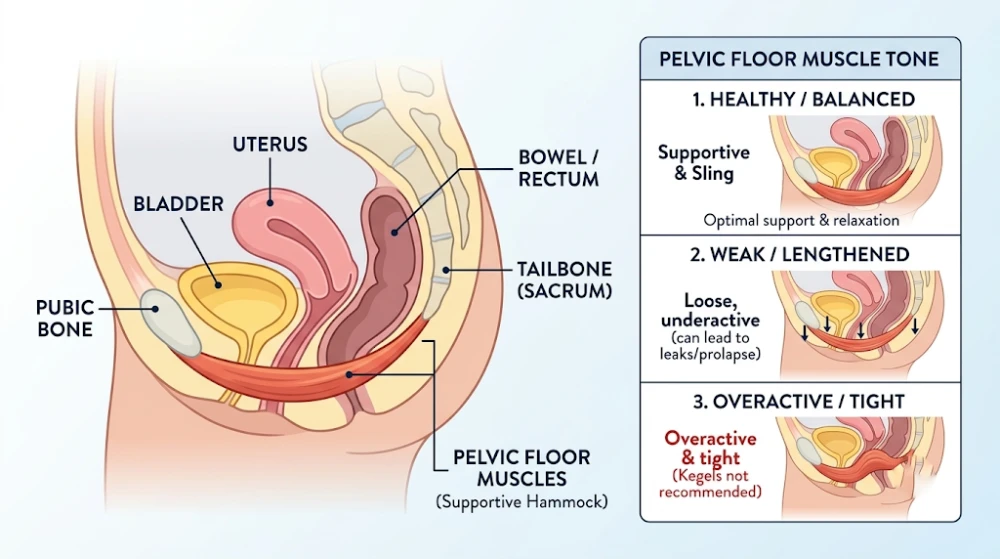
The pelvic floor refers to a group of muscles and connective tissue that form a muscular 'hammock' at the bottom of the pelvis. The pelvic floor supports the bladder, bowel, and female reproductive organs, controls the release of urine, stool and semen, contributes to core stability and plays a role in sexual function.
Like any muscles in the body, pelvic floor muscles can become weak, overactive and tight, or dysfunctional in their coordination. Each type of dysfunction presents different symptoms and requires different treatments. That is why simple advice to 'do kegels' is not always effective, and can even be detrimental if the muscles are already too tight.
Common Signs That You Might Benefit from Pelvic Floor Physiotherapy
It is estimated that one in three women will experience bladder leakage in her lifetime. It is not a normal part of aging, and while it is common, it is certainly not inevitable.
Conditions Pelvic Floor Physiotherapy Can Help With
- Stress and urge urinary incontinence
- Post-partum recovery following vaginal birth or caesarean
- Pregnancy related pelvic and low back pain
- Symptoms of pelvic organ prolapse
- Chronic pelvic pain and overactive (tight) pelvic floor
- Painful intercourse
- Constipation and bowel program concerns
- Pre and post prostate or gynaecological surgery
What to Expect at Your First Pelvic Floor Physiotherapy Appointment
It is normal to feel nervous at your first appointment. Here's what to expect:

How Does Pelvic Floor Physiotherapy Help?
- Strengthening programs for weak pelvic floor muscles
- Down training or relaxation techniques for overly active, tight pelvic floor muscles
- Breathing and core engagement strategies for better coordination and to reduce pressure on the bladder
- Education and management of bowel and bladder patterns and concerns
- Soft tissue release for tight muscles or connective tissue in the pelvis, hips, or abdomen through targeted manual therapy
- Progressive return to desired activities such as running, weight training and sports

Pelvic Floor Physiotherapy Following Pregnancy and Childbirth
Pregnancy and vaginal childbirth places enormous strain on the pelvic floor and abdominal muscles, and it is common to experience leaking, heaviness, or pain in the pelvic floor following delivery. Physiotherapy can help you recover pelvic floor function following both vaginal delivery or caesarean section, and can also help you safely return to sport and pelvic floor exercises. Physiotherapy can also help to manage back, hip or pelvic pain during pregnancy. You don't have to wait until after pregnancy to start pelvic floor physiotherapy.

How Long Will It Take to See Results?
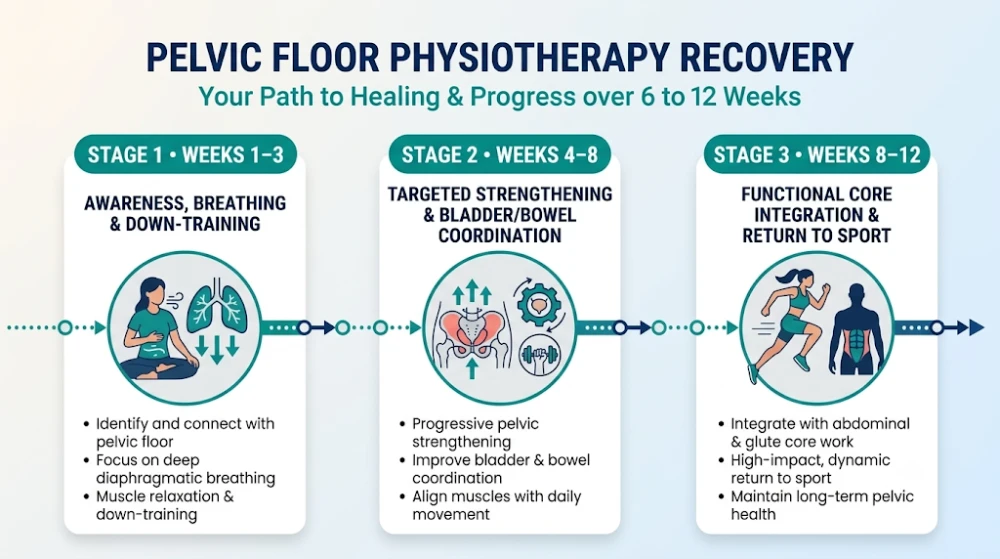
Most people will start to see improvements in their symptoms after 6-12 weeks of consistent pelvic floor exercises and bladder/bowel programs. Every person is different and results depend on the length of time their pelvic floor has been troubled, as well as the underlying cause. The pelvic floor muscles are not ones we can simply 'switch on' at will-they require time and patience to retrain.
When Should I Seek Medical Attention?
Call your doctor or visit the emergency room if you experience:
- Blood in your urine or with fever or burning sensations during urination
- New urinary or bowel concerns
- Inability to control your bowels or bladder with numbness around the groin or inner thigh
- Severe back pain with numbness or weakness in the legs
Why Choose Sterling Physiotherapy Pelvic Floor Physiotherapy in Hamilton?
At Sterling Physiotherapy, we understand that pelvic floor physiotherapy is a very personal and intimate part of your health and we take the time to build a thorough understanding of your concerns, goals, and lifestyle. We provide compassionate and individualized care, with a focus on what you need without pressure or judgment. If you are searching for a pelvic floor physiotherapist near you in Hamilton, we are here for you.
Book a Pelvic Floor Physiotherapy Assessment in Hamilton
Leakage, pain, and pressure are common concerns, but the good news is that the help is available. Book a physiotherapy assessment with Sterling Physiotherapy or call us on (289)-401-2900 to arrange your first appointment today.
Located Inside Rexall, 505 Rymal Rd E, Hamilton, ON L8W 3X1 • Direct Billing Available