 ★★★★★
( 5 Star Reviews)
★★★★★
( 5 Star Reviews)
Sterling Physiotherapy is a trusted clinic in Hamilton with 240+ real Google reviews for Physiotherapy, Vestibular, TMJ Dysfunction, Massage therapy and Custom orthotics.
Hamliton’s famous for more than metal - some call it the Waterfall Capital on Earth. Thanks to a hundred falls scattered around, plus the huge Niagara Cliff running nearby, there’s no shortage of wild spots to explore outside.
From the wide-open sights at Dundas Peak to the rough steps on the Chedoke Radial Trail, or the many twisting routes along the Bruce Trail - locals here just can’t get enough of hiking. So what’s stopping anyone? It hits right: helps shake out thoughts while building up strength.
Still, being physio folks, we catch plenty of what comes after peak hike time. Come Monday at Sterling Physio, we get hit with a rush - keen weekend trekkers who pushed hard on paths their muscles couldn’t handle yet.
When you're prepping for a long trail hike or simply walking up to Tew’s Falls on a lazy afternoon, your body deals with special challenges. This article breaks down how hiking affects movement patterns in your legs and joints. Ever wondered what causes that nagging pain some call hiker’s knee? We’ll go into what triggers it. Besides explaining the root issues, we cover key warm-up moves before hitting dirt paths - so you skip injury drama later.
A lot of people think hiking’s only walking but prettier. Though it uses the same motion, rough ground makes all the difference.
Walking along a level path in central Hamilton, your stride follows a set pattern. One foot hits the pavement, shifts weight forward, then propels ahead without swerving. There’s no bump or give - just solid, uniform ground beneath each step. The ridge looks unique.
If your joints don't move well or your muscles tire fast, one leads to the next - setting up a chain reaction that invites injuries.
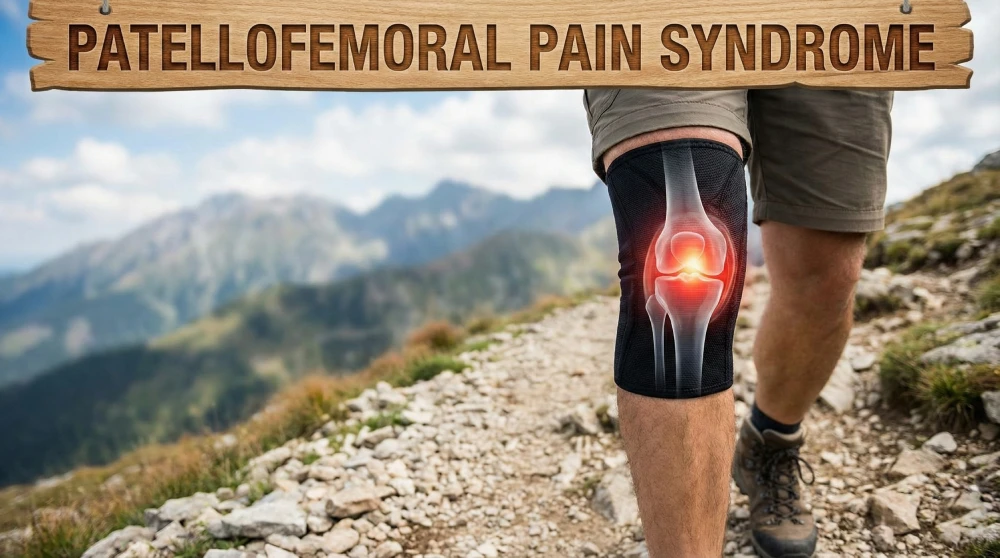
Ever had a sudden, nagging ache beneath your knee, like when walking down a hill? That’s often called runner’s knee.
When going downhill, your quad muscles slow things down. But if those muscles feel stiff or aren’t strong enough, slowing gets messy. That mess means your kneecap doesn’t move right. Instead, it rubs wrong in the slot on your thighbone.
The fix? Work on the VMO - the small muscle by your inner thigh - while loosening up stiff IT bands that pull things out of line.
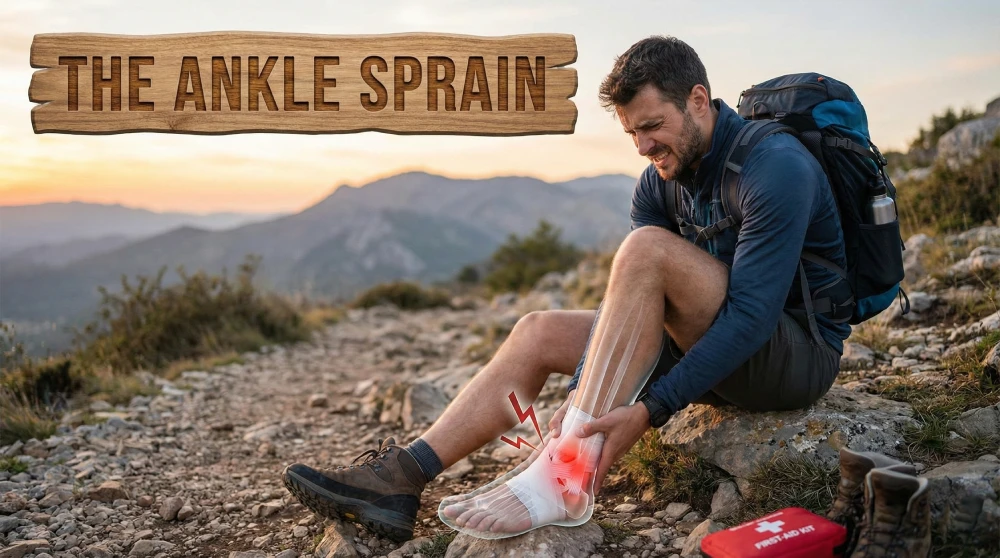
A single wrong step on a concealed tree root near Webster’s Falls - that’s all it needs.
Here’s why this goes down: usually, you’re just wiped out. Late into a trail, once legs feel heavy, your body’s awareness - like knowing where your foot is - starts fading. That means responses get sluggish; one quick misstep, maybe on a loose rock, then suddenly, twist - it’s done.
The solution? Try balance exercises. Tough ankles aren’t only built by strength - they rely on quick nerve signals that lock your joint in place the moment you slip.
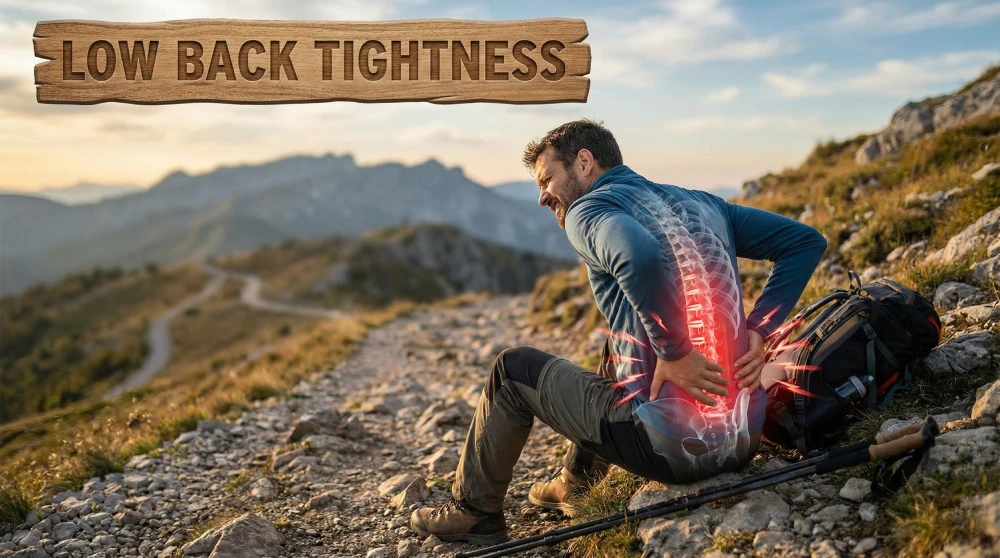
Ever get done walking and feel totally crooked?
Here’s why this occurs: short hip muscles. While walking uphill, you bend your hips again and again. If those front hip muscles feel stiff, they tug at your lower spine - making your back curve too much (called lordosis), which leads to pain.
The solution? Try stretching your hip flexors deeply while waking up your glutes with simple moves.
You wouldn’t floor it down the highway in first gear while ignoring the engine warm-up. So skip charging straight onto the trail with stiff legs. Do this moving prep right where you park - yep, even if it’s just asphalt around you - before stepping off.
Note: Try moving stretches before you start, instead of holding still ones.
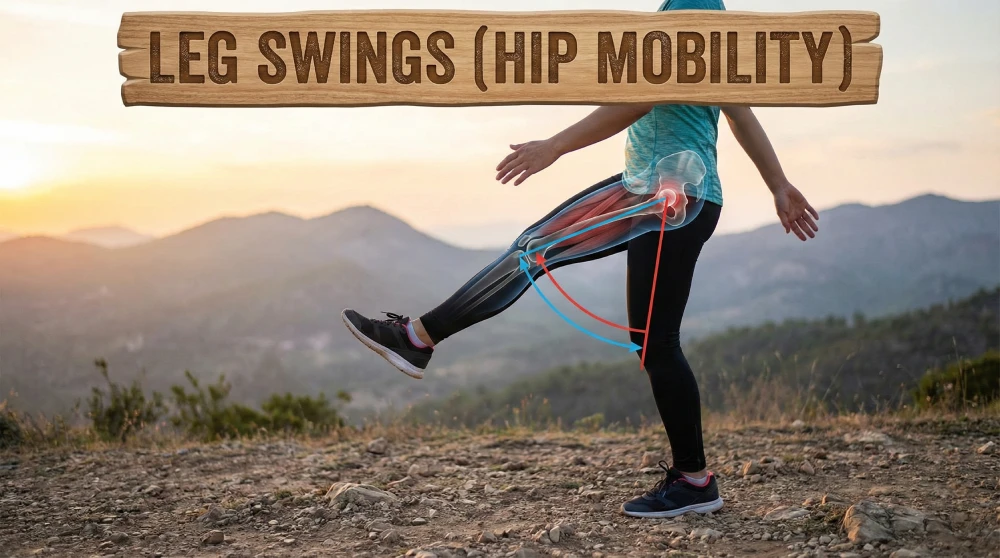
Focus on hip flexors along with hamstrings.
Grab a tree or your vehicle to stay steady. Move one leg back and forth slowly, like a sway. Stay straight up - no leaning, only move the limb.
Reps: Do 15 swings with one leg, then switch - same on the other side.
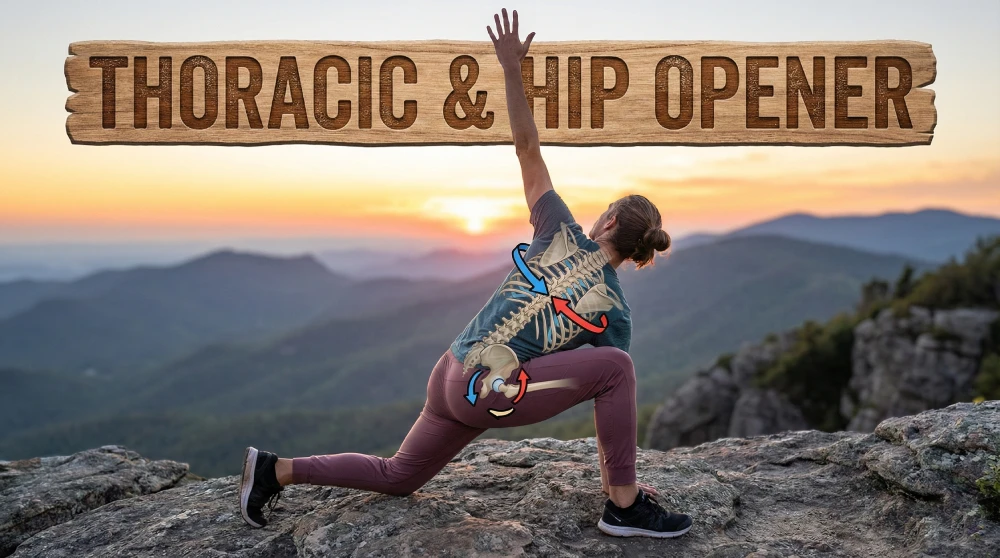
Almost anything counts - like hips, or your back, even the lower legs.
Step far ahead using your right leg. Put your left palm on the floor beside your right foot. Turn your right arm upward, gaze lifting with it. Come back to start position then change sides.
Reps: Do 5 on each side.
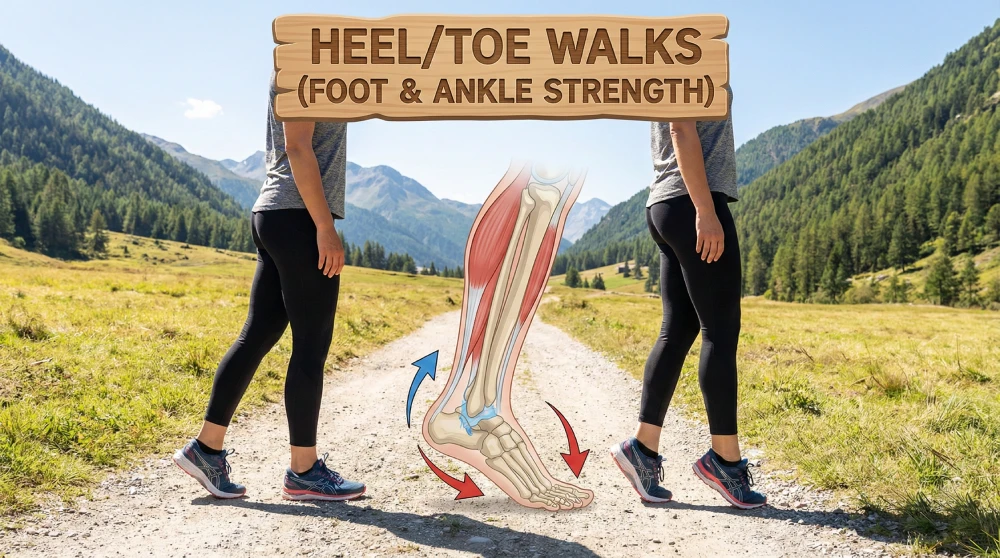
Hit your shins - think tibialis anterior - and calves. That way, you dodge shin splints.
Move ahead 10 steps using only your heels, keeping toes lifted. After that, step forward 10 times on your toes, heels off the ground.
Reps: 2 rounds.
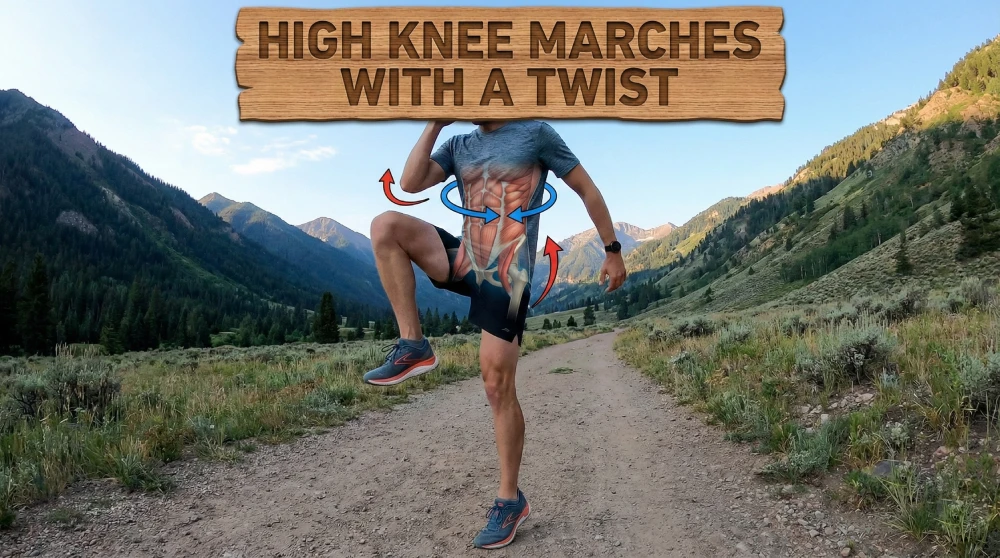
Focus on your lower abs along with your butt muscles.
Walk on the spot, pulling your knees up tall. When your right knee rises, turn your body so your left elbow moves close to it. That sparks the side muscles which hold your pack steady.
Reps: 20 total.
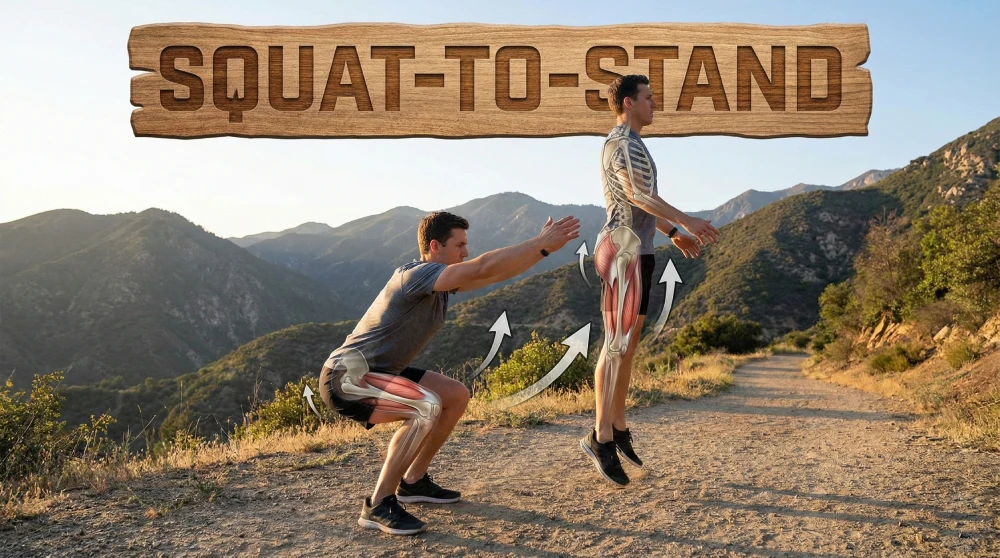
Focus on quads along with knee area.
Stand with your feet about a shoulder's width apart. Lower yourself until you feel it’s enough - no need to force depth. Hold that position briefly before pushing back up using your heels. Doing this wakes up the muscles needed when slowing down on the way down.
Reps: 10 squats.
The trip back usually brings tightness. After hiking, spend five minutes stretching slowly - hold each pose - before hopping in the vehicle. Hit your lower legs and front thighs. Instead of rushing off, pause briefly to loosen up those muscles.
Once you arrive back at your place:
Muscle ache from hiking usually sticks around 1 day or two - that’s typical. Shows you pushed yourself! But head over to Sterling Physiotherapy when:
At Sterling Physiotherapy, we go beyond easing discomfort - we study your hiking style. Instead of guessing, we analyze how you walk. Then, we take a close look at your shoes. If needed, we fit you with personalized supports or braces. That way, you stay out on the trails longer.
Living in Hamilton means we get to explore awesome trails across Ontario. Yet avoidable aches shouldn’t trap you inside. Since hiking’s more than just walking, train your body right - then tackling Dundas Peak feels way easier. Even the steep Chedoke steps won’t scare you once you’re ready.
Got a long hike coming up? Had past ankle twists or sore knees? Swing by before the season starts. So we can prep your body for the path ahead.
Book Your Assessment at Sterling Physiotherapy Located inside Rexall, 505 Rymal Rd E, Hamilton, ON.
Knee pain during hiking is often caused by weak quadriceps, tight IT bands, or poor downhill control. Strength training, proper footwear, and controlled downhill pacing can significantly reduce strain on the knees.
Common injuries include ankle sprains, knee pain, Achilles tendon irritation, plantar fasciitis, and lower back discomfort. Uneven terrain and steep inclines increase the risk if proper preparation is not done.
Dynamic warm-up exercises before hiking are recommended to activate muscles and improve mobility. Static stretching is more beneficial after your hike to reduce stiffness and improve recovery.
Preparation should include lower body strengthening, balance training, and cardiovascular conditioning. Exercises targeting the glutes, calves, and core help improve endurance and stability on uneven terrain.