 ★★★★★
( 5 Star Reviews)
★★★★★
( 5 Star Reviews)
Sterling Physiotherapy is a trusted clinic in Hamilton with 240+ real Google reviews for Physiotherapy, Vestibular, TMJ Dysfunction, Massage therapy and Custom orthotics.
You wake up to a low ache deep in your skull. Pouring coffee, you chew toast - suddenly, a snap or crack pops by your ear. Come mid-afternoon, your neck tightens, while the ache sharpens into a pounding head pain.
If this feels like your story, you’re not alone. Many people in Hamilton visit clinics with ongoing headaches or severe migraines, only to be told their vision is fine and there’s no sinus problem.
So what’s really going on? It could be stress. But just as often, the issue is your jaw.
Jaw joint problems frequently cause persistent head and neck pain. It’s something many people overlook. At Sterling Physiotherapy, we focus on treating this complex area and helping patients find relief they didn’t think was possible.
This guide explains how the jaw works, what can go wrong, and how physiotherapy can help reduce clicking, popping, and discomfort.

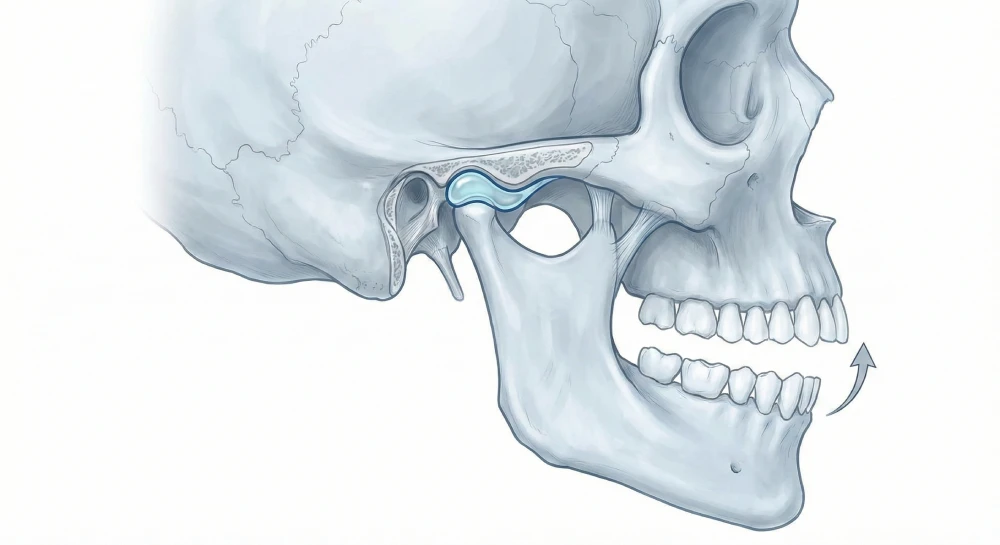
The temporomandibular joint (TMJ) connects your lower jaw to the bones of your skull. You have one on each side of your face, just in front of your ears.
It’s one of the most complex joints in your body. Unlike your knee or elbow, which mainly move back and forth, the TMJ moves forward, backward, and side to side. This allows you to speak, chew, yawn, and swallow.
A small cartilage disc sits between the bones, acting like a shock absorber and helping the joint glide smoothly.
TMJ Dysfunction (TMD) happens when the joint becomes irritated or misaligned. This may involve tight muscles, joint inflammation, or the disc shifting out of position. That’s often what causes the clicking or popping sound.
While injuries such as car accidents or direct trauma can cause TMJ issues, what we often see in Hamilton is something different: chronic tension.
Daily stress from work, long commutes on the Linc or Highway 403, and constant screen time can build tension in the body. Stress doesn’t just stay in your thoughts. It shows up physically in tight shoulders, clenched jaws, and stiff necks.
Many people clench their jaw during the day without realizing it. Others grind their teeth at night, a condition known as bruxism.
The masseter muscle, one of the main chewing muscles, is incredibly strong. When you clench, it can generate significant force on your teeth and jaw joints. Over time, this pressure irritates the joint and nearby nerves, sending pain toward the temples and head.
Your posture plays a major role in TMJ pain.
When your head moves forward, such as while looking at a screen or driving, the muscles in your neck tighten. This pulls the lower jaw backward and increases pressure on the joint near your ear.
Sitting upright with a gentle chin tuck allows the jaw to move more freely. Treating TMJ successfully often requires correcting posture alongside jaw treatment.
Many people believe a dental night guard is the only solution. While guards protect your teeth, they do not always address muscle tension or restore proper joint movement.
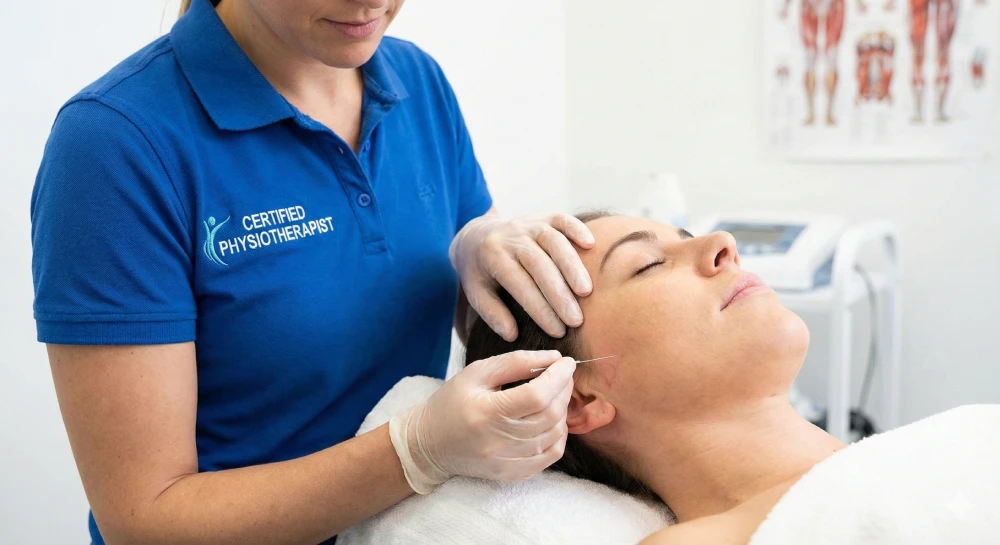
At Sterling Physiotherapy, we use a comprehensive approach:
One commonly recommended method is the Rocabado 6x6 routine. A simple starting position includes:
You don’t have to live with constant headaches or a jaw that clicks every time you eat. TMJ dysfunction is a physical issue, and with the right treatment, it can improve.
At Sterling Physiotherapy, we understand how closely the head, neck, and jaw are connected. We also collaborate with local dentists and physicians in Hamilton to ensure comprehensive care.
Book a TMJ assessment today and take the first step toward lasting relief.
Yes. TMJ dysfunction can cause tension-type headaches and migraine-like symptoms. When the jaw joint or surrounding muscles become tight or irritated, pain often radiates to the temples, forehead, and behind the eyes.
Common signs include morning headaches, jaw clicking or popping, limited mouth opening, ear discomfort without infection, and neck stiffness. If your headache worsens when chewing or clenching, the jaw may be involved.
TMJ issues can develop from jaw clenching, teeth grinding (bruxism), stress, poor posture, trauma, or muscle imbalance. Forward head posture and prolonged screen time are also common contributing factors.
Clicking without pain can sometimes be harmless. However, if clicking is accompanied by pain, locking, or reduced movement, it may indicate disc displacement or joint dysfunction that should be assessed