 ★★★★★
( 5 Star Reviews)
★★★★★
( 5 Star Reviews)
Sterling Physiotherapy is a trusted clinic in Hamilton with 240+ real Google reviews for Physiotherapy, Vestibular, TMJ Dysfunction, Massage therapy and Custom orthotics.
That noise? Every Hamilton resident hears it - plastic scoops dragging on pavement by seven in the morning.
Down here in Southern Ontario, we know our way around big snowfalls. If you're up on Hamilton Mountain, the wind piles it high. Downtown, it’s usually heavy, wet snow that’s even harder to move. Clearing the driveway is simply part of winter life.
But for many people, it’s something they dread. Not just because of the cold, but because of the strain it puts on the body. Every winter after the first heavy snowfall, people walk into Sterling Physio with sharp back pain, strained shoulders, and locked-up muscles.
Snow shoveling is one of the toughest physical tasks homeowners do. It often happens early in the morning when your body is still stiff from sleep. Without proper technique, it’s like lifting heavy weights at the gym with poor form. You are asking for injury.
This guide explains what happens in your back when you shovel the wrong way, and gives you a simple, physio-approved plan to clear snow safely and avoid pain later.
Shoveling can seriously strain your lower back. The biggest mistake people make is the "Scoop and Twist."
Instead of standing upright, they bend forward at the waist to scoop heavy snow. Then, without moving their feet, they twist their upper body to throw it aside.
Flexion combined with rotation under load is one of the most dangerous positions for your spine.
Your spinal discs act as cushions between the bones in your back. When standing upright, pressure is evenly distributed.
When you bend forward while lifting heavy snow, pressure increases at the front of the disc. This pushes the soft inner material backward, increasing the risk of bulging or herniated discs.
Ever feel your back suddenly seize up?
When you lift with your back instead of your legs, smaller stabilizing muscles like the multifidus and larger muscles like the erector spinae work overtime. Your brain senses danger and triggers a protective muscle spasm. This “lock up” acts like a brace, but it is painful.
Your equipment matters. An old straight-handled shovel increases strain on your spine.
Look for these features:
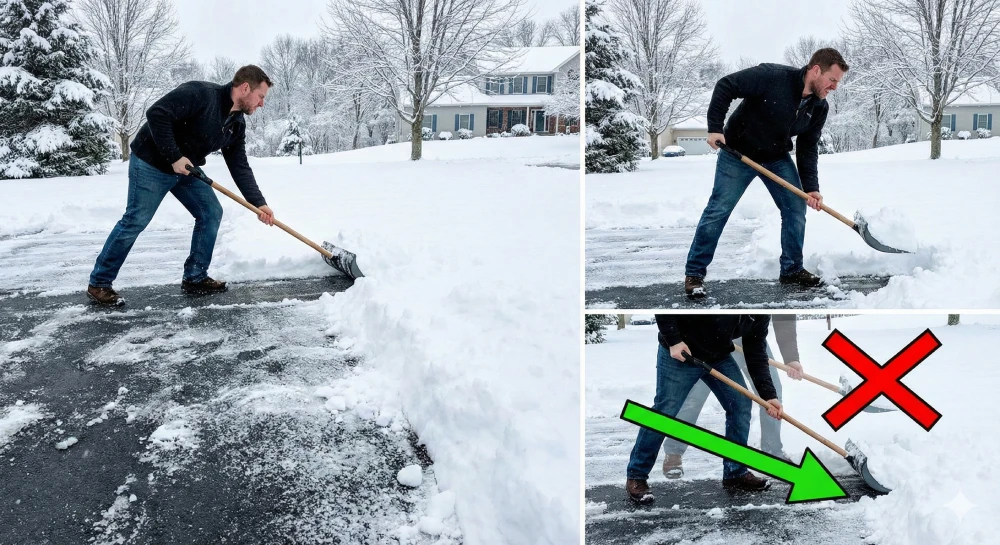
Treat shoveling like a workout. Move steady. Use your legs more than your back. Think of each scoop as a controlled repetition.
Whenever possible, push snow to the side instead of lifting it. Only lift when absolutely necessary.
Keep your chest up and spine neutral. Bend your knees and push your hips back, like sitting into a chair. This activates your glutes and quads instead of straining your lower back.
Never twist your spine while your feet stay planted. Instead:
Hold the shovel close to your body. Avoid extending your arms fully when lifting. Keeping the load near reduces pressure on your spine.
Cold muscles are tighter and more prone to injury. Before heading outside, try this quick indoor warm-up:
Snow shoveling is intense cardiovascular work. Cold air combined with heavy exertion increases strain on the heart, especially for seniors or individuals with heart conditions.
If you feel sudden lower back pain:
If you wake up the next day struggling to bend, tie your shoes, or turn your head, it may be time to seek professional help.
Snow in Hamilton is inevitable. Back pain does not have to be.
Move smart, not hard. Use proper technique. Listen to your body. A clear driveway is great, but a healthy spine matters more.
Remember: Snow melts. Back injuries can linger.
If winter caught up with you this season, book your appointment at Sterling Physiotherapy, Hamilton’s trusted choice for rehabilitation.
Back pain usually happens because of poor lifting technique, especially bending at the waist and twisting while lifting heavy snow. This increases pressure on the spinal discs and strains supporting muscles.
The safest method is to push snow instead of lifting it whenever possible. When lifting is necessary, keep your back straight, bend at the knees and hips, keep the load close to your body, and pivot your feet instead of twisting your spine.
Yes. Cold muscles are more prone to injury. A short 3–5 minute warm-up with marching in place, arm circles, squats, and gentle torso rotations can significantly reduce the risk of strain.
Work for about 10–15 minutes, then rest for 5 minutes. Snow shoveling is physically demanding and can strain both your back and your heart, especially in cold weather.