 ★★★★★
( 5 Star Reviews)
★★★★★
( 5 Star Reviews)
Sterling Physiotherapy is a trusted clinic in Hamilton with 240+ real Google reviews for Physiotherapy, Vestibular, TMJ Dysfunction, Massage therapy and Custom orthotics.
If you've gone by Hill Park one Saturday morning - or even attempted to grab a spot at Confederation Park - you’ve seen it yourself: folks here can’t get enough of Pickleball.
Pickleball is quickly becoming one of the fastest-growing sports in Canada, and Hamilton is right at the center of it. With the launch of the Ontario Pickleball Academy on East Mountain and the new Gretzky Pickleball Club near Nebo Road, more residents are picking up paddles and hitting the courts.
It’s easy to see why. The game is social, fast-paced, and easier on the knees compared to tennis. But while your legs may feel better, your arms might not. At Sterling Physiotherapy, we’ve seen a 300% increase in patients dealing with outer elbow pain — and most of them are pickleball players.
The diagnosis? Lateral Epicondylitis, commonly known as Tennis Elbow. These days, many are calling it Pickleball Elbow.
You might think the paddle is too light to cause injury. The weight isn’t the issue — the repetitive movement is.
Pickleball is played in a smaller court with fast exchanges near the net. That constant quick reaction creates repeated stress on the forearm tendons.
Unlike tennis, where power comes from your full body and shoulder rotation, pickleball often relies on quick wrist flicks during net play.
The problem: Each wrist snap activates a forearm muscle called the extensor carpi radialis brevis. This muscle attaches directly to the outer part of your elbow. Repeating this motion hundreds of times per match creates micro-tears and inflammation at that attachment point.
New players often grip the paddle too tightly, especially during fast rallies.
The issue: A tight grip keeps your forearm muscles engaged even when you’re not hitting the ball. This reduces circulation, increases fatigue, and overloads the tendon.
The combination of a hard plastic ball and a stiff graphite paddle sends vibration up the arm on impact.
If your technique or grip size is off, your elbow tendons absorb more of that force.
One of the most common causes of elbow pain is using a paddle with a grip that’s too small.
The “Claw Effect”: When the handle is too narrow, you instinctively squeeze harder to stabilize it. That constant tension strains the outer forearm muscles.
Quick fix: Add overgrip tape to increase the handle thickness. It’s an inexpensive solution and available at most sports stores in Hamilton.
You don’t have to stop playing. You just need to prepare your arm properly. Perform these exercises three times per week.
Eccentric strengthening has strong research backing for tendon recovery.
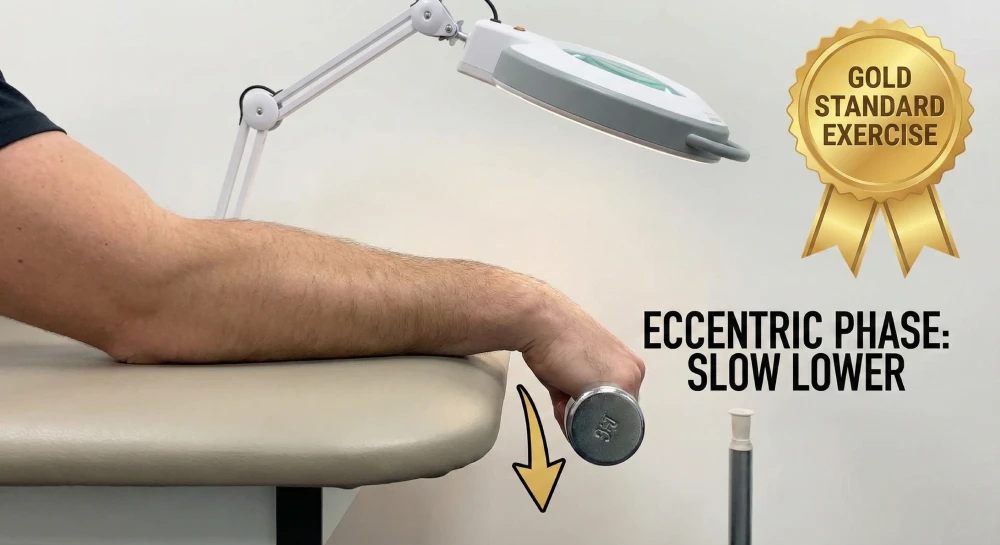
You may feel mild discomfort, but stop if you feel sharp pain.
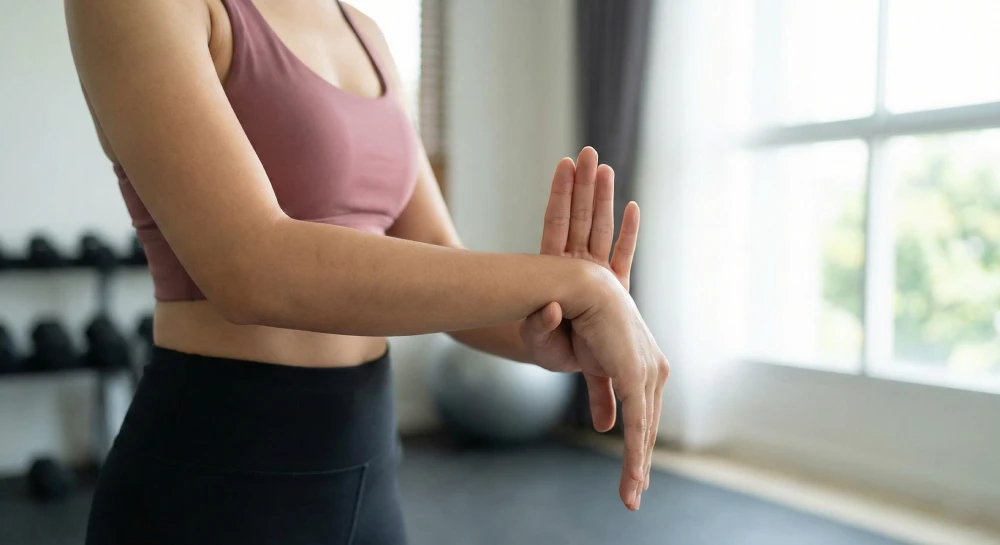
This is a great pre-game stretch before heading to the courts.
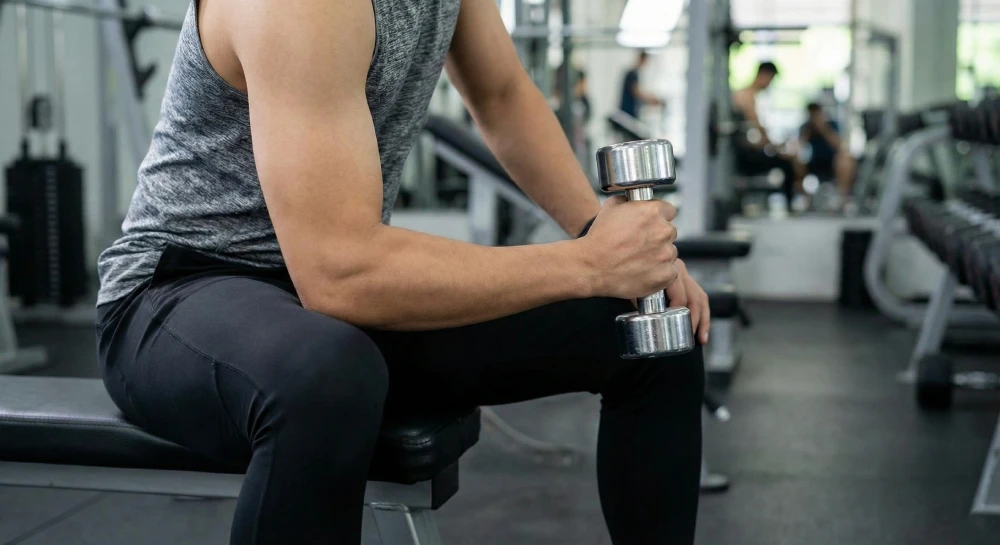
Muscle soreness is common. Tendon pain is different.
Try this: Lift a full coffee mug.
If you feel a sharp pain on the outside of your elbow while gripping it, you may be dealing with chronic Tennis Elbow.
Tendons have limited blood supply. Ignoring the pain can turn short-term inflammation into long-term degeneration, significantly extending recovery time.
If elbow pain is affecting your game, our Hamilton team provides targeted treatment plans designed for pickleball players.
Pickleball is here to stay in Hamilton. With proper preparation, smart equipment choices, and early treatment when needed, you can keep playing without elbow pain.
If your elbow is limiting your performance, don’t rely on ice and rest alone. Early assessment leads to faster recovery.
Book your appointment online with Sterling Physiotherapy today. We treat Hamilton’s athletes — from professionals to weekend pickleball players.
Pickleball elbow is another name for Lateral Epicondylitis, commonly known as Tennis Elbow. It happens when the tendons on the outside of your elbow become irritated from repetitive wrist and forearm movements, which are common in pickleball.
Pickleball involves repeated wrist snapping, tight gripping of the paddle, and vibration from ball impact. Over time, these stresses overload the forearm tendons and can lead to inflammation or tendon degeneration.
A common sign is pain on the outer part of your elbow when gripping objects, such as lifting a full coffee mug. You may also notice weakness in your grip or discomfort when twisting your forearm.
Mild discomfort may improve with proper warm-up and strengthening exercises. However, sharp or persistent pain should not be ignored. Continuing to play through significant pain can worsen the condition and prolong recovery.