 ★★★★★
( 5 Star Reviews)
★★★★★
( 5 Star Reviews)
Sterling Physiotherapy is a trusted clinic in Hamilton with 240+ real Google reviews for Physiotherapy, Vestibular, TMJ Dysfunction, Massage therapy and Custom orthotics.
If you're from Hamilton, you get it - today it's a cozy 5°C, but tomorrow the Escarpment’s slick with frost while Rymal Road’s sidewalks turn into slippery tracks better suited for skates.
Though Canada’s winter looks stunning, it can mess with your body. When cold hits each year, ERs plus therapy offices in Ontario get way busier. Why? People sliding on icy patches - again.
At Sterling Physiotherapy, staying safe in winter matters - be it a trek on the Chedoke Radial Trail or just heading to grab mail. This guide explains what leads to slips, covers frequent cold-weather injuries we see, yet gives clear moves to prep your body for icy days.
Based on info from Canada’s health records, slipping on ice lands more people in hospitals each winter than snow-related sports accidents do. So what makes these slips so harmful?
A slide on ice isn't like riding a rug - it's sudden. Things move quick. Your legs shoot forward, then your torso picks up speed before slamming onto the concrete. Since ice or pavement doesn’t flex at all, every bit of that crash gets taken by muscles and bones.
Cold air slows you down. When it’s chilly, muscles tense up to keep warmth - so they shorten. That means you can’t move as freely or react quickly. Tight muscles tear easier. If you’re rigid, you won’t absorb a fall well either.
As soon as frost rolls into Hamilton, we usually spot three clear kinds of injuries at our clinic. Spotting them quick means you can get proper care sooner - without delay. While one might wait, another shouldn’t linger untreated.
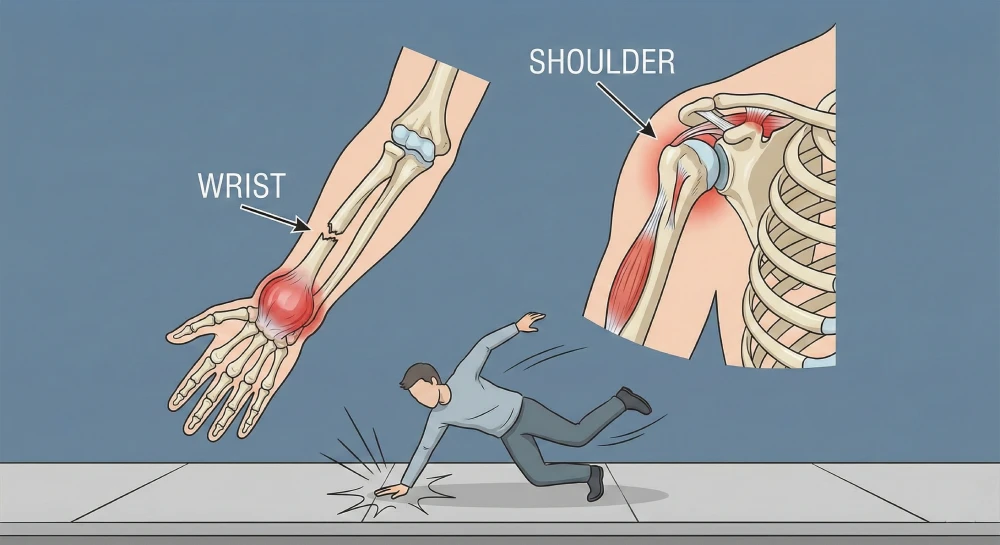
Falling on an outstretched hand? That’s what "FOOSH" means. People usually reach their arms forward when they trip - it just happens. But that move sends all your body's force into weak spots like the wrist or shoulder.
The outcome? Breaks in the wrist, scaphoid injuries, also torn rotator cuffs.
Got ongoing wrist or shoulder pain long after a small fall? Could be a tiny tear or crack needing care - don’t ignore it.
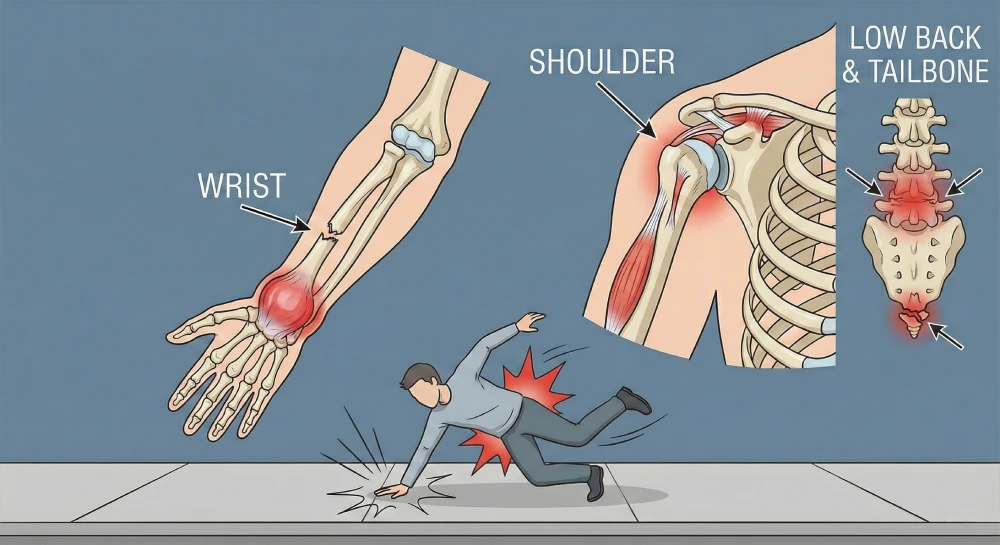
If your feet slide ahead, you’ll probably plop straight onto your butt. That squishes the backbone, possibly hurting or cracking the tailbone.
The Result: Acute lower back pain, disc herniation, or coccydynia (tailbone pain).
Physio Tip: When this injury happens, your lower back muscles might tighten up - kinda like a shield kicking in. Therapy by hand could ease that tightness pretty well.
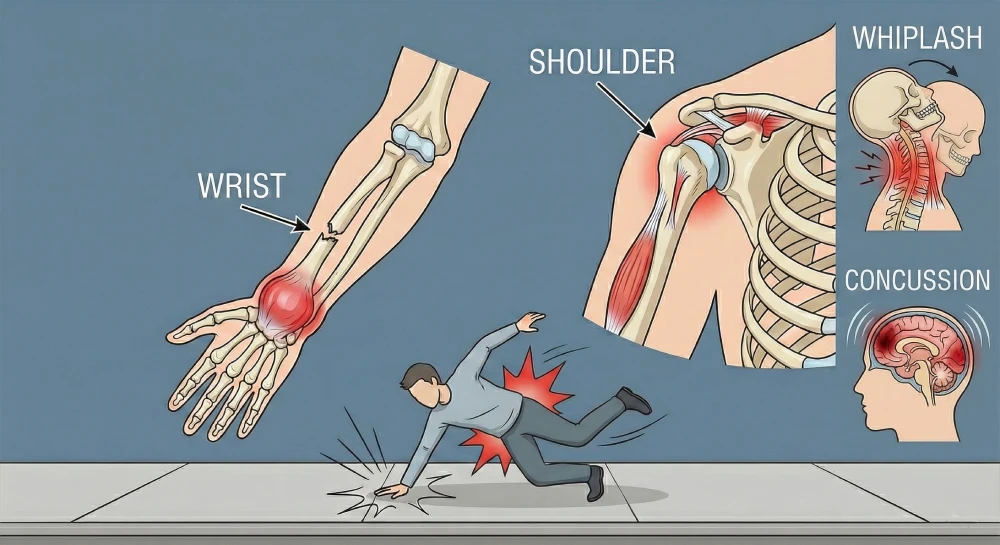
You don't have to bump your head hard to end up with a concussion. Even a sudden jolt from slipping fast might make your brain rattle in the skull. In much the same way, when your head jerks backward sharply - like during whiplash - it can pull or stretch neck muscles.
Dizziness or headaches showed up. Neck felt stiff - also balance problems popped out.
Feeling woozy after a tumble? Could be more than just surprise. Our Vestibular Rehab crew checks whether your inner ear’s balance took a hit. Instead of brushing it off, get it looked at - might make a real difference.
Many folks see physio mostly when they're injured. But over at Sterling Physio, we push pre-hab instead - smart moves that gear up your body before winter hits hard.
To keep yourself out of trouble while skating, focus on three basics for your body: strength, balance, or endurance
Your body knows its position thanks to proprioception. When the ground's slick, your mind uses info from your soles to tweak how you stand.
The solution? Try balance boards along with stability drills - they help fine-tune those nerve signals, making your reflexes kick in quicker if you step on ice.
Your core’s where your body balances. It holds things steady when you move. When you begin to lose footing, a strong core helps adjust your stance - so you don’t end up on the ground. That stability kicks in fast, keeping you upright without extra effort.
The Fix: Pilates-based core strengthening targeting the deep abdominal muscles.
Tight ankles or hips lead to a rigid walking pattern - this raises your chance of tripping.
The fix? Hands-on treatment to ease stiff joints - so your walk feels smoother, more natural. Instead of locked-up steps, you get flexibility back. This means less strain when moving. Think of it like oiling a rusty hinge: things just work better after.
Beyond visiting the clinic, here are five daily habits to adopt immediately.
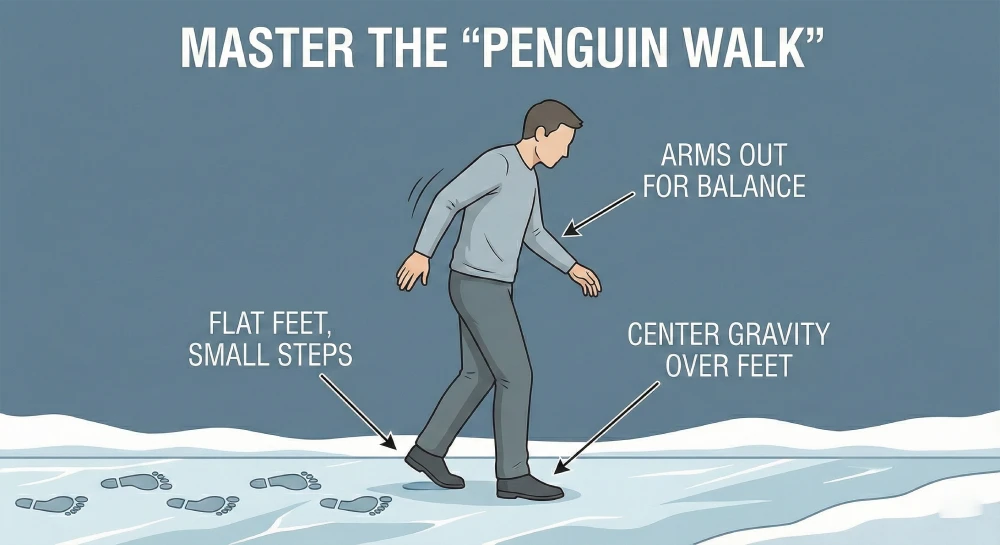
It might seem dumb, yet it does the trick. As you take regular steps, your body shifts weight halfway through each stride. Out on icy ground, that’s risky.
Lean a bit forward from the waist. Your weight should sit right above your lead leg. Move in small strides, feet flat on the ground. Hold your arms free - don’t stuff them in pockets - they help you stay steady.
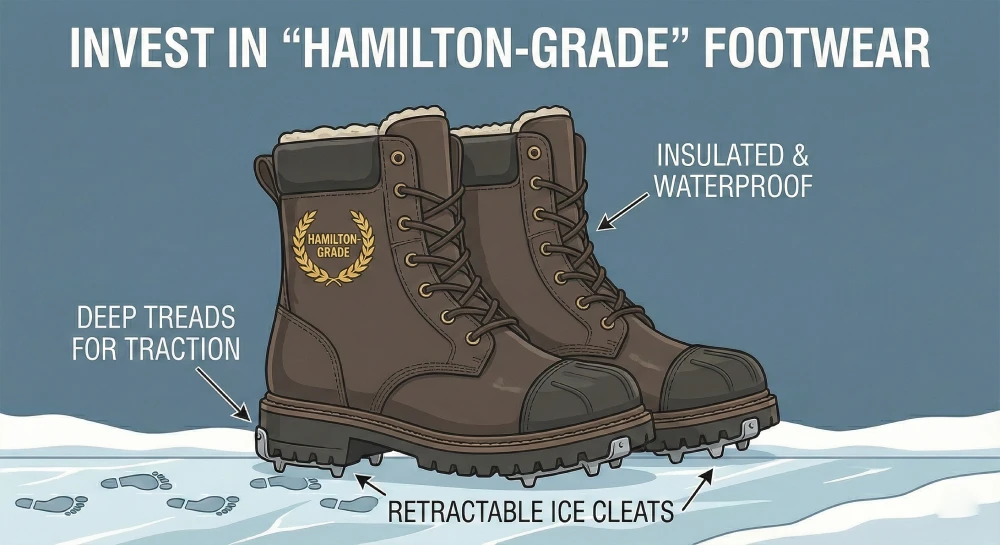
Fashion boots usually come with slick bottoms - these turn risky when it's icy. Check out cold-weather footwear featuring:
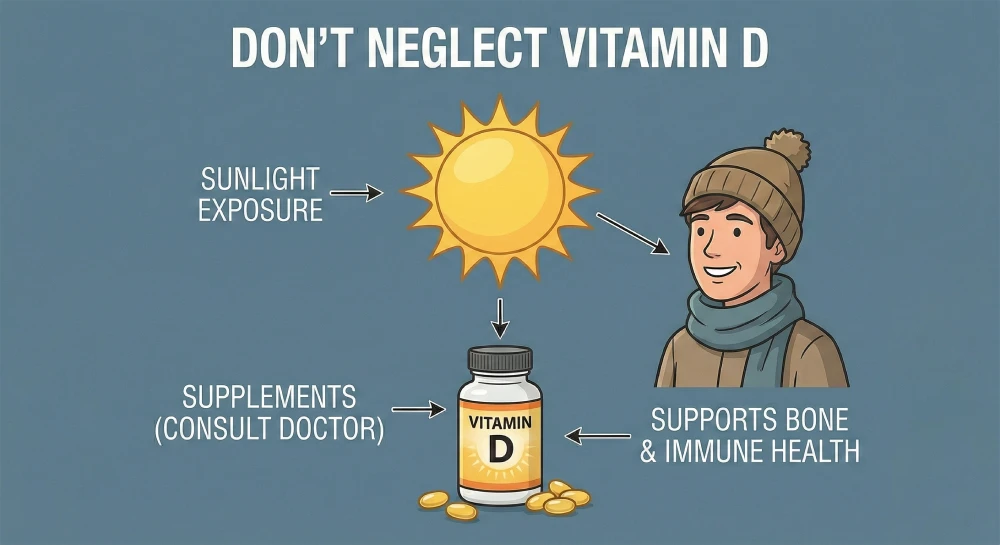
Ontario’s sky stays dull for ages. Because of this, folks in Hamilton often lack vitamin D when it's cold.
Here’s why this counts: Vitamin D keeps your bones sturdy. In case you take a tumble, solid bones can mean a sore spot instead of a break. Chat with your healthcare provider or drugstore expert on adding supplements.
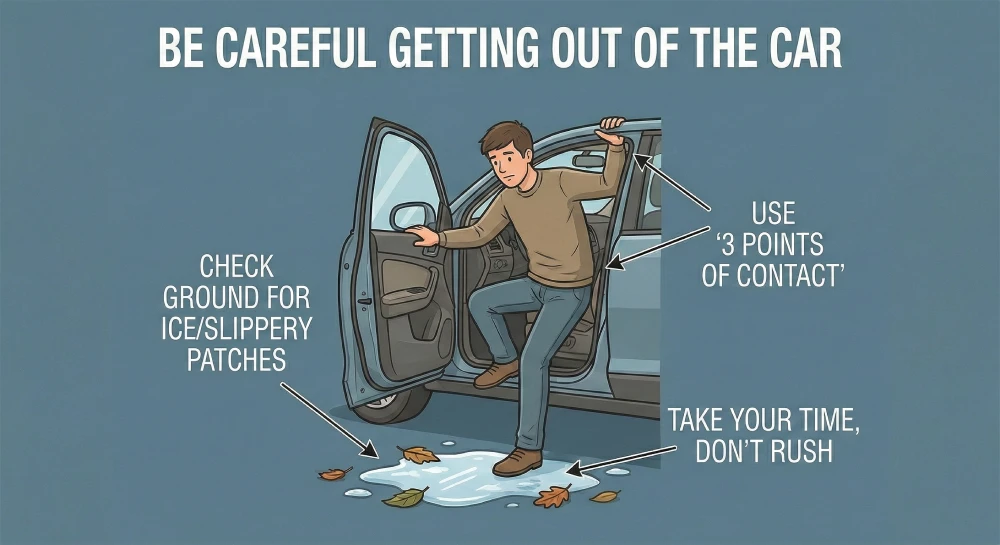
A good number of people we see get hurt in parking areas. When you leave a cozy vehicle, hidden slick spots on the ground can cause serious slips.
The trick? Move one leg, then the other out slowly. Once outside, set each foot down carefully - check how solid the floor feels. Only after that shift your full body weight to get up.
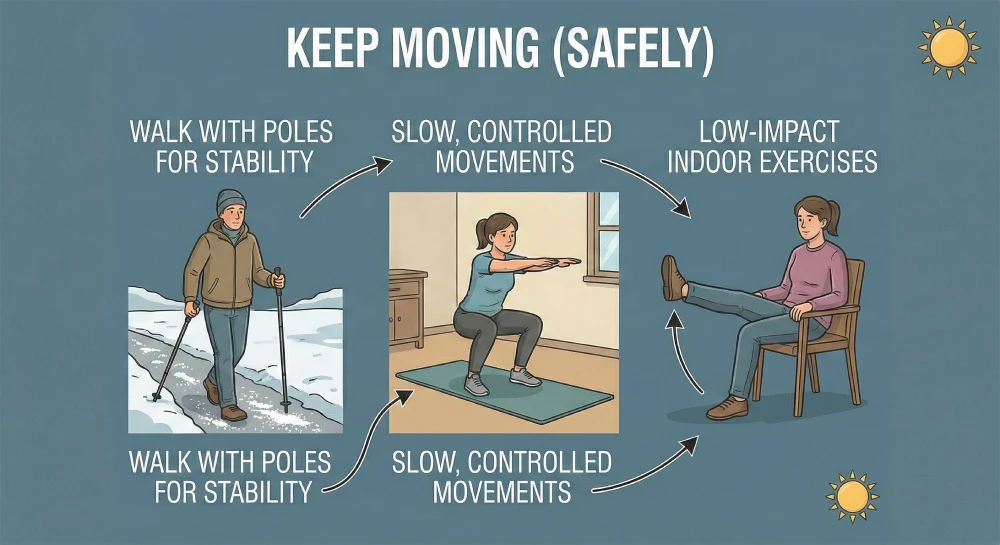
Fear of slipping makes you sit more when it's cold. Sitting too much slows your body down - so when you move again, you're actually more likely to lose balance.
The trick? When sidewalks are slick, skip the outdoors - try a treadmill instead, hit up a shopping center, or just move around at home. Build power in your butt and thighs!
If something goes wrong + you end up falling:
Winter hits Hamilton every year - no way around it. Yet slips or strains? Not a must. Keep moving, dress for the cold, stay loose and steady on your feet; that’s how you handle snow months without worry.
If you’re wobbling when you walk, or dealing with an old winter injury that flares up when it’s chilly, head over to Sterling Physiotherapy - they’ve got your back. Their crew will build a custom plan focused on stability and strength so you stay upright while waiting for spring flowers to pop.
Get set for winter? Grab a spot online or ring us at (289) 401-2900. You’ll find us right in Rexall, on Rymal Rd E, Hamilton.
Hamilton winters often bring ice, freezing rain, and snow-packed sidewalks. These conditions reduce traction and make balance harder, especially for older adults or people with previous injuries.
Physiotherapists commonly treat wrist fractures, ankle sprains, knee ligament injuries, hip injuries, and lower back pain caused by slips, falls, and sudden loss of balance on ice.
Wearing proper winter footwear with good grip, taking shorter steps, keeping your hands free, and avoiding icy shortcuts can significantly reduce the risk of slipping.
Yes. Physiotherapy improves balance, strength, joint mobility, and reaction time, all of which are essential for preventing falls during icy conditions.