 ★★★★★
( 5 Star Reviews)
★★★★★
( 5 Star Reviews)
Sterling Physiotherapy is a trusted clinic in Hamilton with 240+ real Google reviews for Physiotherapy, Vestibular, TMJ Dysfunction, Massage therapy and Custom orthotics.
Sitting too long often tugs the body sideways. Shoulders creep ahead, the head leans into space while the spine forgets its lift. Days stack up - tightness follows, then soreness, sometimes a dull ache behind the eyes. Small moves, done with care, gently reset what slow days undo.
Slumping day after day tugs your body out of alignment - hips tighten, shoulders roll forward. Chest muscles contract, refusing to let go. Meanwhile the small ones between your shoulder blades? They fade into silence. Core support slips away like sand through fingers. Without small shifts now and then, gravity wins, dragging you deeper into that hunched shape.
Doorway Chest Stretch Opens the front of the shoulders and chest.

How to do it:
Benefits: Helps reverse rounded shoulders.
Sit tall, stretch back - eases tension mid-task.
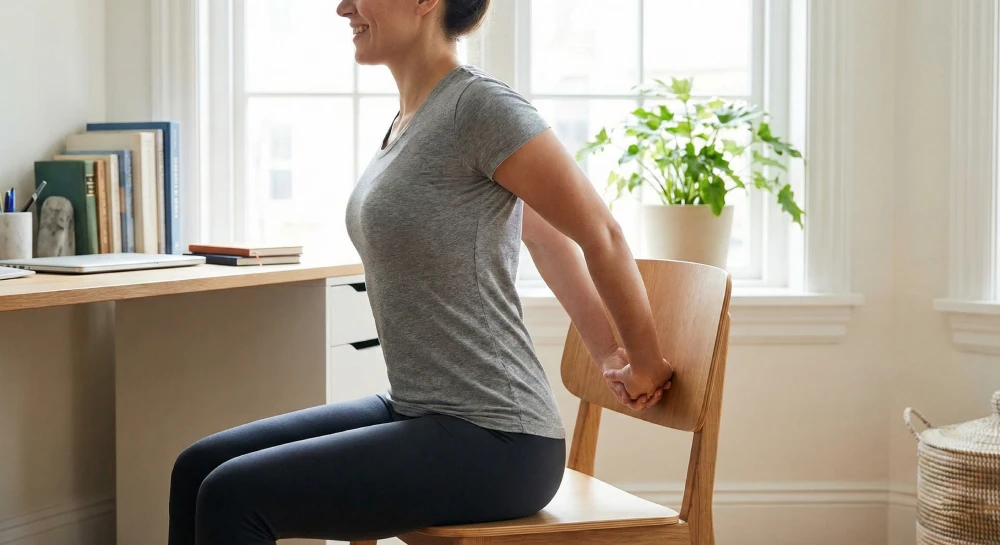
How to do it:
Improves mobility within the upper back region - fluidity returns, motion feels clearer, tension softens over time.
Hip flexor stretch works on tight muscles from sitting too much - unwinds what gets coiled through long hours in chairs, opens up tension stored near the hips, while gently pulling things back toward balance.
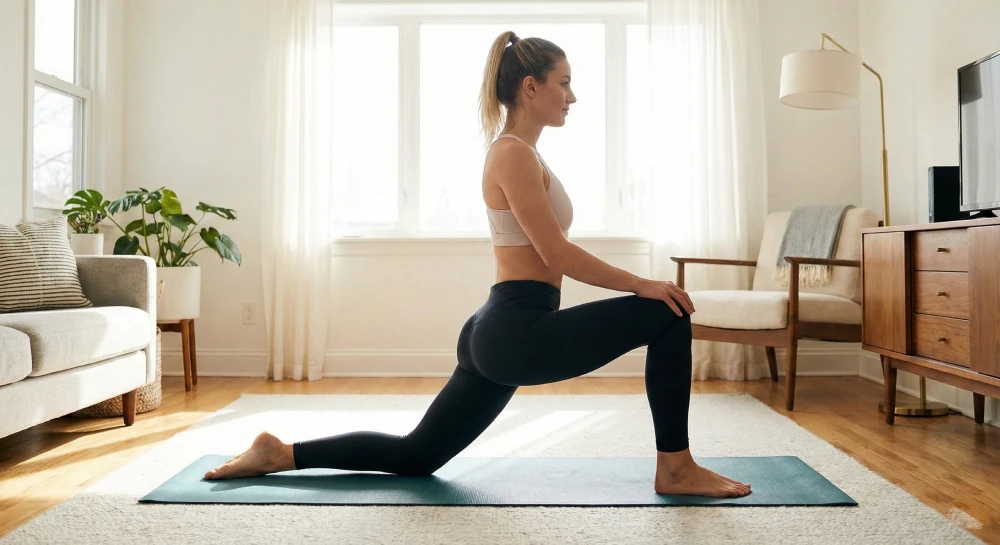
How to do it:
Benefits: Reduces lower back strain and improves hip mobility.
Wall angels build strength across the upper back while sharpening how you manage shoulder movement.
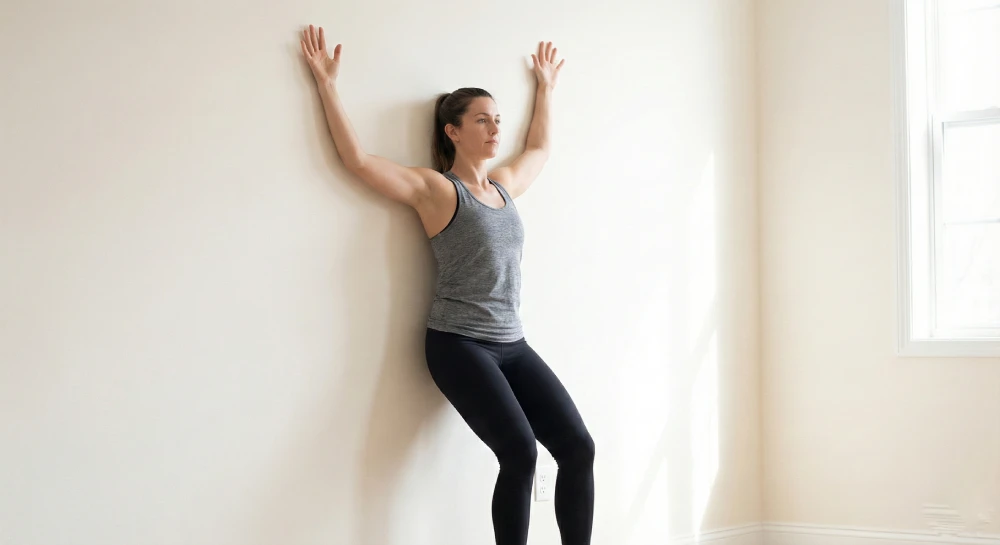
How to do it:
Bolsters the body's framework for standing tall. Keeps you aligned without effort. Strengthens what holds you upright each day.
Dead bug - gentle on the spine, solid for building midsection control.
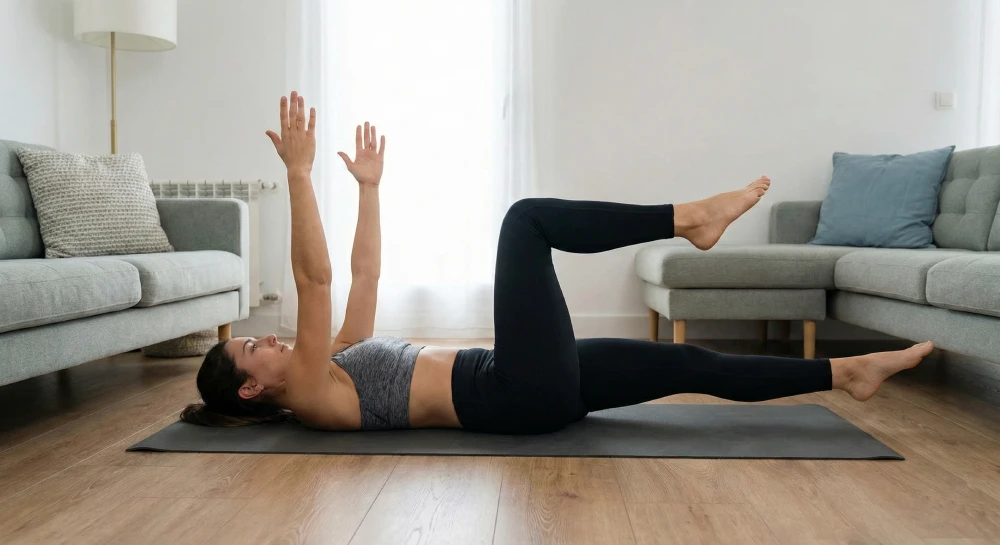
How to do it:
Built-in stability improves when you engage the inner muscle layers around your midsection. These deeper fibers wrap around your back, offering natural reinforcement where your body needs it most.
Follow this routine using 10 to 12 repetitions when building strength.
Do this once a day - or maybe twice - if your job keeps you seated too long. Some days call for it more than others, especially when hours slip by in the chair.
If you’re after better posture down the road, tweak your chair height - hips just above knee level helps. Position matters more when it shows up day after day. Keep the seat edge from digging into your legs; that shift changes everything. Small setup fixes stick around longer than quick fixes ever do.
Position the monitor so it lines up with your gaze.
Move your body beyond the job - try walks or simple lifting now and then.
If lingering tightness, frequent headaches or nagging tension across the shoulders won't ease up, consider seeing a physio. They’ll check how you hold yourself day to day. From there, they shape a routine tailored to reset spinal alignment. Building stability becomes part of the process. Relief often follows as movement patterns shift. Progress shows not through force, but steady adjustments. Discomfort fades when daily habits support better mechanics.
Sitting for long hours tightens the hips and chest while weakening the upper back and core muscles. Over time, this can lead to rounded shoulders, forward head posture, and back or neck pain.
Ideally, posture exercises should be done daily. Even 10 to 15 minutes a day can help improve muscle balance and reduce stiffness caused by prolonged sitting.
Yes. Regular posture exercises help strengthen supporting muscles, improve spinal alignment, and reduce strain on the neck and lower back, which often leads to less pain and discomfort.
Exercises are very effective, but combining them with proper workstation ergonomics gives the best results. Adjusting chair height, monitor level, and taking regular movement breaks can significantly improve posture.