 ★★★★★
( 5 Star Reviews)
★★★★★
( 5 Star Reviews)
Sterling Physiotherapy is a trusted clinic in Hamilton with 240+ real Google reviews for Physiotherapy, Vestibular, TMJ Dysfunction, Massage therapy and Custom orthotics.
Jaw pain can be an uncomfortable feeling. It can affect simple, everyday tasks like eating, talking, yawning, or even smiling. For some, it may be a recurring dull ache that comes and goes. For others, it can be a sudden, intense pain with clicking, headaches or even difficulty opening the mouth.
Jaw pain refers to any discomfort in the temporomandibular joint (TMJ), surrounding muscles, or tissues. It can arise from inflammation, injury, teeth grinding, or poor posture, making everyday tasks like eating or talking difficult. Sterling Physiotherapy can help address the root cause of your discomfort with non-invasive treatments, allowing you to recover without relying heavily on medication.
Many people think that jaw pain is strictly a dental concern, but the truth is, there are a number of other factors that can contribute to this issue. Physiotherapy can help address the root cause of your discomfort, and offer a non-invasive solution that allows you to get back to your daily life without the worry of medication.
Sterling Physiotherapy offers a wide variety of treatment options for jaw pain, and our physiotherapists can help develop a recovery plan that gets you back to feeling your best.
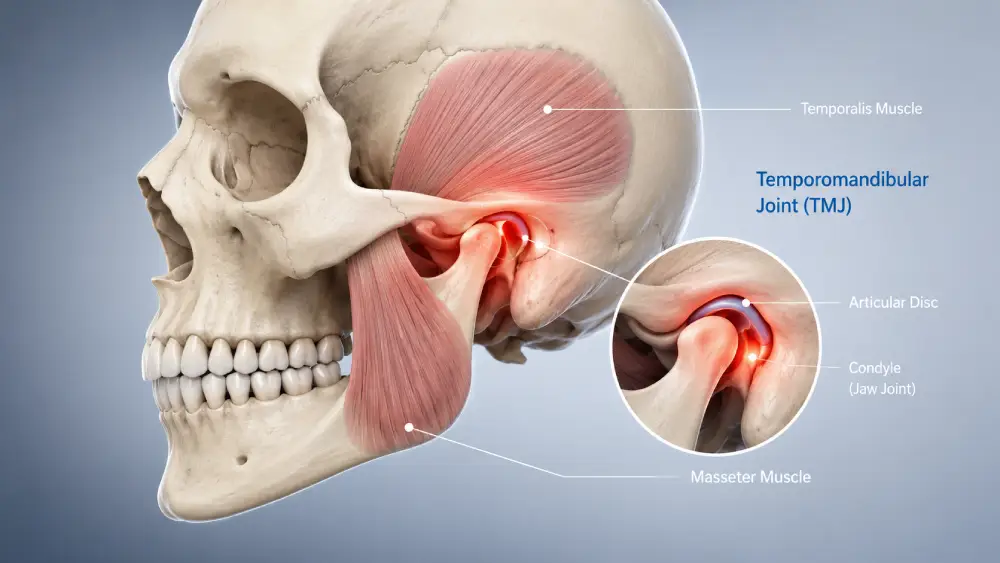
Jaw pain refers to any discomfort in the jaw joint, the muscles surrounding the jaw, or the tissues near the jaw. The temporomandibular joint (TMJ) is a complex structure that allows us to chew, speak, and yawn. It consists of the jaw bone, muscles, ligaments, and nerves that all work together to allow us to open and close our mouths.
Issues can arise when any of these structures are inflamed, injured or strained, causing pain and discomfort. Jaw pain can often appear suddenly as the result of an injury or develop gradually over time.
There are a number of different causes of jaw pain. It is important to identify the source of your discomfort in order to receive the most effective treatment.
TMJ issues are some of the most common causes of jaw pain. The temporomandibular joint can become inflamed or irritated, causing discomfort and difficulty with movement. Symptoms of a TMJ disorder may include:
Many people grind their teeth or clench their jaws while sleeping or when they are under stress. This can put a strain on the muscles and joints of the jaw, causing inflammation and discomfort. Symptoms may include:
Poor posture can cause a number of musculoskeletal issues, and jaw pain is no exception. When you slouch while working at a computer or looking at your phone, it places additional strain on the muscles of your neck and jaw. A forward head posture can also alter the way that your jaw moves and functions.
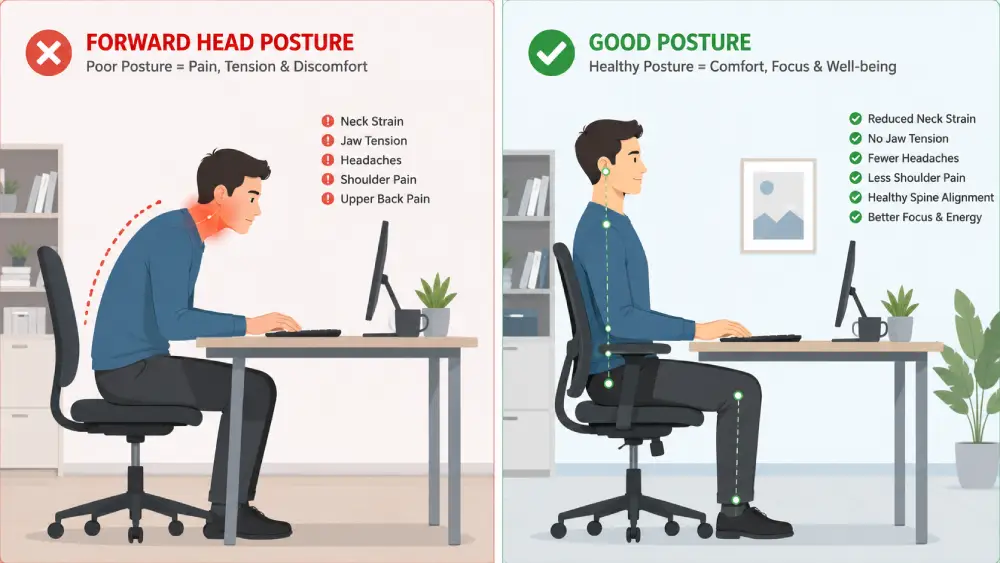
The muscles in your neck and jaw are connected, and issues in one area can lead to discomfort in the other.
Arthritis can affect the TMJ, causing stiffness and a reduced range of motion. Symptoms may include:
A blow to the face or jaw can cause a range of issues, from bruising to a dislocated jaw. In some cases, the damage may be minor, but in other cases, it may require surgery to correct.
Stress can cause many people to unconsciously tense their facial muscles. If this happens frequently, it can lead to persistent jaw pain and headaches.
Jaw pain can present differently depending on the cause. Common symptoms may include pain around the jaw joint, stiffness in the jaw, clicking or popping sounds, and difficulty opening or closing your mouth. Pain may also occur while chewing or talking, or when touching your face or ears.
Other symptoms may include:
If you are experiencing any of these symptoms for more than a few weeks, or if they are affecting your daily life, it is important to seek professional treatment.
Who is at Risk? Anyone can develop jaw pain, but you are at a higher risk if you have poor posture, grind your teeth, experience high stress, play contact sports, have arthritis, or suffer from chronic neck pain.
Many people are surprised to learn that physiotherapy can be an effective treatment for jaw pain and TMJ disorders. Physiotherapy focuses on treating the root cause of the issue, rather than just masking the symptoms. Physiotherapists can also help you develop a personalized recovery plan that can help you get back to your daily life.
Sterling Physiotherapy offers a number of different physiotherapy treatments for jaw pain and TMJ disorders. Your physiotherapist will work with you to develop a personalized treatment plan based on your specific condition and needs. Treatments may include:

While professional treatment is crucial, simple lifestyle changes can also help reduce your discomfort:
If you are experiencing persistent or recurring jaw pain, pain that interferes with eating or speaking, a locking or dislocated jaw, popping sounds with pain or pain that is not effectively managed with over-the-counter medications, it is time to seek help. Early treatment can help prevent chronic pain and discomfort.

At Sterling Physiotherapy, we understand that everyone’s needs are different. Our physiotherapists can work with you to develop a personalized treatment plan that addresses your specific concerns and helps you achieve your recovery goals. We offer a comprehensive range of physiotherapy treatments for jaw pain, including manual therapy, therapeutic exercises, and posture correction. Our goal is to help you reduce your discomfort, improve your range of motion, and get back to your daily life without the worry of medication.

Jaw pain can be an uncomfortable condition that affects your daily life. Fortunately, physiotherapy can be an effective treatment option for a wide range of causes, from TMJ disorders to poor posture. Our physiotherapists can help you identify the root cause of your discomfort and develop a personalized recovery plan to help you get back to feeling your best. If you are experiencing persistent jaw pain, we encourage you to book an assessment with our physiotherapy team and take the first step towards a healthier, more comfortable life.
Yes. Physiotherapy is highly effective for many TMJ disorders and muscle-related jaw pain by improving joint mobility, reducing muscle tension, correcting posture, and restoring normal movement.
The number of sessions depends on the severity and cause of your condition. Many patients notice improvement within a few visits, while chronic cases may require a longer treatment plan.
Yes. The muscles and joints of the neck and jaw work closely together. Neck stiffness and poor posture frequently contribute to jaw pain.
Not always. Some people experience painless clicking without significant problems. However, if clicking is accompanied by pain, locking, or difficulty moving the jaw, it should be assessed by a healthcare professional.