That popping sound every time you yawn or chew might be more than just a nuisance - here's what it means and what you can do about it.
That little "click" or "pop" you hear every time you open your mouth wide - when yawning, biting into a burger, or even just talking - is something a surprisingly large number of people experience. You are not alone. And no, your jaw is not about to fall off.
But it is your body's way of telling you something. In most cases, jaw clicking is connected to a condition called TMJ dysfunction - a problem with the joint that connects your jawbone to your skull. The good news? It's very treatable, especially when you catch it early.
In this article, we'll walk you through exactly what's happening when your jaw clicks, why it happens, when you should be worried, and what a physiotherapist can do to help you get back to eating, talking, and laughing without that annoying (or painful) sound.
First, What Is the TMJ?
"What is the TMJ?"
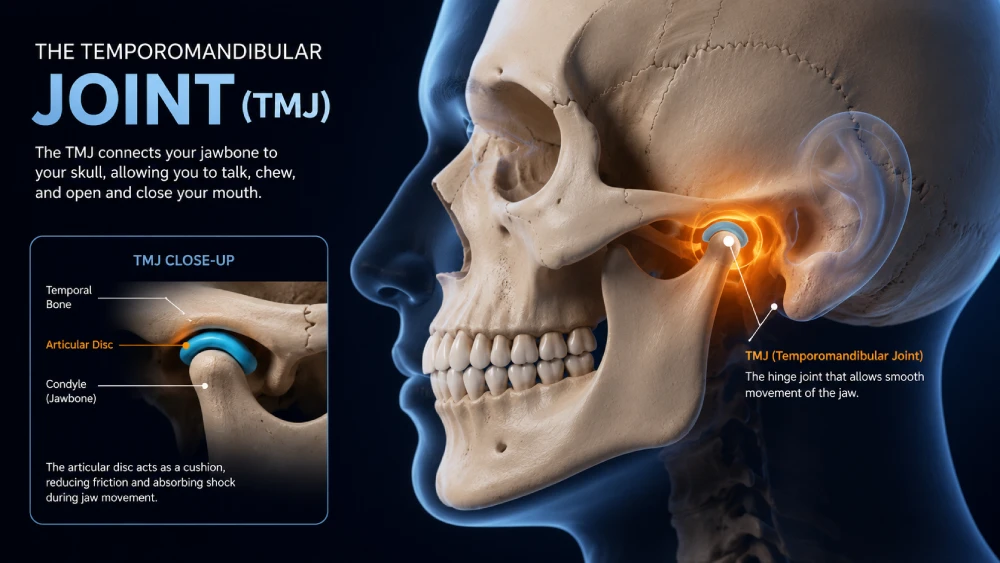
The temporomandibular joint (TMJ) is one of the most used joints in your entire body. It connects your lower jaw (mandible) to the base of your skull, just in front of your ears on both sides. Every time you speak, chew, yawn or swallow, the TMJ is at work.
Unlike most joints, the TMJ has a unique design - it doesn't just hinge open and shut. It also slides forward and rotates, making it a complex joint that relies on a perfect balance of bones, cartilage, a small disc of tissue and multiple muscles. When any part of that system gets out of sync - even slightly - you might start hearing that click.
- Normal Function: The disc cushions the joint as the jaw moves smoothly, silently, and without pain in any direction.
- When Things Go Wrong: The disc shifts or sticks, muscles tighten, and the bones catch - creating that familiar pop or click sound.
What Actually Causes the Clicking Sound?
There isn't one single cause. The clicking in your jaw can come from a few different things happening inside the joint. Here are the most common reasons:
Common Causes of Jaw Clicking
- Disc displacement: A small cartilage disc inside the joint slips slightly out of position. When the jaw opens or closes, the disc snaps back into place - making a popping sound.
- Teeth grinding (bruxism): Many people clench or grind their teeth at night without realizing it. This puts enormous pressure on the TMJ, wearing down the joint and causing clicking over time.
- Jaw clenching from stress: Whether it's a stressful job or a tough week, many of us tighten our jaw muscles without noticing. Over time, this strain affects the joint.
- Poor jaw alignment or bite issues: If your teeth don't meet properly, the extra pressure on one side of the joint can cause clicking and discomfort.
- Injury or trauma: A knock to the jaw, a car accident, or even a dental procedure that required holding your mouth open for a long time can trigger TMJ problems.
- Arthritis: Osteoarthritis or rheumatoid arthritis can affect the TMJ just as it affects other joints in the body, causing clicking along with stiffness and pain.
- Tight neck and shoulder muscles: The jaw doesn't work in isolation. Tension in the neck and upper back often transfers to the jaw, contributing to clicking and discomfort.

It's worth noting that sometimes jaw clicking has no obvious cause - it just develops gradually over time. That's completely normal, and it doesn't mean something serious is wrong. But it does mean the joint is under stress and deserves some attention.
"The jaw is the only joint that works continuously, all day, every day. When it starts making noise, it's simply asking for a little care."
Is Jaw Clicking Always a Problem?
Here's the honest answer: not always. Some people have a jaw that clicks painlessly and has done so for years without any complications. In cases like this, the click is more of a quirk than a medical issue.
However, jaw clicking becomes a concern - and a reason to see a professional - when it shows up alongside other symptoms. Think of the clicking as a warning light. On its own, it might be fine. But if other lights come on at the same time, it's time to pay attention.
Warning Signs That Deserve a Proper Assessment
- Pain or soreness in the jaw, especially when eating or talking
- Headaches that seem to start around the temples or ears
- Earaches or a feeling of fullness in the ears (with no ear infection present)
- Difficulty fully opening or closing your mouth
- A jaw that gets "stuck" or locks for a moment when you open wide
- Neck pain or stiffness that doesn't go away
- Clicking that is getting louder or more frequent over time
- Facial pain, especially in the cheeks or around the eyes
- Difficulty chewing or a change in how your teeth fit together
If even two or three of these sound familiar, it is very likely you have some degree of TMJ dysfunction and a physiotherapist can help you figure out exactly what's going on.
How Is TMJ Dysfunction Diagnosed?
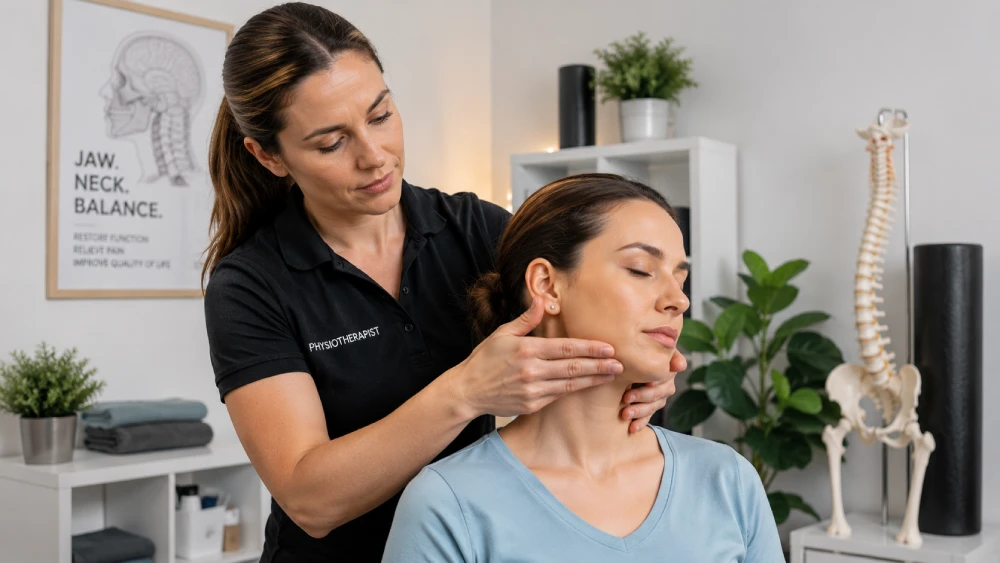
There's no single test that confirms TMJ dysfunction. Instead, a physiotherapist or doctor will take a thorough look at your history - when the clicking started, what makes it better or worse, any past injuries, and your stress levels. They'll then do a physical assessment of your jaw movement, check how far you can open your mouth, feel for muscle tightness around the jaw and neck, and listen for the sounds the joint makes.
Sometimes your doctor may also refer you to a dentist who specializes in jaw disorders, or imaging such as an X-ray or MRI might be ordered to get a clearer look at what's happening inside the joint.
The important thing is to rule out other possible causes - such as nerve pain (trigeminal neuralgia), swollen lymph nodes or salivary gland issues - before landing on a TMJ diagnosis.
Related Conditions at Sterling Physiotherapy
- Neck Pain - often connected to jaw tension and TMJ issues
- Arthritis - a possible cause of TMJ-related joint degeneration
- Myofascial Release - helps relieve jaw and facial muscle tension
- Manual Therapy - hands-on joint mobilization for the jaw
What Can Physiotherapy Do for a Clicking Jaw?
Physiotherapy is widely considered one of the most effective non-surgical treatments for TMJ dysfunction. Unlike medication that simply masks the pain, physiotherapy works to find and fix the actual source of the problem.
At Sterling Physiotherapy in Hamilton, your treatment for jaw clicking typically begins with a full assessment of not just the jaw, but also the neck, shoulders, and upper back - because these areas are deeply connected and often contribute to TMJ problems.
How Sterling Physiotherapy Treats Jaw Clicking
- Manual therapy: Hands-on techniques to gently mobilize the jaw joint and release tension in the muscles around the jaw, neck and head.
- Jaw exercises: Simple, targeted movements that help retrain the muscles to support proper jaw mechanics - reducing the disc displacement that causes clicking.
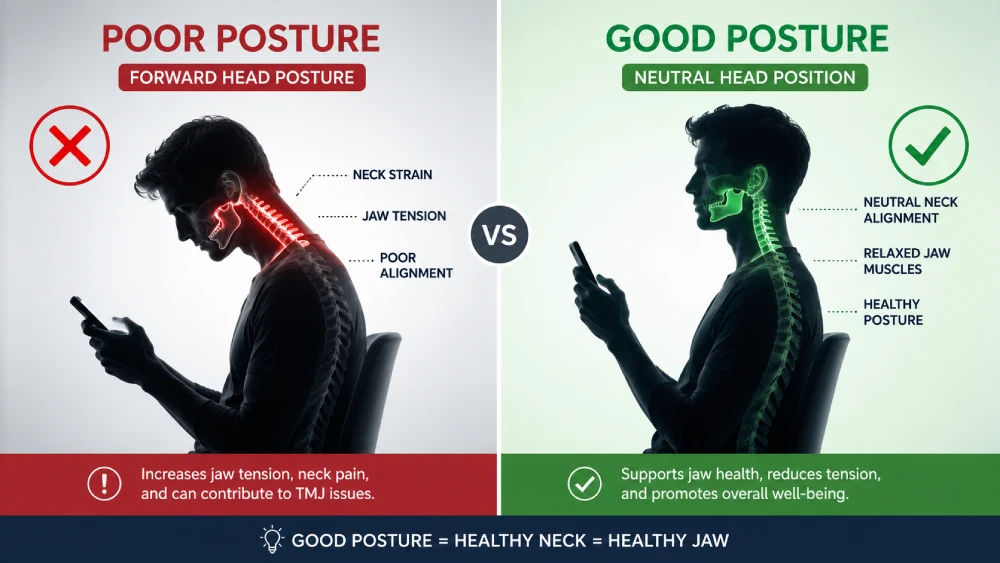
- Postural correction: A forward head posture (that classic "phone neck" position) puts significant strain on the jaw joint. Correcting posture is often a key part of TMJ treatment.
- Myofascial release: Releasing tight bands of tissue in the jaw, face and neck muscles that are pulling the joint out of alignment.
- Ultrasound or electrical stimulation: To reduce inflammation and promote healing in the joint itself.
- Stress management and lifestyle advice: Guidance on habits like jaw clenching, chewing gum, nail biting or sleeping positions that could be making things worse.
Most patients notice a significant improvement within a few weeks of consistent physiotherapy. The goal is not just to quiet the clicking - it's to restore smooth, pain-free jaw function and make sure the problem doesn't keep coming back.
What Can You Do at Home Right Now?
While we always recommend getting a proper assessment from a qualified physiotherapist, there are a few things you can start doing today to ease the discomfort:
Helpful Home Tips
- Rest your jaw: Try to eat softer foods for a while. Avoid chewy foods like bagels, tough meats, or chewing gum that put extra strain on the joint.
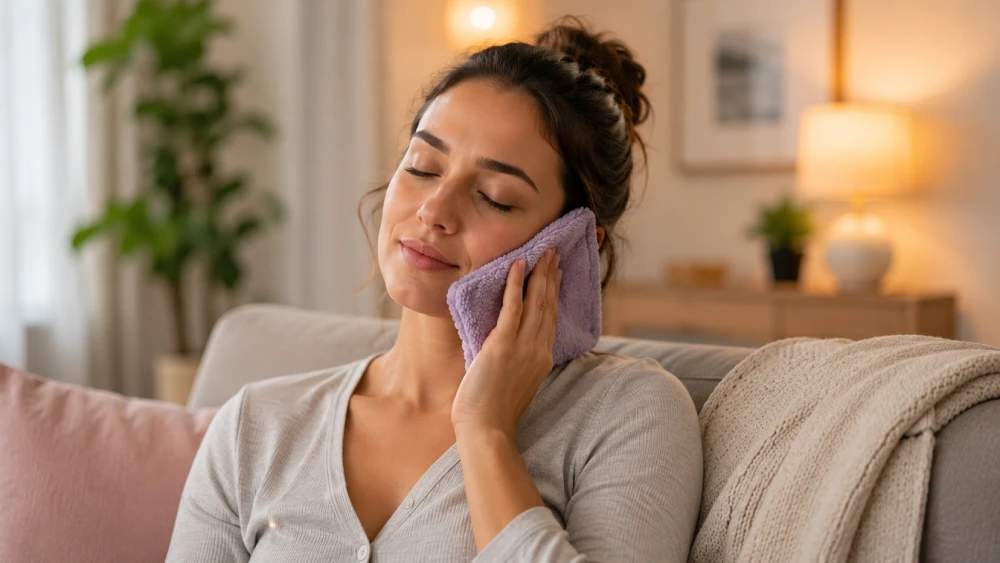
- Apply warmth: A warm, damp cloth held gently against the jaw for 10–15 minutes can help relax tight muscles and ease soreness.
- Be mindful of clenching: During the day, try to keep your teeth slightly apart and your jaw relaxed. The teeth should only touch when you're eating.
- Watch your sleeping position: Sleeping on your stomach with your face pushed into the pillow puts extra stress on the jaw. Side or back sleeping is better for TMJ health.
- Reduce stress: Since stress is one of the biggest drivers of jaw clenching and grinding, anything that helps you unwind - a walk, a bath, breathing exercises - also helps your jaw.
- Avoid wide opening: Try not to open your mouth very wide (like taking huge bites) until you've had proper treatment. Extreme jaw movement can aggravate an already irritated joint.
These tips can help manage symptoms, but they don't replace treatment. If the clicking is painful, worsening or affecting your daily life, please don't wait too long to reach out to a professional.
Can Jaw Clicking Be Prevented?
To some extent, yes. While you can't always prevent TMJ issues - especially those caused by genetics or injury - there are practical habits that significantly lower your risk:
Good posture while working at a desk keeps the neck and jaw aligned. Addressing teeth grinding early (often with a night guard from your dentist) protects the joint from wear. Managing stress proactively means less unconscious jaw clenching. And addressing any neck or shoulder tension through regular physiotherapy or massage therapy before it builds up means the jaw joint doesn't end up carrying extra load.
Think of it like maintaining a car - regular upkeep avoids the big, expensive repairs down the road.
Why Choose Sterling Physiotherapy for Jaw Clicking in Hamilton?
At Sterling Physiotherapy, we have dedicated experience treating TMJ dysfunction as part of a comprehensive approach to your overall musculoskeletal health. We don't just focus on the jaw in isolation - we look at the full picture, including your neck, posture and lifestyle, to make sure you get lasting relief and not just a temporary fix.
Our team provides direct billing to most major insurance providers, so there are no unnecessary headaches when it comes to getting the care you need. With over 175 five-star Google reviews and 10+ years of experience in Hamilton, we're proud to be a trusted name in physiotherapy for families in the area.
Explore Our Services
- TMJ Dysfunction Treatment in Hamilton
- Physiotherapy in Hamilton
- Massage Therapy - for jaw and neck muscle tension
- Myofascial Release Therapy
- Direct Billing - we handle most insurance providers
Ready to Stop That Click for Good?
Don't let jaw pain or clicking disrupt your daily life. Our physiotherapy team in Hamilton is here to help you find real, lasting relief.
Book an Appointment Today
Call: (289) 401 2900
Visit: 505 Rymal Rd E, Hamilton, ON
Hours: Mon–Fri: 10 AM – 8 PM | Sat: 10 AM – 3 PM
Disclaimer: This blog is for general informational purposes only and does not constitute medical advice. Always consult a qualified healthcare professional for diagnosis and treatment specific to your condition. If you are experiencing severe jaw pain, difficulty breathing, or swallowing, please seek emergency medical care.
Jaw clicking is most commonly caused by a shift in the small cartilage disc inside your temporomandibular joint (TMJ). When you open your mouth, the disc snaps back into position, creating that pop or click sound. Other causes include teeth grinding, muscle tension, jaw injury, arthritis, or misalignment of the bite.
Painless jaw clicking without other symptoms is usually not dangerous. However, if the clicking comes with pain, jaw locking, headaches, ear pain, or difficulty chewing, it is a sign of TMJ dysfunction and should be assessed by a physiotherapist or doctor. Left untreated, it can worsen over time.
Yes - physiotherapy is one of the most effective treatments for a clicking jaw caused by TMJ dysfunction. Techniques like manual therapy, jaw exercises, myofascial release and postural correction address the root cause and help restore smooth, pain-free jaw movement.
Yes. Sterling Physiotherapy at 505 Rymal Rd E, Hamilton, ON specializes in TMJ dysfunction treatment, including jaw clicking, jaw pain, and related conditions. You can call us at (289) 401-2900 or book an appointment online. We offer direct billing to most major insurance providers.