
Pelvic floor physiotherapy is a specialized branch of rehabilitation that focuses on assessing, strengthening, and relaxing the muscles and surrounding connective tissues at the base of your pelvis.
This therapy can be beneficial for women or men of any age, as well as those dealing with bladder leakage, pain, pregnancy-related concerns, postpartum issues, bowel health, pelvic prolapse, or surgery recovery.
At Sterling Physiotherapy in Hamilton, we offer personalized pelvic health care to help you manage your symptoms, meet your comfort needs, and get you back to doing the things you enjoy.

What is the Pelvic Floor?
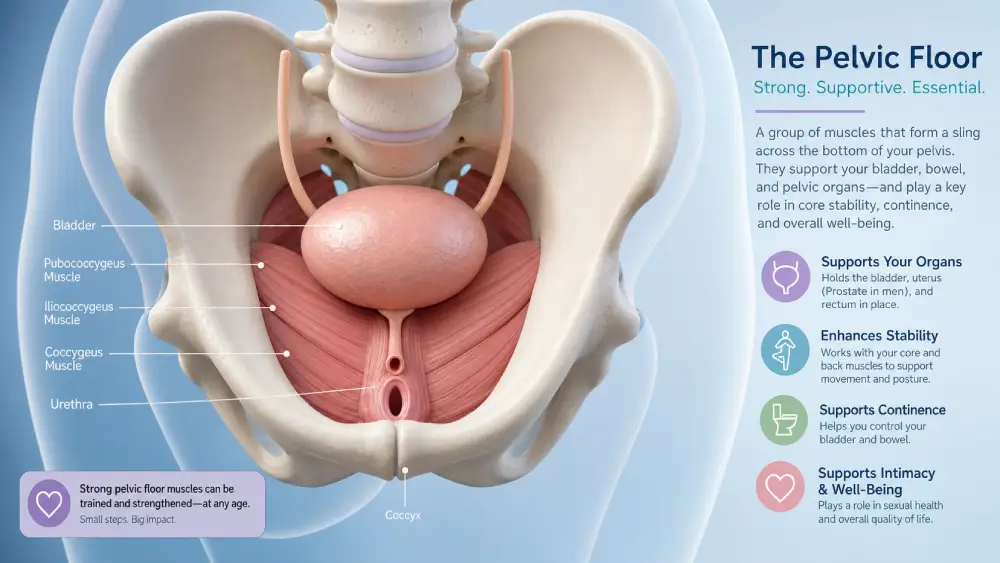
The pelvic floor is a group of muscles and connective tissues located at the bottom of your pelvis. Imagine a hammock that supports your bladder and bowel, as well as your sexual organs.
Your pelvic floor muscles perform several essential functions:
- Control urination and bowel movements
- Provide structural support to your pelvis and spine
- Contribute to sexual function and comfort
- Support daily movements like sitting, standing, walking, and exercising
Your pelvic floor needs to be flexible enough to open and relax, while also being strong enough to support you throughout the day. Just like any other muscle group, your pelvic floor can become weak, tight, tender, or uncoordinated.
This is why pelvic health physiotherapy is much more than just “Kegels” — it’s about building a personalized program tailored to your specific anatomy and lifestyle needs.
What Does Pelvic Floor Physiotherapy Help With?
A specialized physiotherapist can address a wide variety of pelvic health concerns. In some cases, you might already know why you’re seeking treatment, while in others, your therapist can help identify the root cause during an assessment.
1. Bladder Leakage or Loss of Control
One of the most common reasons people seek pelvic floor physiotherapy is bladder leakage (urinary incontinence). You might leak urine when coughing, sneezing, laughing, running, exercising, or lifting heavy objects, or you may experience sudden, intense urges to pass urine. A physiotherapist can build a customized pelvic floor muscle training and bladder management routine.
2. Pelvic Pain
If you experience pain in your pelvis, hips, tailbone, lower abdomen, or pelvic muscles, a physiotherapist can help. In many cases, discomfort stems from overly tight pelvic muscles that cannot fully relax. A comprehensive assessment helps pinpoint the precise muscular trigger points.
3. Pregnancy-Related Concerns
During pregnancy, your pelvic floor, abdominal muscles, hips, and spine undergo significant stress. Pelvic floor physiotherapy helps manage structural changes and prepares your body for labor and delivery through targeted stretches, breathing techniques, posture adjustments, and core coordination.
4. Postpartum Pelvic Floor Recovery
Childbirth places immense strain on your abdominal wall and pelvic floor, whether you had a vaginal delivery or a C-section. Postpartum physiotherapy aids recovery by targeting core weakness, scar tissue sensitivity, pelvic pain, and bladder dysfunction.
5. Pelvic Organ Prolapse
Pelvic organ prolapse occurs when weak muscles or tissues cause pelvic organs to press against the vaginal wall, creating a feeling of heaviness or pressure. Physiotherapy helps restore muscle support through pressure-reduction techniques, breathwork, and targeted stabilization exercises.
6. Bowel Control and Digestive Issues
Your pelvic floor plays a crucial role in bowel regulation. Issues like chronic constipation, painful bowel movements, difficulty emptying, or bowel leakage can often be addressed by restoring muscle coordination and relaxing hypertonic pelvic muscles.
7. Painful Sex (Dyspareunia)
Tight or irritated pelvic floor muscles can lead to pain during or after intimacy. Treatment focuses on gentle muscle mobilization, relaxation strategies, guided breathing, and patient-guided comfort boundaries.
8. Men’s Pelvic Floor Health
Pelvic health care is equally important for men. Common male pelvic floor concerns include chronic pelvic pain syndrome (CPPS), post-prostatectomy urinary incontinence, and pelvic stiffness. A targeted therapy plan helps restore muscle balance and relieve discomfort.
Who is Pelvic Floor Physiotherapy For?
If you are pregnant, recovering postpartum, experiencing pelvic pain, dealing with bladder or bowel leakage, or recovering from pelvic surgery — you are a candidate for pelvic floor physiotherapy.
You don't need to be an athlete, and you don't even need to have severe incontinence to benefit. Pelvic floor issues affect people of all ages, fitness levels, and genders.
At Sterling Physiotherapy, we provide private, compassionate pelvic health care tailored specifically to your goals.
What Happens During an Initial Assessment?
It is completely normal to feel nervous before your first appointment, especially regarding an internal examination. Your comfort and consent are always the top priority.
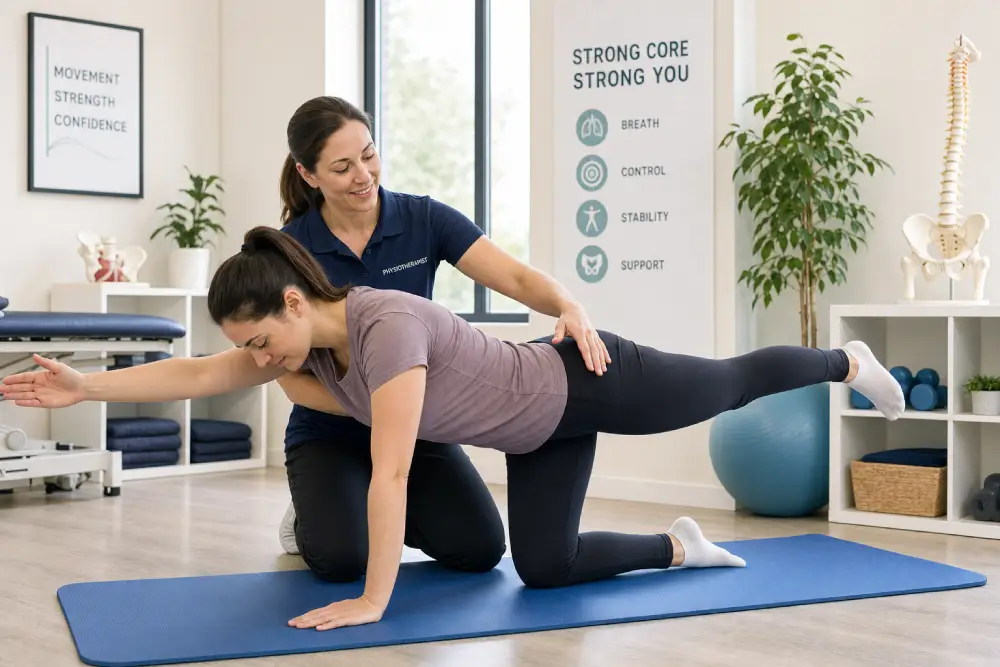
An initial assessment typically includes:
- A detailed discussion of your medical history, symptoms, and daily habits
- An evaluation of pelvic and hip mobility, posture, breathing patterns, and core activation
- An optional, gentle internal muscle assessment (only performed with your full consent and comfort)
Treatment plans may incorporate targeted exercises, manual therapy, education, breathing techniques, and lifestyle adjustments.
Do I Need Pelvic Floor Therapy If I Don’t Leak Urine?
Not necessarily. Many pelvic floor conditions present without any urinary leakage. You may seek therapy for pelvic pain, core instability, painful intercourse, pressure feelings, or bowel irregularities. In fact, many individuals suffer from overactive (overly tight) pelvic floor muscles, where traditional Kegels would actually worsen the condition.
When Should You See a Pelvic Floor Physiotherapist?
You should consider scheduling an assessment if pelvic symptoms interfere with your exercise routine, daily activities, sleep, or intimate relationships. Seeking an early assessment provides clarity and sets a clear roadmap toward recovery.
Restore Your Comfort and Quality of Life
You don't have to live with pelvic pain, bladder leakage, or postpartum discomfort. Evidence-based pelvic health physiotherapy can help you regain control and confidence.
Sterling Physiotherapy
505 Rymal Rd E, Hamilton, ON L8W 3X1
Phone: (289) 401-2900
Website: sterlingphysiotherapy.com
Book an appointment with a pelvic physiotherapist at Sterling Physiotherapy today to take the first step toward better pelvic health.