Plantar Fasciitis Treatment in Hamilton: Causes, Symptoms and Physiotherapy Relief
Get relief from plantar fasciitis and heel pain with personalized physiotherapy in Hamilton. Explore treatment, stretching, strengthening and recovery options at Sterling Physiotherapy.
Plantar Fasciitis Treatment in Hamilton: Causes, Symptoms and Physiotherapy Relief
Get relief from plantar fasciitis and heel pain with personalized physiotherapy in Hamilton. Explore treatment, stretching, strengthening and recovery options at Sterling Physiotherapy.
Plantar Fasciitis Treatment in Hamilton: Causes, Symptoms and Physiotherapy Relief
Get relief from plantar fasciitis and heel pain with personalized physiotherapy in Hamilton. Explore treatment, stretching, strengthening and recovery options at Sterling Physiotherapy.
Plantar fasciitis results in pain in the bottom of the heel. This occurs due to irritation of the plantar fascia. It is often very painful upon first standing and after sitting. This condition can be effectively managed in physiotherapy using load management, stretching, strengthening and sometimes more advanced techniques in stubborn cases, such as shockwave.
Quick Overview: Managing Plantar Fasciitis
Plantar fasciitis causes sharp pain at the bottom of the heel due to repetitive overload and irritation of the plantar fascia tissue. It is typically worst during your first steps out of bed or after prolonged sitting. Evidence-based physiotherapy in Hamilton effectively resolves heel pain through load management, targeted calf and arch stretching, progressive strengthening, custom orthotics, and shockwave therapy for persistent cases.
If you are suffering from heel pain and finding activities such as walking or exercising uncomfortable, you may be suffering from plantar fasciitis. Below, we outline what causes this condition, effective treatments, and how we can help you manage plantar fasciitis in Hamilton.
What is Plantar Fasciitis?
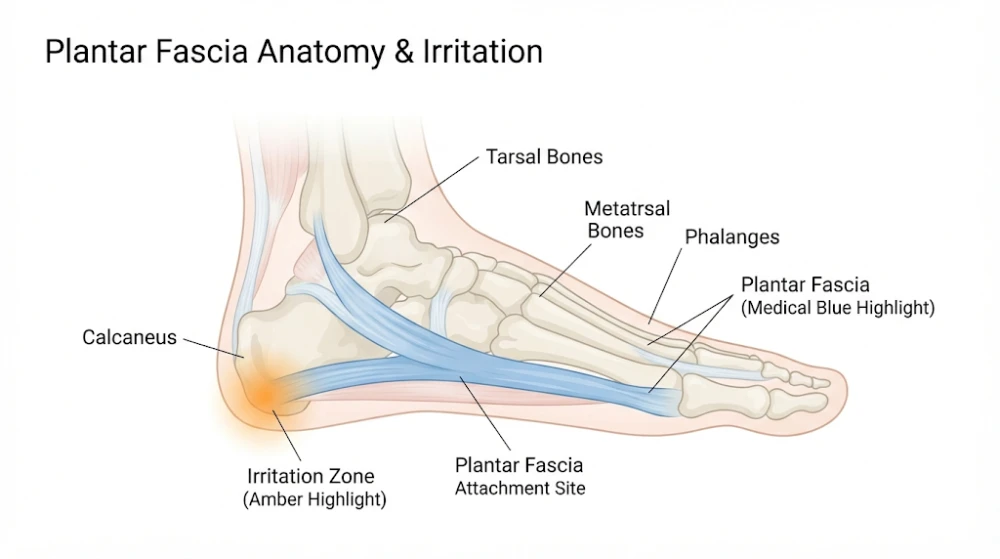
Plantar fasciitis occurs in the thick tissue structure (plantar fascia) connecting the heel to the toes. Repeated overloading of this area can cause pain and irritation in the heel where the plantar fascia attaches.
Although it has ‘inflammation’ in the name, the current view is that it is more related to overuse of the tissue. Therefore, in many cases, simply resting the tissue and taking anti-inflammatories may not be enough. It is common in runners, people who stand for work, and adults aged approximately 40–60 years.
The plantar fascia supports the arch of your foot and absorbs shock with every step.
Plantar Fasciitis Symptoms
Common signs that your heel pain is caused by plantar fasciitis include:
Pain in the bottom of the heel, especially first thing in the morning or after sitting
Pain reduces with warming up, but comes back with prolonged standing
Pain on palpation (pressing) of the inside front of the heel
Stiffness in the arch or at the back of the ankle
Pain when going up stairs or pushing off to walk/run
Causes of Plantar Fasciitis
Several biomechanical and lifestyle factors can overload the plantar fascia:
Sudden increase in activity volume (running, walking, or standing)
Tight calf muscles or limited ankle range of movement
Standing on hard surfaces and/or inappropriate footwear (flat or highly worn shoes)
Prolonged standing at work
Excess weight meaning extra load on the foot
Structural issues in the foot and movement patterns of the foot (high/low arch, weak foot muscles)
Important Note: Not all heel pain will be plantar fasciitis. Pain caused by nerve irritation, stress fractures in the heel, and fat pad issues in the heel may feel similar. An appropriate assessment is therefore important.
Physiotherapy Treatment for Plantar Fasciitis
Following a thorough assessment, your physiotherapist will confirm your diagnosis and examine your foot, ankle, and calf joint, as well as your walking/running gait. They will then create a customized treatment plan to reduce overload. Common treatments include:
Load Management
Modifying activity to allow the irritated tissue to settle while safely maintaining your overall fitness.
Targeted Stretching
Stretching of the plantar fascia and calf. Short stretches should be completed regularly to relieve tightness and reduce morning pain.
Progressive Strengthening
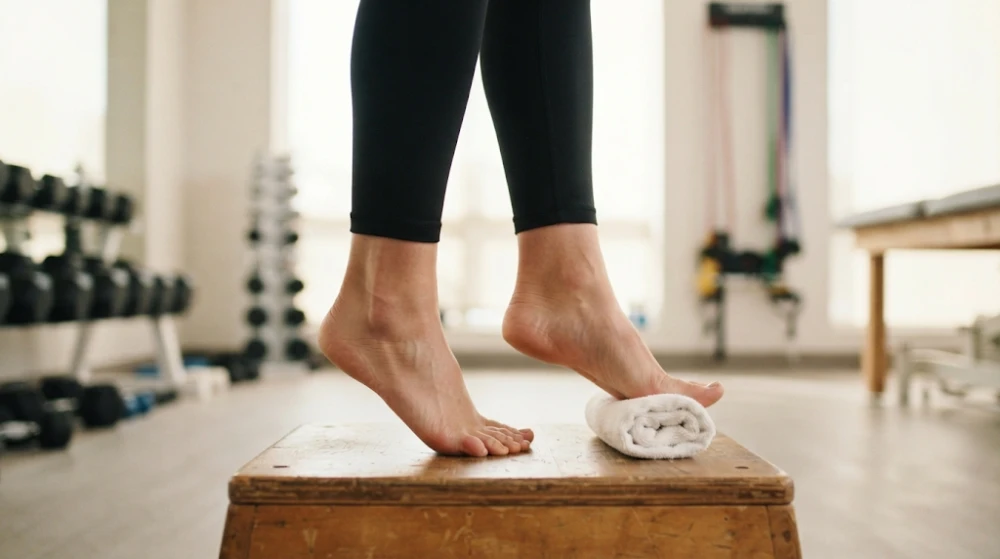
Heavy slow calf raises and intrinsic foot muscle strengthening. Research supports these exercises to improve tissue load capacity.
Taping & Custom Orthotics
Temporary arch taping to reduce pain whilst building strength, alongside supportive footwear advice and custom orthotics depending on your needs.
Manual Therapy & Massage
Hands-on joint mobilization and massage therapy to reduce tension in the calf, ankle, and foot.
Progressive calf and foot strengthening builds long-term load tolerance in the plantar fascia.
Self-Management Tips at Home
Alongside your physiotherapy program, these daily habits help protect your heel:
Avoid walking barefoot on hard surfaces, particularly first thing in the morning. Keep supportive indoor slippers or sandals beside your bed.
Warm up before standing: Gently flex and point your foot and ankle for 1 minute before getting out of bed or standing up from a desk.
Wear supportive footwear: Replace worn-out running or walking shoes that have lost their midsole cushioning.
Gradually increase activity levels: Avoid sudden spikes in walking distance, running mileage, or standing hours.
Apply ice or perform a massaging roll over the arch of your foot using a chilled water bottle or massage ball for temporary comfort.
How Long Does Plantar Fasciitis Take to Resolve?
Many people recover from plantar fasciitis within a few months, and the vast majority will make a full recovery within approximately 1 year. Because tendon and fascia tissue adapts slowly, progressive strengthening and sensible activity levels are far more effective than quick fixes. Starting targeted treatment early can significantly shorten the time needed to recover compared to simply waiting for symptoms to improve.
Are Injections or Surgery Needed?
Although corticosteroid injections can provide short-term pain relief, they carry risks (such as fat pad atrophy or fascia rupture) and do not help the tissue strengthen. Therefore, they are generally not a first-line treatment. Surgery is very rarely required and would only be considered if a long period of well-delivered conservative management has not resolved symptoms. We can support you with decision-making regarding these treatments and work alongside your family doctor if required.
Seek Medical Advice Quickly If…
Your pain occurred following a major injury or fall, you cannot put weight through your foot, or there is significant swelling, redness, heat, or numbness/tingling in your foot. You should also seek prompt evaluation if you experience severe pain at rest/night, or if you have diabetes and notice any wounds or changes in your foot.
Why Choose Sterling Physiotherapy for Plantar Fasciitis Treatment in Hamilton?
At Sterling Physiotherapy, we accurately diagnose and clearly explain the root cause of your heel pain. We tailor your rehabilitation plan based on your occupation, footwear and activity goals-supporting you with hands-on manual therapy, progressive exercise rehab and a safe return to walking or running.
Because foot mechanics are closely linked to the rest of your lower body, if you also experience discomfort in other areas of the lower limb including knees and hips, explore our musculoskeletal physiotherapy in Hamilton. If you’re looking for a trusted local physiotherapy clinic for heel pain on Hamilton Mountain and the surrounding area, we’d be happy to help.
Book Your Plantar Fasciitis Assessment in Hamilton
Don’t let heel pain affect your first steps out of bed! Get a clear diagnosis and long-term solution at Sterling Physiotherapy (505 Rymal Rd E, Hamilton, ON).
Medical Disclaimer: This article is for general information purposes only and does not constitute medical advice. Always seek advice from a qualified healthcare professional for concerns relating to your condition.
Physiotherapy Can Help Manage Plantar Fasciitis Through Individualized Treatment That May Include Manual Therapy, Plantar Fascia And Calf Stretching, Foot And Ankle Strengthening, Taping, Footwear Guidance And Activity Modification.
Recovery From Plantar Fasciitis Varies Depending On Symptom Severity, Duration And Individual Response To Treatment. Some People Notice Improvement Within Several Weeks, While Persistent Or Chronic Symptoms May Take Several Months To Improve.
Plantar Fasciitis Can Develop Due To Repetitive Loading And Stress On The Plantar Fascia. Contributing Factors Include Prolonged Standing Or Walking, Increased Physical Activity, Tight Calf Muscles, Foot Mechanics And Inadequate Footwear.
Plantar Fasciitis Is A Common Cause Of Heel Pain Involving The Plantar Fascia, A Thick Band Of Tissue Along The Bottom Of The Foot. It Commonly Causes Pain Around The Heel, Especially During The First Steps After Waking Up Or Resting.
During Periods Of Rest, The Plantar Fascia May Become Less Flexible. Taking The First Steps In The Morning Stretches The Tissue And Can Trigger Heel Pain Or Discomfort.