
Sciatica Treatment in Hamilton: Causes, Relief & Physiotherapy

Sciatica Treatment in Hamilton: Causes, Relief & Physiotherapy

Back pain shooting down your leg? Learn the causes of sciatica, what helps it heal and how physiotherapy can speed recovery in Hamilton.

Sciatica Treatment in Hamilton: Causes, Relief & Physiotherapy

Back pain shooting down your leg? Learn the causes of sciatica, what helps it heal and how physiotherapy can speed recovery in Hamilton.

Sciatica Treatment in Hamilton: Causes, Relief & Physiotherapy

Back pain shooting down your leg? Learn the causes of sciatica, what helps it heal and how physiotherapy can speed recovery in Hamilton.

Sciatica Treatment in Hamilton: Causes, Relief & Physiotherapy

Sciatica is pain, tingling and/or numbness travelling from your lower back or bottom down your leg. Most commonly caused by irritation or pressure on your nerve roots in your lower back. Physiotherapy can help reduce irritation in the nerve, regain movement and strengthen. The majority of people will improve without surgery.


Key Takeaways (TL;DR)

  • Sciatica is a symptom (radiating pain, tingling, numbness) caused by nerve root compression, not a standalone diagnosis.
  • Common causes include herniated discs, spinal stenosis, and deep gluteal tightness.
  • Lower back pain that radiates down the leg can be effectively managed with targeted, movement-based physiotherapy.
  • Most patients experience significant recovery within 4 to 6 weeks using conservative care; surgery is rarely necessary.

Does pain shooting down your leg mean you’re struggling to sleep, go to work or do your workouts? This article will tell you all about what can cause sciatica, what can help relieve your symptoms and how we can get you moving comfortably with sciatica treatment in Hamilton.

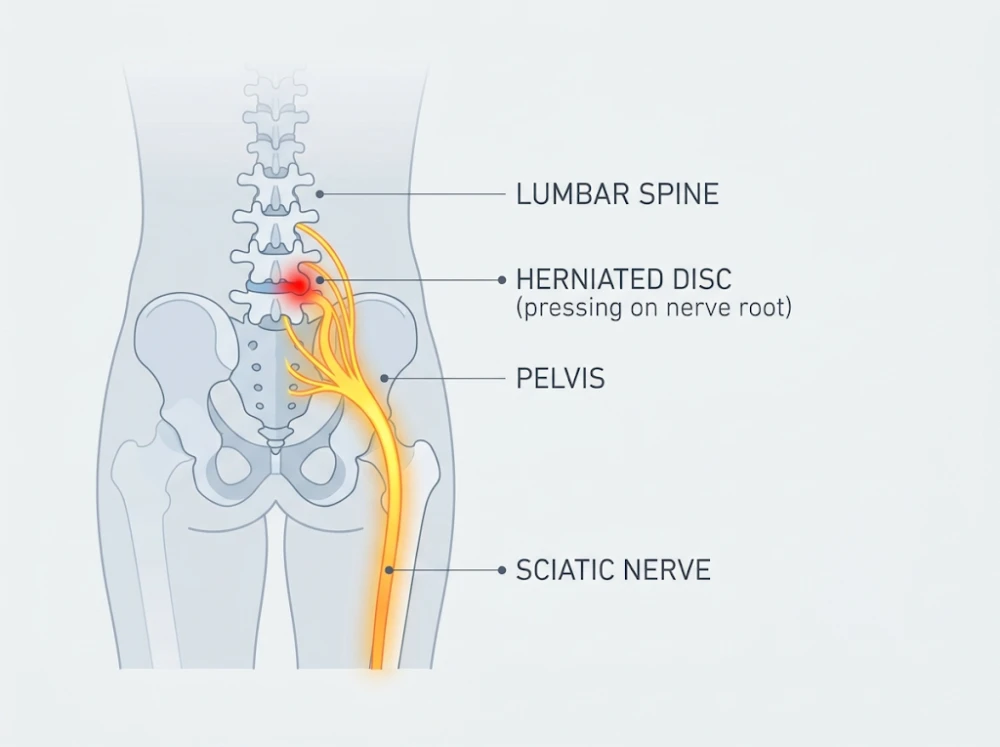
Anatomical diagram showing the sciatic nerve running from the lower back down the leg, illustrating nerve compression

What is Sciatica?

Sciatica refers to any symptoms that occur along the longest nerve in your body. This is formed from nerve roots in your lower back area. It passes through your bottom and down the back of your leg. Sciatica is not a diagnosis but a description of symptoms. Typically only affecting one side. The pain can vary from a dull ache to a sharp, electrical pain.

Common Symptoms of Sciatica

  • Radiating Pain: Pain from your lower back and/or bottom into your thigh, calf and/or foot.
  • Sensory Changes: Tingling, burning and/or numbness in your leg and/or foot.
  • Movement Triggers: Increased pain when sitting, bending, coughing or sneezing.
  • Muscular Weakness: Weakness in your leg and/or a heavy feeling in your foot.
  • Location: Pain that is more prominent down your leg than in your back.

Common Causes of Sciatica

  • Herniated disc: A bulging disc causing pressure on your nerve root.
  • Stenosis: Narrowing of the nerve passageways. More common with age.
  • Degenerative changes: Wear and tear to discs and joints in your lower back.
  • Piriformis/Deep Gluteal Syndrome: Tightness in your bottom muscles causing irritation to the nerve.
  • Pregnancy: Altered posture and increased pelvis loading.
  • Lifestyle Factors: Injury and/or sitting for long periods causing excessive loading on your lower back.
Person sitting at a desk with poor posture experiencing lower back and sciatica pain

Physiotherapy Treatment for Sciatica

Your Physio will firstly identify what is causing your nerve to become irritated and what movements and positions help reduce your symptoms. Your Physio will then create a treatment plan specific for you. This could include:

Education & Reassurance

Learning that most people will improve with sciatica. Discover what to do and what to avoid whilst your symptoms are present.

Movement Based Treatments

Specific, guided postures and movements designed to reduce your leg symptoms.

Nerve Mobilisations

Targeted techniques to allow your irritated nerve to move more freely, when appropriate.

Hands-on Treatment

Using manual therapy to reduce stiffness in your joints and tightness in your muscles in your back, hips, and bottom.

  • Strengthening: Building your core and hip muscles to provide support to your spine and reduce flare ups.
  • Ergonomics: Advice on improving your posture, workstation, and lifting techniques to reduce strain.
  • Activity Modification: A progressive, tailored return to activities, including work, exercise, and sport.
Physiotherapist performing a guided nerve mobilisation stretch on a patient's leg for sciatica relief

Tips for Self Care

  • Try to stay active: Usually short, frequent walks will help more than lying down.
  • Limit sitting: Try not to sit for too long. Get up and move every 30 mins or so.
  • Find comfortable postures: Placing a pillow between your knees when lying on your side, or underneath your knees when lying on your back, can help you sleep.
  • Use contrast therapy: Heat or ice can help alleviate localized pain.
  • Correct lifting techniques: Keep the load close, don’t twist suddenly, and bend your hips and knees.
  • Don’t over-rest: Lying in bed for too long can often make recovery slower. Avoid postures and exercises that make your pain shoot further down your leg. Ask your Physio for an alternative.

How long will my Sciatica last?

Many people will see improvements within 4-6 weeks. Most people will improve with conservative treatments within approximately 3 months. Recovery times will vary depending on the cause and severity.

If your pain is severe or getting worse and not improving after a few weeks, see a health professional. If your symptoms are disabling and/or you have ongoing nerve weakness you can discuss options such as medication, injection and in some cases surgery with your doctor.

Why choose Sterling Physiotherapy for Sciatica Treatment in Hamilton?

We will help find the real cause of your leg pain and explain it to you simply. We offer hands on treatment, simple exercises to do at home and advice on returning to work, sleeping and being active.

If you have more concerns related to your back, hips and joints please refer to our musculoskeletal physiotherapy in Hamilton page. We can help you find a Physio nearby.


Book an Assessment for Sciatica in Hamilton

You don’t need to suffer with pain down your leg. Book an assessment with us today. We will give you a clear diagnosis and treatment plan to help relieve your symptoms.

Call (289) 401 2900

Disclaimer: This article is for educational purposes only and should not be used as a substitute for individual advice. Please seek advice from a qualified healthcare professional.

Need Fast Sciatica Relief?

Our Hamilton physiotherapists specialize in fast, effective nerve pain relief and targeted mobility treatments.

Book Assessment Online Call (289) 401 2900

Frequently asked questions

In Ontario You Can Book Physiotherapy Directly Without A Referral. Check With Your Insurer, As Some Plans Have Their Own Requirements.

View More

Usually Not At First. An MRI Is Considered If There Are Warning Signs, Progressive Weakness Or Symptoms That Don't Improve With Treatment.

View More

Many People Improve Within 4 To 6 Weeks And Most Within About 3 Months. Severe, Worsening Or Non-improving Symptoms Should Be Reviewed By A Healthcare Professional.

View More

For Most People, Short, Gentle Walks Help. Build Up Gradually And Ease Off If Walking Sharply Increases Leg Pain.

View More

There's Rarely One Quick Fix, But Staying Gently Active, Breaking Up Sitting, Using Positions That Ease Your Leg Symptoms And Following A Targeted Exercise Plan Usually Helps Most.

View More

Subscribe To Our Newsletter

📞 Call Now Book Appointment