
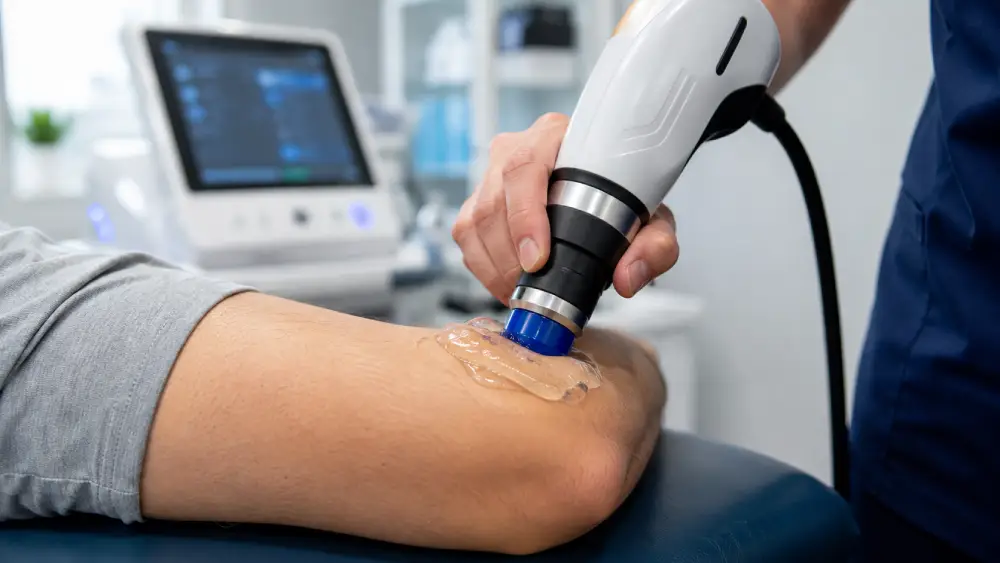
If standard conservative treatments have failed to deliver satisfactory relief, you may benefit from Shockwave Therapy in Hamilton. At Sterling Physiotherapy, our clinical team offers state-of-the-art shockwave therapy combined with individualized rehabilitation programs to help you recover faster.
What Is Shockwave Therapy?
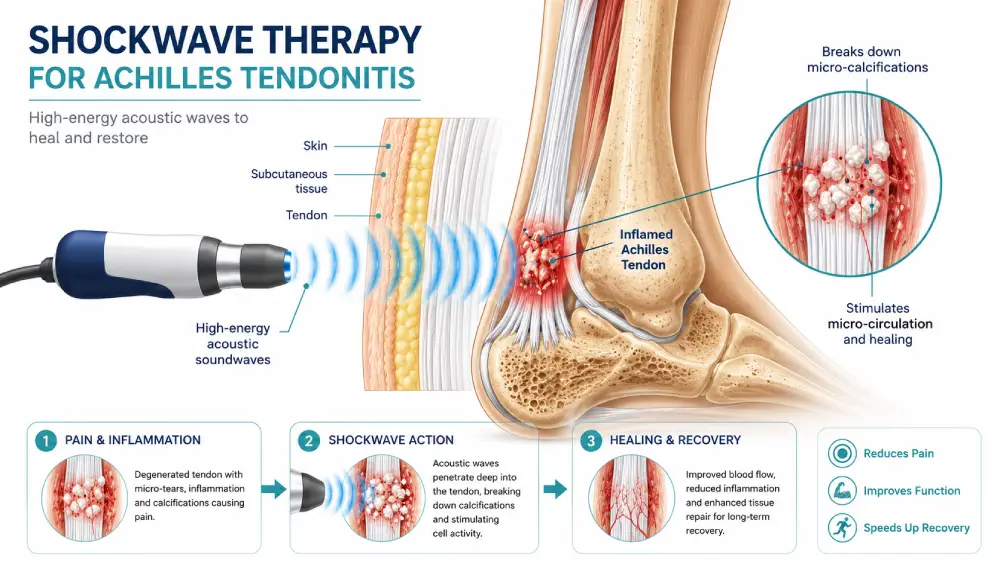
Otherwise known as Extracorporeal Shockwave Therapy (ESWT), shockwave therapy utilizes high-powered acoustic soundwaves to treat chronic muscle, tendon, joint, and ligament injuries. It is a minimally invasive procedure that triggers the body’s natural regenerative abilities to repair damaged soft tissue.
Clinical evidence demonstrates that ESWT is exceptionally effective for managing lower limb tendinopathies and calcific tendinopathy. However, shockwave therapy is not a standalone cure-all; it achieves optimal results when integrated into a structured physiotherapy program tailored to your physical goals.
Common Conditions Treated With Shockwave Therapy
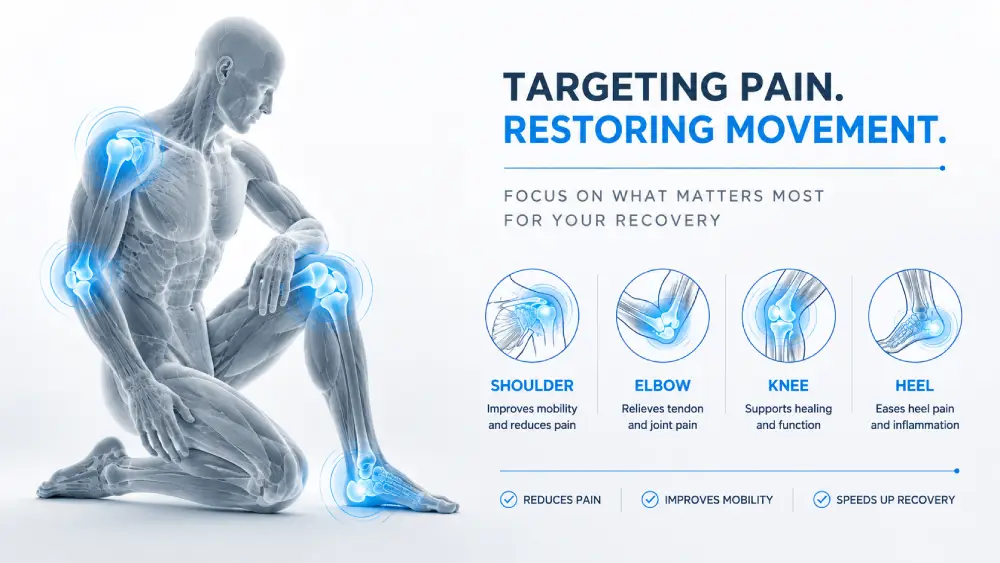
ESWT is specifically indicated for chronic musculoskeletal conditions that have not responded adequately to rest, ice, or traditional medication. Key conditions treated at our Hamilton clinic include:
| Condition | Primary Symptoms | How Shockwave Helps |
|---|---|---|
| Plantar Fasciitis | Severe heel pain, especially during early morning steps. | Stimulates collagen production and relieves chronic tissue strain under the foot. |
| Tennis & Golfer’s Elbow | Outer or inner elbow pain from repetitive forearm use. | Reduces micro-tears, inflammation, and degenerative tendon soreness. |
| Calcific Shoulder Tendinitis | Restricted shoulder mobility due to mineral deposits. | Acoustic energy breaks down calcified buildup within shoulder tendons. |
| Jumper’s Knee (Patellar Tendinopathy) | Pain at the front of the knee during jumping or running. | Promotes localized blood flow and tissue remodeling for active athletes. |
| Achilles Tendinopathy | Stiffness and aching along the back of the ankle/heel. | Increases metabolic activity in thick, slow-healing Achilles tendon tissue. |
| Hamstring & Gluteal Tendinopathy | Deep, persistent buttock or upper thigh discomfort. | Relieves chronic tendinitis pain when standard stretches yield slow progress. |
How Does Shockwave Therapy Work?
Shockwave Therapy operates by delivering precise acoustic pulses into deep biological structures. These high-energy waves stimulate cellular processes essential for long-term tissue repair:
- Stimulates Cellular Repair: Increases growth factor release to regenerate injured tissues.
- Enhances Blood Circulation: Promotes new vessel formation (neo-vascularization) to supply oxygen and nutrients.
- Triggers Collagen Synthesis: Rebuilds damaged tendon fibers with stronger structural tissue.
- Breaks Down Calcified Deposits: Dissolves localized calcium deposits in chronic tendinitis.
- Reduces Chronic Inflammation: Re-initiates a controlled, natural healing cycle in dormant injuries.
- Blocks Pain Signals: Temporarily numbs nerve endings to provide immediate symptom relief.
What to Expect During Your Treatment Session
Your journey begins with a thorough clinical evaluation by a registered therapist at Sterling Physiotherapy to ensure you are a suitable candidate for ESWT.
- Initial Assessment: Evaluation of your injury, mobility limits, and pain history.
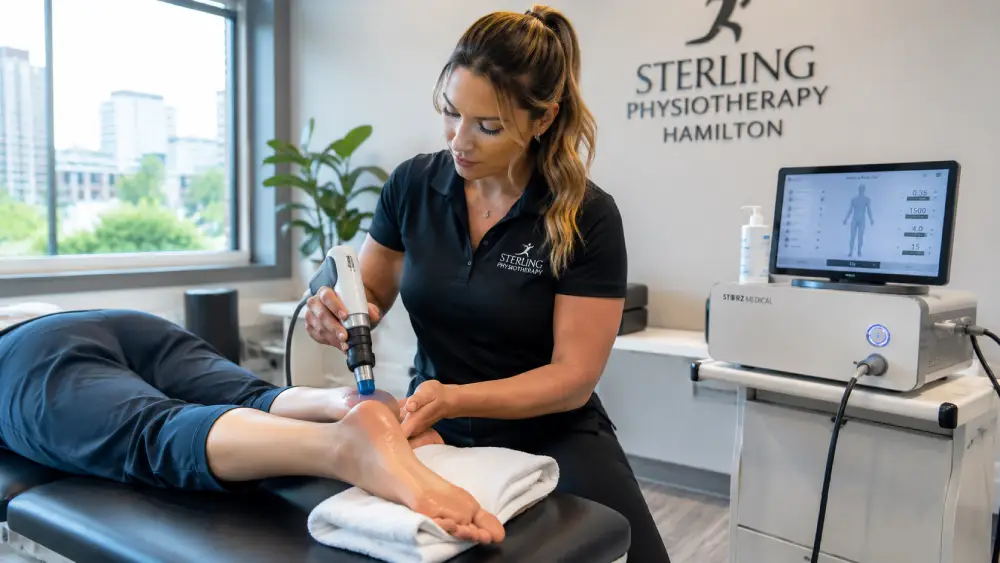
- Conductive Gel Application: A specialized water-based gel is applied to the targeted anatomical site to facilitate smooth soundwave transfer.
- Application of Soundwaves: The physiotherapist gently glides the shockwave handpiece over the targeted region. You may feel a slight tingling or mild aching sensation as the energy penetrates the tissue.
- Session Duration: Treatment typically lasts between 10 to 20 minutes, allowing you to return to work or daily routines immediately afterward.

How Many Sessions Will You Need?
Most patients require 3 to 6 sessions, scheduled roughly one week apart. Many individuals report noticeable pain relief after just 2 or 3 appointments. For complex or longstanding conditions, additional sessions may be recommended alongside exercise therapy.
Is Shockwave Therapy Painful?
While treatment can produce mild discomfort—particularly over tender trigger points or hyper-sensitive areas—the sensation is temporary and easily manageable. Your physiotherapist can adjust the energy intensity in real time to match your comfort level while maintaining therapeutic efficacy.
Contraindications: Who Should Avoid Shockwave Therapy?
Although safe and health-authority-cleared, ESWT is not recommended for everyone. Contraindications include:
- Pregnancy
- Bleeding or blood-clotting disorders
- Current use of blood thinners (anticoagulant therapy)
- Malignant tumors in the treatment region
- Active skin infections or open wounds in the target area
- Open growth plates in children and young adolescents
- Severe peripheral neuropathy
Why Shockwave Therapy Must Be Combined With Physiotherapy
While shockwave therapy accelerates cellular repair, it does not correct joint biomechanics, muscular weaknesses, or postural imbalances on its own. To prevent recurring injuries, Sterling Physiotherapy in Hamilton pairs ESWT with comprehensive rehabilitation strategies:
- Hands-on Manual Therapy: Restores joint motion and softens tight myofascial tissues.
- Targeted Strengthening & Mobility Exercises: Builds tendon load capacity and joint stability.
- Posture & Ergonomic Corrections: Eliminates movement strains in daily work environments.
- Sports Injury Management: Safe return-to-sport protocols for athletes.
Take the First Step Toward Pain-Free Living
Don't let chronic tendon or joint pain hold you back any longer. Contact Sterling Physiotherapy in Hamilton today to schedule your shockwave therapy consultation.