
If conservative treatment options have failed to provide you with much-needed relief, you might have come across the term shockwave therapy as a potential solution.
Physiotherapy shockwave therapy is a non-invasive treatment that uses acoustic waves to stimulate the healing process in targeted tissues. It serves as a valuable addition to your comprehensive rehabilitation program at our Hamilton, Ontario clinic for chronic tendon and soft tissue conditions as part of a personalized care plan.
What Is Shockwave Therapy?
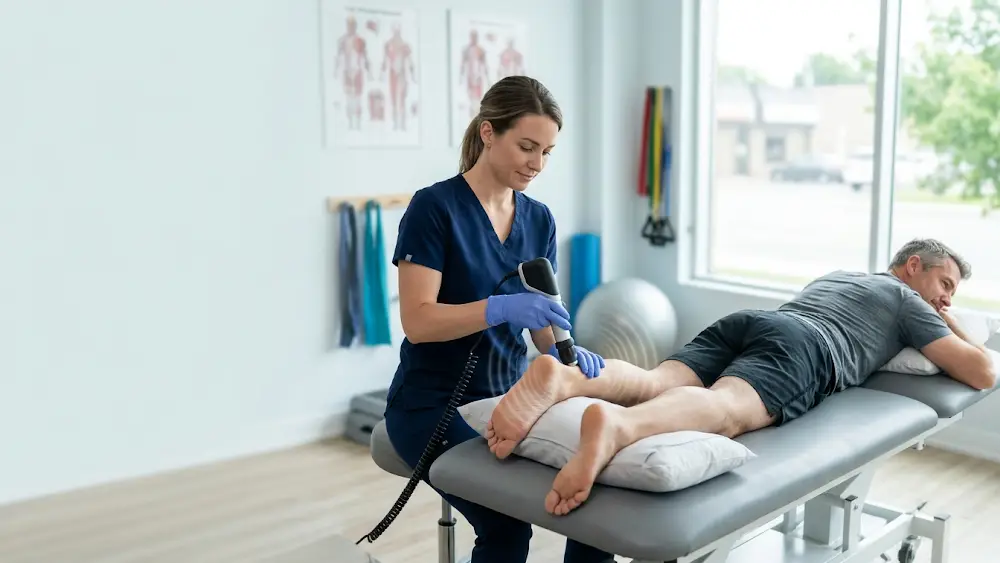
Shockwave therapy, clinically referred to as Extracorporeal Shock-Wave Therapy (ESWT), uses acoustic sound waves generated by a specialized handheld applicator device.
These sound waves are delivered directly to the injured or painful area in a controlled manner to induce specific therapeutic physiological responses.
Clinical Insight: Shockwave therapy is not a "magic wand" that makes chronic pain disappear overnight. Lasting relief requires a thorough clinical assessment to identify and treat the underlying biomechanical causes of your pain.
That is why physiotherapy shockwave therapy yields optimal results when integrated into an individualized, movement-based rehabilitation strategy.
How Does Shockwave Therapy Work?
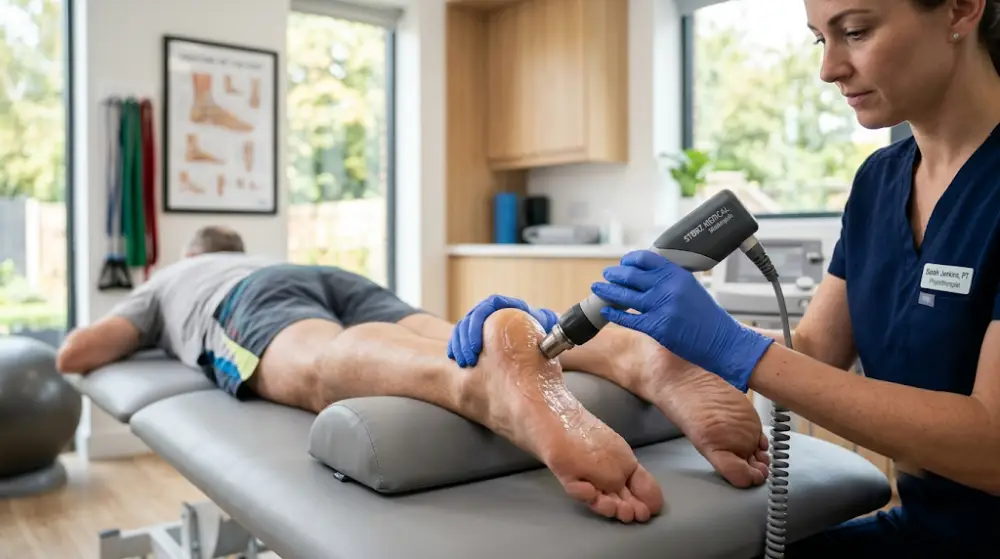
During a session, your physiotherapist applies a specialized conductive gel to the skin and uses a handheld applicator to deliver targeted acoustic waves deep into soft tissues.
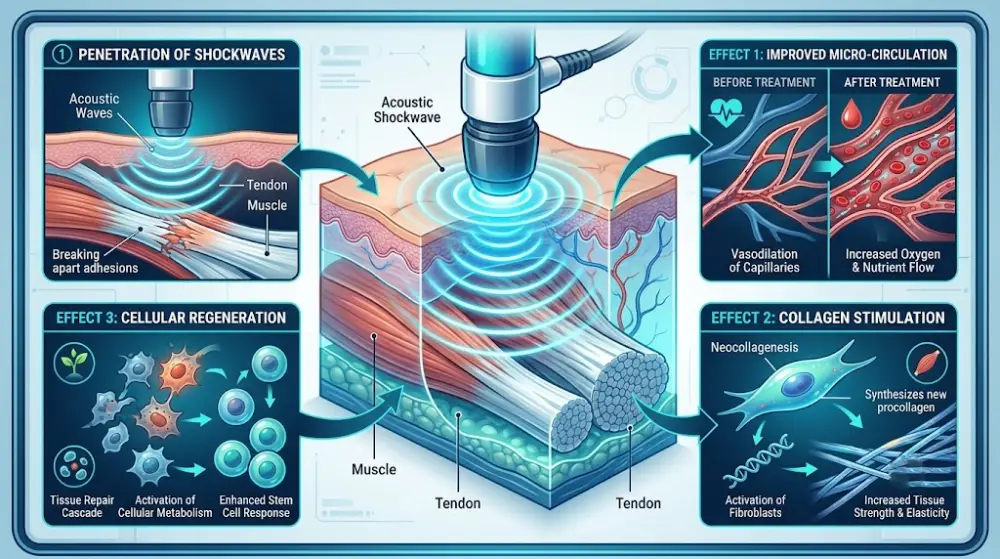
These targeted waves stimulate tissue cellular activity, triggering a controlled local healing response that reduces pain and enhances tissue recovery.
Key Benefits of Acoustic Wave Stimulation:
- Supports natural cellular repair: Restarts the body’s dormant healing mechanisms in chronic injuries.
- Improves microcirculation: Promotes new blood vessel formation (neovascularization) to nourish tissue.
- Aids tissue remodeling: Encourages collagen synthesis necessary for healthy tendon structure.
- Reduces pain sensitivity: Temporarily desensitizes local nerve endings to alleviate chronic aching.
- Enhances musculoskeletal function: Restores mobility and strength to dormant or tight soft tissues.
- Resolves persistent calcifications: Helps break down localized calcium deposits in calcific tendinopathy.
What Conditions Can Be Treated With Shockwave Therapy?
Physiotherapy shockwave therapy is highly effective for chronic tendon injuries and stubborn soft tissue conditions that have not responded to rest or traditional medication:
| Condition | Primary Symptoms | How Shockwave Helps |
|---|---|---|
| Plantar Fasciitis | Sharp heel pain, especially during morning steps or after prolonged sitting. | Stimulates tissue repair under the foot and relieves chronic plantar strain. |
| Tennis Elbow | Pain on the outer elbow, weak grip strength, pain when lifting objects. | Promotes micro-injury healing and reduces chronic tendon inflammation. |
| Achilles Tendinopathy | Stiffness, swelling, and aching along the back of the ankle/heel. | Increases metabolic activity in thick, slow-healing tendon fibers. |
| Patellar Tendinopathy | Front knee pain during jumping, running, or squatting ("Jumper’s Knee"). | Accelerates collagen regeneration in the patellar tendon below the kneecap. |
| Shoulder Tendinopathy | Dull shoulder ache, restricted overhead reach, calcific tendonitis buildup. | Acoustic pulses assist in dissolving calcified buildup within rotator cuff tendons. |
A detailed assessment at our Hamilton physiotherapy clinic helps determine if shockwave therapy is the right choice for your specific injury.
Who Can Benefit From Shockwave Therapy?
You may be an ideal candidate for shockwave therapy if you experience any of the following:
- You suffer from persistent heel pain or chronic plantar fasciitis.
- You have ongoing outer elbow pain from tennis elbow.
- You suffer from chronic Achilles tendon tightness or pain.
- You experience persistent knee soreness from patellar tendinopathy.
- You have lingering soft tissue injuries that have failed to resolve after months of rest.
- Your condition has not adequately responded to conservative rehab alone.
What Happens During A Shockwave Therapy Treatment?
Your session starts with an in-depth conversation and movement examination by your physical therapist. Once it is confirmed that shockwave therapy is safe and appropriate for your condition:
- A conductive coupling gel is applied to the targeted region.
- The clinician applies the acoustic shockwave applicator, delivering gentle acoustic pulses into the tissue.
- You will feel a tapping or pressure sensation. Intensity levels are continuously adjusted to match your tolerance level while remaining therapeutically effective.
- Your session is paired with targeted exercise prescription and mobility work for holistic recovery.
Is Shockwave Therapy Painful?
Shockwave therapy can feel somewhat uncomfortable, particularly over tender or inflamed spots. However, treatment is generally well-tolerated because the intensity level can be customized in real-time by your physiotherapist. Sessions are short (typically lasting 10 to 15 minutes per treatment zone).
How Many Shockwave Therapy Treatments Are Needed?
The total number of required treatments depends on several individual factors, including your specific diagnosis, injury severity, lifestyle, and recovery response. Most patient plans range between 3 to 6 sessions spaced about one week apart.
Shockwave Therapy vs. Traditional Physiotherapy
Shockwave therapy is not a replacement for active physical therapy—it is an accelerator. For optimal long-term outcome, shockwave therapy works best when combined with active core clinical interventions:
- Progressive strength training and tendon loading
- Targeted joint mobilization and manual therapy
- Gait analysis and biomechanical retraining
- Custom exercise programs and patient education
Is Shockwave Therapy Safe?
Yes. Extracorporeal shockwave therapy is a non-surgical, evidence-based procedure that is safe when delivered by a licensed healthcare professional. Prior to initiating care, your therapist will review your medical history to screen out potential contraindications (such as pregnancy, active blood thinning medication, or local circulation issues).
Why Choose Sterling Physiotherapy for Shockwave Therapy in Hamilton?
At Sterling Physiotherapy, we reject standard one-size-fits-all treatments. Our dedicated team of Hamilton physiotherapists conducts thorough, personalized assessments to evaluate your joint mechanics, posture, muscle strength, and movement habits before designing your treatment plan.
Whether you are dealing with chronic foot discomfort, elbow tendinopathy, or a sports-related joint injury, our mission is to treat the root cause of your pain, restore functional performance, and keep you pain-free long-term.
Ready to take the first step toward living free from chronic tendon pain? Contact our Hamilton clinic today to schedule your comprehensive assessment.