
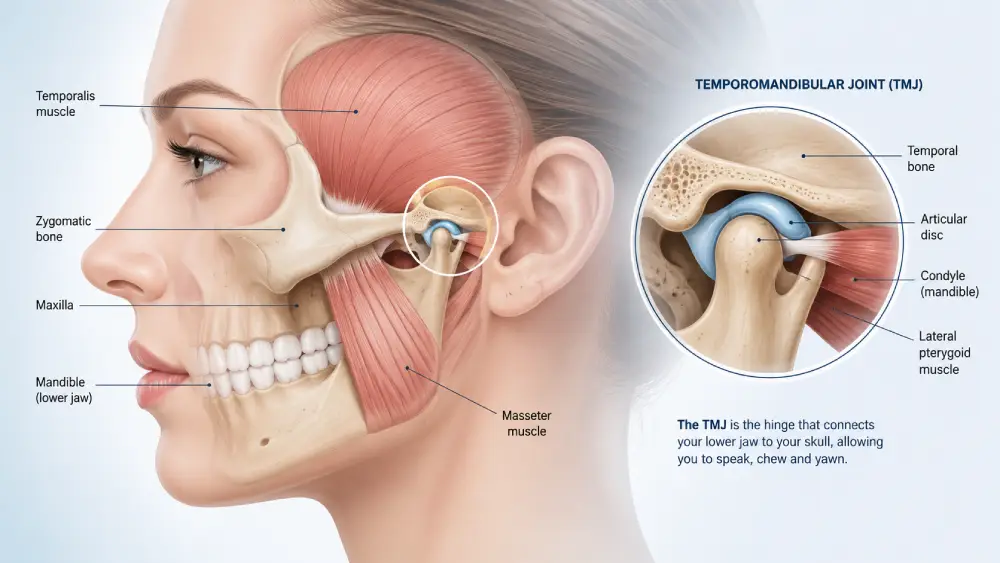
If you are experiencing jaw pain, popping or clicking, stiffness, headaches, or difficulty opening or closing your mouth, you may be suffering from temporomandibular disorder (TMD). The temporomandibular joints (TMJ) are located on each side of your head, just in front of the ears. The TMJ connects the lower jaw to the skull and allows us to open and close our mouths to chew, speak, and yawn.
The good news is that physiotherapy can help! Physiotherapists assist many patients suffering from TMJ pain and limited jaw movement. Current clinical guidelines recommend supervised jaw exercises, stretches, manual therapy, postural and neck exercises, education, and self-management strategies for the treatment of painful TMD.

What Is TMJ Pain?
The temporomandibular joints are located on both sides of the face, just in front of the ears. They allow us to chew, speak, and yawn by working with several muscles and tissues. When these joints or muscles become inflamed or irritated, it can lead to a temporomandibular joint disorder (TMD).
There are many different factors that can contribute to TMD. Some common causes of TMJ pain include:
- Teeth clenching and grinding
- Stress and muscle tension
- Jaw or facial injury
- Arthritis or degeneration of the joint
- Poor posture
- Chewing gum or repetitive chewing
- Weakness or imbalances in the jaw or surrounding muscles
- Dental or bite issues
Sometimes there is no single cause of TMD. The pain can be caused by a combination of muscle tightness, joint dysfunction, poor posture, repetitive movements and stress.
What Are the Symptoms of TMJ Dysfunction?
TMJ dysfunction can present in a variety of ways. Some people may have more pain around the jaw, while others may have headaches or neck pain. Common symptoms of TMD include:
- Pain or tenderness around the jaw
- Popping, clicking, or grinding sounds
- Stiffness in the jaw
- Difficulty opening or closing the mouth
- Pain when chewing or speaking
- Locked or limited jaw movement
- Headaches
- Pain around the ear or temple
- Neck and shoulder discomfort
- Facial muscle soreness
- Increased pain after clenching or grinding the teeth
A popping sound by itself is not always a cause for concern. However, if you are experiencing clicking or popping accompanied by pain, limited movement or difficulty chewing, it is best to get it checked out.
Can Physiotherapy Help With TMJ Pain?
Yes. Physiotherapy can be an effective treatment option for many people suffering from TMJ dysfunction. Physiotherapy treatment for TMD typically focuses on reducing pain and improving mouth opening and jaw function. Physiotherapists can also help to reduce muscle tension and improve posture and neck mobility, which can contribute to TMJ pain.
Research has shown that physiotherapy interventions, such as manual therapy and therapeutic exercises, can help reduce pain and improve mouth opening for people with TMD. The physiotherapist will work with you to create a treatment plan that is right for you based on your symptoms and assessment findings.
At Sterling Physiotherapy in Hamilton, we offer personalized treatment for TMJ dysfunction and pain.
How Does TMJ Physiotherapy Work?
1. An In-Depth Assessment
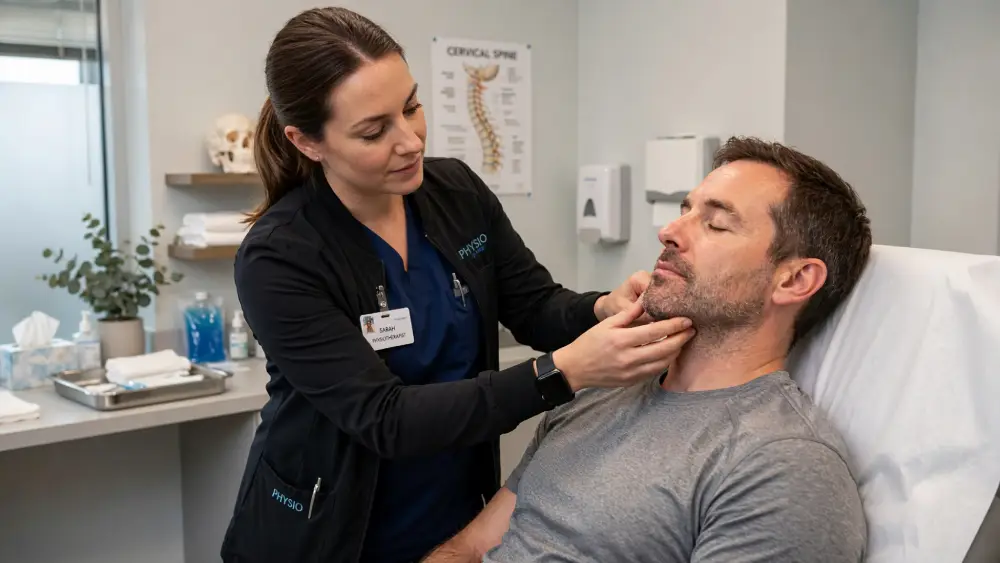
The physiotherapist will begin by assessing your jaw function and symptoms. They will likely assess:
- Jaw mobility and movement
- Jaw muscle tenderness and tension
- Range of motion and mobility in the neck and shoulders
- Posture and muscle coordination
- Any contributing factors such as clenching or grinding
By understanding what is contributing to your symptoms, the physiotherapist can develop an individualized treatment plan for you.
2. Manual Therapy
Your physiotherapist may use manual therapy techniques to help reduce muscle tension and improve mobility. They will work on the muscles in the jaw, neck, and shoulders, depending on what is contributing to your symptoms. Joint mobilization and soft tissue techniques can also be used to improve range of motion and reduce pain.
3. Jaw Exercises
Your physiotherapist may prescribe specific therapeutic exercises to help improve jaw mobility, coordination, and muscle function. According to clinical guidelines, supervised therapeutic jaw exercises and stretches are recommended for the conservative management of chronic painful TMD.
4. Posture and Neck Exercises
Your jaw does not work alone. The muscles in the jaw, neck, and shoulders are all connected. As such, your physiotherapist may assess your posture and recommend specific neck or posture exercises to help reduce tension.
5. Education and Self-Management
Long-term improvement requires more than just in-clinic treatment. Your physiotherapist may give you advice on how to take care of your jaw and reduce your risk of future flare-ups, including:
- Avoiding excessive chewing gum and unnecessary clenching
- Eating soft foods if you are having a flare-up
- Being mindful of tension in the jaw or face
- Maintaining good posture
- Completing a home exercise program
What Happens During a Physiotherapy Appointment for TMJ Dysfunction?
At Sterling Physiotherapy, your first appointment will begin with an assessment of your jaw and symptoms. Your physiotherapist will likely assess your range of motion and mobility, as well as any muscle tenderness or tension. Based on your assessment, your physiotherapist will develop an individualized treatment plan for you. This may include manual therapy, soft tissue techniques, jaw exercises, myofascial release, mobilization, and education.

When Should You See a Physiotherapist for Jaw Pain?
If you are experiencing persistent or recurrent jaw pain that is affecting your ability to speak, eat, or yawn, you should consider booking an assessment. You should also see a physiotherapist if you are experiencing:
- Persistent jaw pain or difficulty opening your mouth
- Pain when chewing or headaches associated with jaw tension
- Clicking, popping, locking, or limited jaw movement
- Neck and shoulder discomfort associated with jaw pain
Note: If you are experiencing severe pain, sudden swelling, or other concerning symptoms, it is best to seek immediate medical or dental attention.
Can TMJ Physiotherapy Replace Dental Treatment?
Physiotherapy is not a replacement for dental treatment. There are many different causes of TMD, and each case must be treated individually. Physiotherapy focuses on the musculoskeletal and postural aspects of TMD, while dental treatment focuses on the dental and oral aspects. A combination of both may be necessary for some patients.
Why Choose Sterling Physiotherapy for TMJ Treatment in Hamilton?
If you are looking for physiotherapy treatment for TMJ pain in the Hamilton area, Sterling Physiotherapy can help. We offer individualized treatment for jaw pain, stiffness, popping, headaches, and associated neck or shoulder pain.
Sterling Physiotherapy is located at 505 Rymal Rd E, Hamilton, ON L8W 3X1. We offer physiotherapy treatment for TMJ dysfunction as part of our comprehensive rehabilitation services.
Take the First Step Toward Improving Your Jaw Function
You do not have to live with painful or stiff jaws. Evidence shows that physiotherapy interventions such as therapeutic exercises, manual therapy, and self-management can be effective treatments for TMD.
If you are experiencing TMJ pain, stiffness, clicking, headaches, or limited jaw movement in Hamilton, Ontario, we are here to help.
Sterling Physiotherapy
505 Rymal Rd E, Hamilton, ON L8W 3X1
Phone: (289) 401-2900
Website: sterlingphysiotherapy.com
Book an appointment today to learn more about how physiotherapy can help your TMJ dysfunction and reduce your pain.