


Unfortunately, residual dizziness is very common after BPPV-even when canalith repositioning has successfully stopped the vertigo. Research shows that even after successful treatment, many patients experience residual imbalance for days, weeks, or even months.
Understanding the difference between recurrent BPPV and residual dizziness is key to finding relief. Getting evaluated through a professional vestibular physio assessment can help identify why your symptoms persist and how to treat them effectively.

What is BPPV?
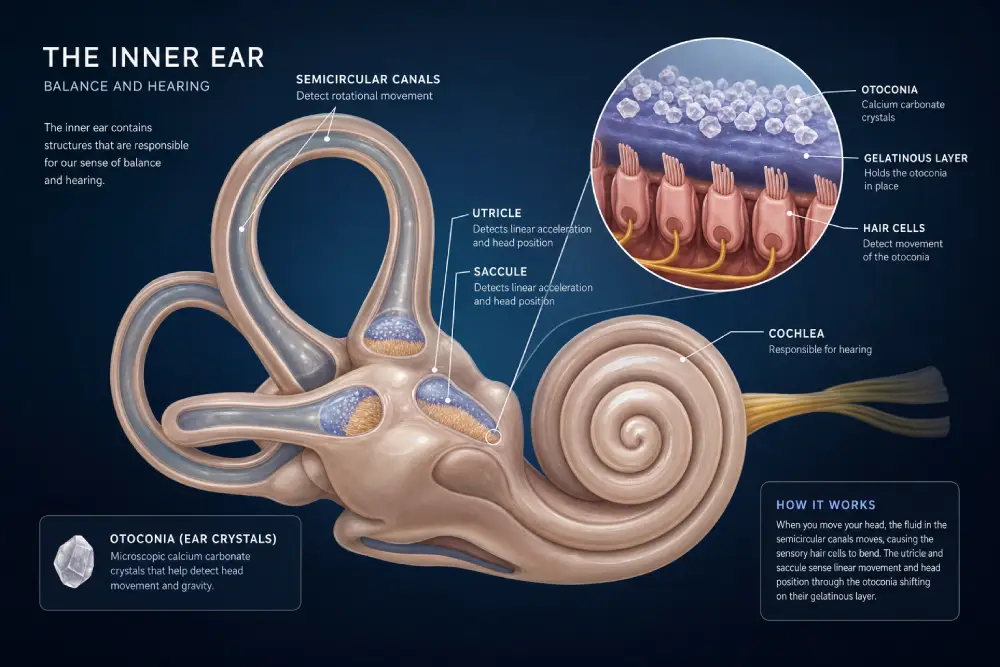
Benign paroxysmal positional vertigo (BPPV) is a common inner-ear condition causing short episodes of spinning triggered by specific head movements, such as looking up, rolling over, or getting out of bed.
BPPV occurs when microscopic calcium carbonate crystals ("ear crystals") dislodge and enter one of the inner ear's semicircular canals, disrupting normal fluid flow. In most cases, targeted canalith repositioning maneuvers (like the Epley maneuver) clear the crystals and resolve the spinning.
However, clearing the crystals doesn't always guarantee immediate 100% relief. Here are 7 reasons why you might still feel dizzy after treatment:
1. You Might Have Residual Dizziness After BPPV
Residual dizziness is a recognized phenomenon following successful BPPV treatment. Rather than severe room-spinning, you might experience:
- Lightheadedness or a "floaty" sensation
- Unsteadiness on your feet while walking
- Dizziness triggered by turning your head or bending over
- Wooziness in visually stimulating environments like grocery stores
Studies indicate that residual dizziness can last from a few days to a few months (averaging around 3 months). While frustrating, it is a common part of the inner ear recovery process.
2. Your BPPV Might Not Be Fully Treated
It is possible that the initial treatment did not clear all the crystals. Crystals may remain in the canal, the wrong canal may have been treated, or multiple canals could be affected. Alternatively, you may be experiencing recurrent BPPV.
If you still experience brief (less than 60 seconds) bursts of intense spinning during these specific triggers, your BPPV may not be fully resolved:
- Lying down or sitting up quickly
- Looking straight up or bending down
- Rolling over in bed
3. Your Balance System Needs Time to Recalibrate
Your brain maintains balance by integrating sensory signals from your inner ear, eyes, and muscles/joints. During BPPV, faulty signals from the inner ear disrupt this system.
Once crystals are moved, your brain often needs time to recalibrate to normal incoming signals. Targeted vestibular rehab therapy can speed up this adaptation process and retrain your balance system.
4. You Might Have Another Vestibular Disorder
BPPV can coexist with other inner ear conditions. Underlying peripheral vestibular weakness, labyrinthitis, or vestibular neuritis can leave lingering dizziness even after BPPV resolves. A thorough evaluation can differentiate between residual BPPV symptoms and secondary vestibular conditions.
5. Vestibular Migraine Might Be the Cause
Vestibular migraine is another primary cause of dizziness and lightheadedness. Unlike BPPV's brief positional spinning, vestibular migraine attacks often last hours or days and may occur alongside motion sensitivity, headache, sound sensitivity, or fatigue.
6. Fear of Movement (Kinesiophobia)
After experiencing severe vertigo, it is natural to feel anxious about head movements. Many people subconsciously limit head motion or stiffen their neck to avoid triggering symptoms.
This movement avoidance delays nervous system recovery and increases muscle tension, prolonging feelings of unsteadiness. Working with a physical therapist helps safely reintroduce movement and lower movement-related anxiety.
7. Non-Vestibular Health Factors
Dizziness isn't always caused by the inner ear. Persistent lightheadedness or unsteadiness can also stem from:
- Medication side effects
- Blood pressure fluctuations
- Cervicogenic issues (neck stiffness or dysfunction)
- Dehydration or stress

How Long Does Dizziness Last After BPPV Treatment?
While many patients experience immediate relief after successful repositioning, residual dizziness commonly lasts anywhere from several days to a few weeks. In some cases, mild unsteadiness can persist for a few months. Vestibular rehabilitation exercises significantly accelerate recovery times.
When Should You See a Physiotherapist or Doctor?
You should consider visiting a vestibular physical therapist if:
- Your dizziness or unsteadiness persists past a few days
- You feel unsteady or fearful of falling during everyday tasks
- You continue experiencing brief bursts of positional spinning
- You find yourself avoiding normal head movements
At Sterling Physiotherapy, custom treatment plans-including repositioning maneuvers and customized habituation exercises-are designed to address persistent balance issues.

Get Relief From Lingering Dizziness Today
If lingering dizziness or unsteadiness is holding you back after BPPV treatment, you don't have to wait it out alone. A structured rehabilitation plan can help retrain your brain and restore your confidence on your feet.
Contact Sterling Physiotherapy to schedule a comprehensive assessment and take the first step toward clear, steady movement.